
Industrial White Paper & Sourcing Dossier
High-Quality Baby Socks Manufacturers & Suppliers for the Japan Market
Precision Japanese Standard (JIS L 1096 / Law 112) Compliance, Zero-Formaldehyde Knitting & Scalable OEM/ODM Infrastructure Engineered for Japanese Retail Chains
Priority Lines for Japan Procurement
Top-Tier Infant & Toddler Hosiery for Japanese Department Stores & Boutiques
Engineered precisely for the high sensory and safety expectations of Japanese parents. Featuring 200-needle density, zero-detectable formaldehyde finishes, and anti-mosquito protective weaves.
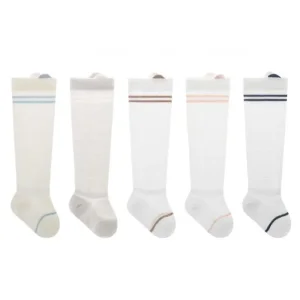
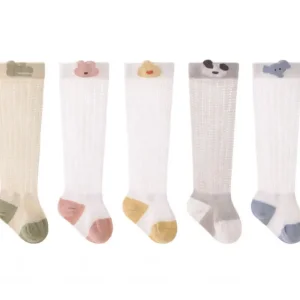
Japan Standard Wholesale Thin Baby Socks with Cute Cotton Knee High Mosquito Proof Summer Edition
View Spec & Order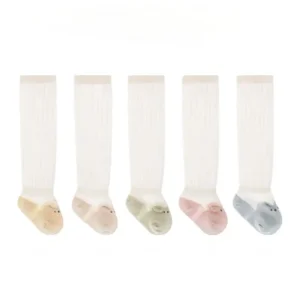
High-Quality Cooling Cartoon Infant Socks Knee-High Colorful Baby Socks for Japan Children Retailers
View Spec & Order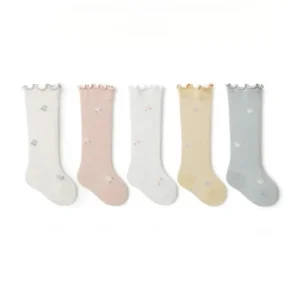
High-Quality 100% Combed Cotton Socks Eco-Friendly Organic Knee High Socks for Japan Market
View Spec & Order
Regulatory & Consumer Intelligence
The Japanese Baby Socks Market: Strict Compliance & Micro-Innovations
Japan represents one of the most discerning baby apparel ecosystems globally. Importers, trading companies (Sogo Shosha), and private labels must navigate stringent chemical thresholds and unmatched consumer expectations.
Act on Control of Household Goods (Law 112)
In Japan, textiles for infants under 24 months are legally regulated under Law No. 112. The absorbance difference requirement is strictly set to ΔA ≤ 0.05 (essentially zero detectable formaldehyde). Even cross-contamination during transit or factory packaging requires sealed barrier poly-bags from cleanrooms.
JIS L 1096 Dimensional Stability & Hand-Feel
Japanese consumers expect socks to maintain elasticity through rigorous low-temperature drum washes without pilling or shrinkage. Strict washing fastness, perspiration test standards (JIS L 0848), and 100% hand-linked seamless boneless toe construction are standard prerequisites.
The "Non-Squeeze" Gentle Cuff Trend
Japanese mothers intensely dislike the red indentation marks left on baby ankles by aggressive rubber bands. The market heavily demands "Yurufuwa" (gentle, cloud-soft ribbing) that stays up through engineered elastane tension rather than constrictive elastic cords.
<0.05
Law 112 Absorbance Limit
100%
Needle Detector Inspected
200N
High-Density Baby Knit Gauges
4.5+
JIS L 0844 Color Fastness
Global Industry Panorama
Worldwide Dynamics: From Conventional Footwear to Functional Baby Hosiery
Across North America, Europe, and Asia-Pacific, infant foot health has graduated from simple thermal protection to ergonomic developmental support, eco-textile compliance, and sensory-friendly integration.
The Global Shift Toward Organic Fibers & Circularity
International baby apparel brands are rapidly eliminating conventional petro-synthetics. GOTS-certified combed cotton, OEKO-TEX Standard 100 Class I yarns, and natural plant-based dyes are commanding shelf premiums. European and American buyers now demand cradle-to-gate ESG visibility, matching the long-standing Japanese preference for non-toxic, hypoallergenic purity.
Multi-Functional Micro-Textiles & Non-Slip Traction
As infant neurological development studies emphasize early sensory stimulation, global floor grip demands have escalated. Medical-grade, phthalate-free silicone pads with custom micro-distribution ensure toddlers learn to stand on smooth hardwood, tatami, and linoleum tiles without muscular strain or tipping.
Sichuan MiFo Manufacturing Engine
Why Japan’s Discerning Buyers Partner with MiFo China
Combining high-capacity automation, dedicated clean-packing protocols, and full vertical supply integration across a 42,000 m² campus in Sichuan, China.
Dual-Needle Computerized Lonati Knitting
Equipped with 96N, 108N, 120N, 144N, and 200N high-precision automated machinery. Seamless rosso and hand-linking stations guarantee that zero abrasive inside threads irritate infant skin.
Direct Yarn Sourcing & Cost Control
Centralized purchasing of long-staple combed cotton, bamboo viscose, and modal creates a 15-22% cost arbitrage compared to domestic Japanese mills or Southeast Asian assembly without compromising quality.
Export Protocol (Hashikensha Alignment)
Our dedicated inspection line mirrors Japanese Kenpin (検品) facilities. Standard twin-head metal needle detection (0.8mm sensitivity test block pass), optical sorting, and batch-sealed anti-formaldehyde barrier foil wrapping.
Japanese Lifestyle & Commercial Usage
Engineered for Daily Japanese Life & Institutional Environments
How technical design specifics align with the everyday rituals of Japanese households, nurseries, and cultural ceremonies.
Hoikuen (Nursery School) Compliance
Japanese licensed daycares mandate floor grip socks to prevent slip injuries on polished cypress wood floors. Custom name-woven back tags allow parents to use permanent ink pens without ink bleeding through to sensitive skin.
Omiyamairi & Shichi-Go-San Ceremonies
Formal baby socks featuring delicate lace ruffles, pristine pure white bleached combed cotton, and discrete pastels designed to coordinate with ceremonial kimono and celebration rompers for shrine visits.
Indoor Tatami Mat Gentle Friction
Standard aggressive PVC grips can damage traditional woven rush grass tatami mats. We utilize low-profile food-grade silicone formulations that offer lateral stability without abrading delicate interior straw surfaces.
Procurement Benchmark Matrix
Technical Sourcing Standards: Japan vs. Western Criteria
Understand exactly how our manufacturing parameters exceed international baselines to satisfy Japanese quality assurance inspectors.
| Evaluation Parameter | Japanese Market Requirement (JIS) | Western / EU Standard (EN / ASTM) | MiFo Sichuan Factory Execution |
|---|---|---|---|
| Formaldehyde Limits | Law 112: Absorbance ΔA ≤ 0.05 (Non-detectable) | OEKO-TEX: < 16 ppm (Class 1) | ΔA ≤ 0.02 (Double Cleanroom Wrapped) |
| Toe Seam Finishing | 100% Boneless Hand Linking (No bulk) | Machine Rosso Linking accepted for budget | Precision Hand Linking Standard |
| Needle Detection | Double-pass 0.8mm ø Fe ball test | Single-pass 1.0 - 1.2mm Fe ball test | Dual Japanese Hashima Detector Lines |
| Grip Composition | Food-Grade Low Odor Liquid Silicone | Standard PVC Plastisol or Silicone | 100% Phthalate-Free Liquid Silicone |
| Color Fastness | JIS L 0844 Method A-2: Grade 4.0 or above | ISO 105-C06: Grade 3-4 | Reactive Eco-Dyeing Grade 4.5+ |
Complete Japan OEM/ODM Production Collection
Wholesale Anti-Slip, Indoor & Newborn Socks Ready for Custom Branding
Explore verified production lines featuring custom novelty jacquards, food-grade silicone floor grips, and soft combed ankle styles for retail chain replenishment.
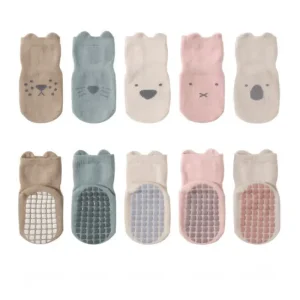
Wholesale Non-Slip Infant Socks with Cute Novelty Cartoon Animal Design for Japan Importers
View Spec & Order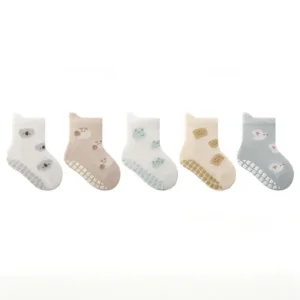
Japan Standard Wholesale Anti Slip Kids Socks for Newborn Baby Toddler Infant in Summer
View Spec & Order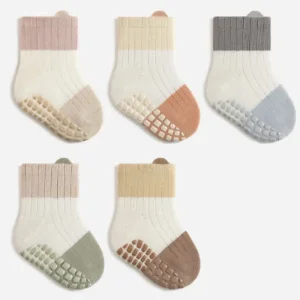
Custom Colorful Kids Socks Indoor Floor Anti Slip Socks for Japanese Early Education Centers
View Spec & Order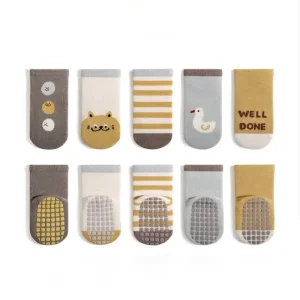
Wholesale Factory Price Baby Socks Floor Grip Mid-Tube Socks with Character for Kids in Fall
View Spec & Order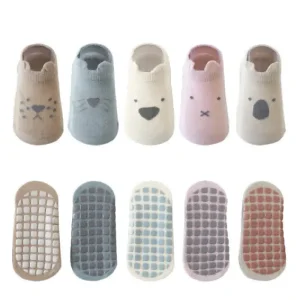
Custom Newborn Soft Anti Slip Infant Socks Cotton Baby Crew Socks with Silicone Grips for Japan
View Spec & Order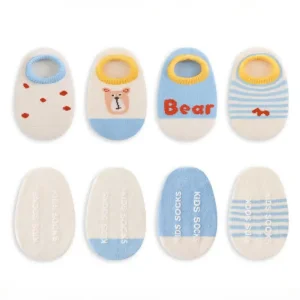
Wholesale Factory Colorful Soft Baby Socks Anti-Slip Comfortable Kids Cotton Ankle Socks
View Spec & Order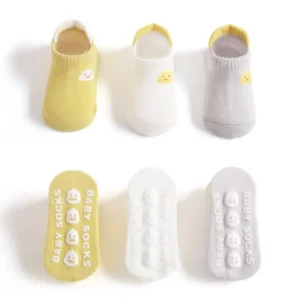
Japan Hot Sale Kids Socks Wholesale Non Slip Soft Ankle Baby Toddlers Socks Manufacturer
View Spec & Order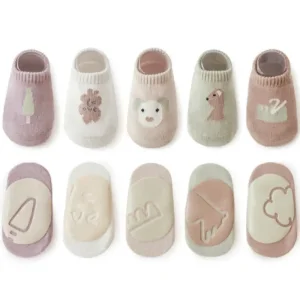
High-Quality Non Slip Toddler Socks Cute Cartoon Baby Socks with Grips Crew Walking Socks for Japan
View Spec & Order
Technical & Logistical Answers
Frequently Asked Questions by Japanese Sourcing Directors
Direct, transparent answers regarding Japanese import regulations, needle detection, sample turnaround, and localized logistics.
How does your factory ensure compliance with Japan's Law 112 regarding formaldehyde?
We operate a zero-formaldehyde yarn and chemical finishing policy for baby hosiery. All raw fibers are screened before knitting. Post-boarding, baby socks are handled in isolated finishing zones and sealed in impermeable polyethylene packaging inside our facility to eliminate any potential cross-contamination during international container shipping. Independent SGS/Intertek testing validates absorbance differences below ΔA 0.05.
What is your needle detection (検針 - Kenshin) protocol for shipments to Japan?
We utilize calibrated Japanese Hashima conveyor needle detectors. Every single sock must pass through a two-stage detection zone calibrated to an 0.8mm steel ball test block. We provide timestamped detector test logs with every shipping lot, ensuring zero broken needle hazard risks for Japanese infant retail chains.
What are your typical sample lead times and mass production turnaround times?
Digital jacquard artwork and technical knit files are generated in 24 hours. Custom physical sample prototypes take 5-7 days. Upon pre-production sample approval, bulk production runs typically take 20 to 30 days depending on order volume and packaging specifications. Expedited sea freight to Osaka, Tokyo, or Yokohama ports takes 3 to 7 days from Shanghai/Ningbo ports.
Can you provide custom retail packaging meeting Japanese store requirements?
Yes. We regularly supply Japanese hang-tags (with JAN barcode printing, wash instruction symbols complying with JIS L 0001, and Japanese material composition declarations), branded header cards, organic cotton gift pouches, and individual Japanese-spec OPP bags with bilingual warning text.