
Engineered Baby Socks Catalog: Core B2B Selections
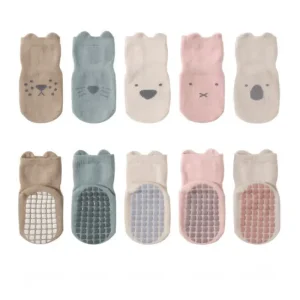
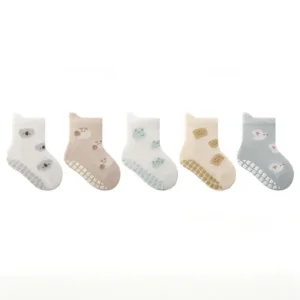
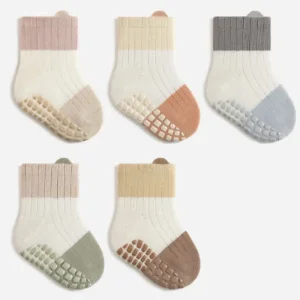
Explore our export-ready baby socks manufactured with high-needle count machines, hand-linked seamless toes, toxic-free botanical dyes, and medical-grade food-contact silicone grips.
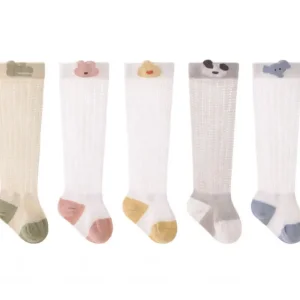
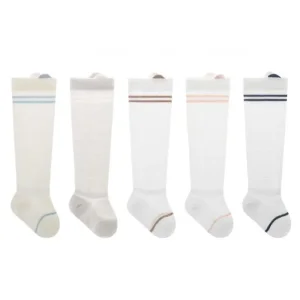
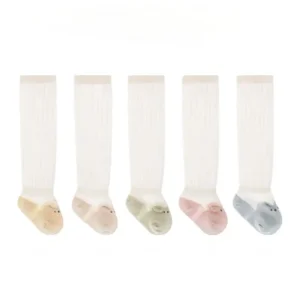
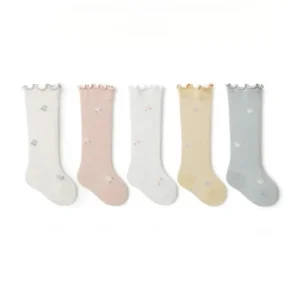
Global Baby Hosiery Landscape & Industrial Manufacturing Paradigms
Addressing structural challenges in the global infant apparel supply chain through computerized knitting engineering, safe chemistry, and lean production networks.
1. The Evolving Macro Landscape: From Low-Cost Commodity to Pediatric Ergonomics
The global infant and toddler hosiery market has experienced a significant paradigm shift over the past decade. Historically categorized as a low-margin commodity, infant socks are now recognized by regulatory bodies, pediatric podiatrists, and high-tier retail buyers as a specialized medical-textile intersection. In infant development, the foot consists largely of flexible cartilage rather than ossified bone. Poorly constructed socks with restrictive elastane bands, irregular seam ridges, or abrasive synthetic blends pose direct risks to microvascular circulation and motor gait development.
Simultaneously, leading global regulatory frameworks—such as the United States Consumer Product Safety Improvement Act (CPSIA), European REACH Annex XVII, and the EU General Product Safety Regulation (GPSR)—have tightened chemical thresholds on infant wearables. Harmful plasticizers such as phthalates (DBP, BBP, DEHP, DINP), banned azo colorants, alkylphenol ethoxylates (APEOs), and trace heavy metals (cadmium, lead, hexavalent chromium) are now subject to strict zero-tolerance screening at borders. For procurement directors, sourcing from unvetted workshop-style subcontractors creates severe recall risks and legal exposure. Modern baby socks factories must operate with institutionalized quality management systems, traceable fiber procurement, and sterile, audited clean-floor knitting environments.
2. Vertically Integrated Factory Architecture vs. Dispersed Trading Intermediaries
One of the primary vulnerabilities in the supply chain is the reliance on trading agents who subcontract production to non-compliant family mills. A truly qualified Baby Socks Supplier must maintain direct ownership and end-to-end governance over the five essential pillars of hosiery engineering: raw yarn spinning and spinning verification, automated knitting, precision linking, grip printing vulcanization, and finished lot testing. Sichuan MiFo Technology Co., Ltd. operates a centralized 42,000 m² campus in Sichuan, China, with an annual output exceeding 200 million pairs. By centralizing automated production lines under strict ISO 9001 and BSCI/Sedex ethical protocols, brands eliminate the risk of batch-to-batch variation, hidden subcontractors, and undocumented yarn substitutions.
| Operational Metric | Traditional Workshop Mill | Trading Company Intermediary | MiFo Industrial Smart Factory |
|---|---|---|---|
| Knitting Machinery | Outdated mechanical cylinders (84N-120N) | Subcontracted; inconsistent gauge | High-speed Italian Lonati & computerized 144N-168N single/terry cylinders |
| Toe Seam Finishing | Rough overlock machine stitching (causes blisters) | Unverified manual or rough auto | Rosso precision linking & Hand-linked flat seamless closure |
| Chemical Compliance | Untested market yarn; risk of formaldehyde & azo | Third-party paper certificates, high fraud risk | Certified OEKO-TEX Standard 100 Class I, GOTS Organic Cotton trace |
| Grip Adhesion & Safety | Solvent-based PVC, heavy plasticizer leaching | Variable PVC/rubber blends | 100% Medical-grade silicone, automated oven curing, 50+ wash peel test |
| Annual Capacity | < 5 Million pairs (seasonal bottlenecks) | Variable, dependent on third parties | 200 Million+ pairs with 99.4% on-time delivery metric |
Annual Pair Capacity
Integrated Campus
On-Time Delivery Rate
Global Export Markets
Infant-Specific Material Science & Ergonomic Roadmap
Deep-dive engineering into specialized yarn counts, skin-neutral pH formulations, zero-compression cuff ribbing, and slip-fall prevention technology.
Long-Staple Combed Cotton & Organic Bamboo
We strictly utilize staple lengths exceeding 32mm combed cotton (32s/2 to 40s/2 yarn counts). This eliminates loose surface micro-fibrils that cause respiratory irritation and skin chafing in neonates. For sensitive skin and atopic dermatitis, bamboo viscose provides natural bacteriostatic performance and high moisture vapor transmission rates.
Non-Marking Zero-Pressure Cuffs
Infant ankles feature delicate subcutaneous fat and developing micro-capillaries. Conventional elastic bands create deep tourniquet red marks that impede lymphatic drainage. We engineer dual-feed spandex wrapped in fine multifilament nylon, yielding a 1:2.8 elongation ratio that stays upright without exerting constriction greater than 4.5 mmHg.
Seamless Hand-Linked Rosso Closures
Traditional sock construction joins the toe with an abrasive, bulky overlock thread ridge. This constant friction can cause blisters or toe curl deformities. Our high-gauge automated Rosso toe linkers and hand-inspection seam aligners ensure a 100% planar surface, preventing abrasion against sensitive infant toes.
Medical-Grade Liquid Silicone Grip Vulcanization
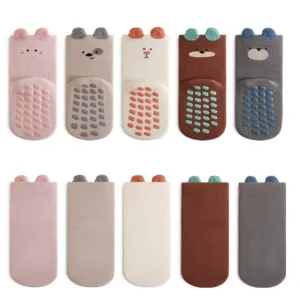
As early crawlers transition into cruising and walking, floor traction becomes critical. Unlike cheap PVC dot transfers that crack and emit toxic VOCs, we formulate skin-safe, food-contact grade liquid silicone rubber (LSR). Screen-printed and heat-cured at 160°C, our custom traction prints maintain dynamic friction on hardwood, tile, and laminate without peeling or flaking in washing cycles.
Toe-Loop Anti-Entanglement Reverse Knitting
Toe tourniquet syndrome occurs when loose thread loops on the inside of socks wrap around an infant's toes, cutting off circulation. Our high-precision jacquard knit programs employ reverse looping technology and in-line ultrasonic thread trimming, ensuring zero exposed loops exceeding 1.5mm inside the sock chamber.
Skin-Neutral pH & Colorfast Botanical Dyes
Infants frequently place their sock-clad feet into their mouths. Our reactive and botanical dye operations are conducted in ISO 14001 water treatment facilities. We guarantee a finished fabric pH between 5.5 and 7.0 (identical to baby skin acid mantle) with dry and wet rubbing colorfastness ratings of Grade 4.5+.
Localized Support & Global Regulatory Assurances
Comprehensive compliance architecture protecting tier-one importers, department stores, and DTC brands against customs seizure, legal recall, and reputational risk.
Rigorous Lab Verification & Audit Verification Matrix
As a global Baby Socks Supplier, Sichuan MiFo Technology Co., Ltd. operates an on-site testing laboratory alongside partnerships with internationally accredited third-party inspection firms (SGS, Intertek, TÜV Rheinland). Every production run destined for North America, the European Union, Australia, or Japan undergoes stringent verification protocols before bills of lading are issued.
- OEKO-TEX Standard 100 Class I (Infants & Toddlers up to 36 Months): Ensures total absence of carcinogenic arylamines, nickel, lead, cadmium, chlorinated phenols, and organotin compounds. Verified safe for newborn oral contact.
- US CPSIA (Consumer Product Safety Improvement Act) Compliance: Full conformance with 16 CFR Part 1303 (lead content < 90 ppm), 16 CFR Part 1307 (prohibition of specified ortho-phthalates < 1,000 ppm), and tracking label requirements under Section 103.
- EU REACH Annex XVII & GPSR (General Product Safety Regulation): SVHC (Substances of Very High Concern) screening, skin sensitization testing under ISO 10993-10, and compliance with the EU textile fiber composition labeling regulation No 1007/2011.
- Ethical Manufacturing & Human Rights Audits (BSCI & Sedex SMETA 4-Pillar): Ensuring zero child labor, fair living wages, comprehensive worker health and safety provisions, and sustainable environmental effluent disposal.
- Needle Detection & Micro-Contaminant Screening: 100% of finished infant socks pass through dual-aperture conveyor metal detectors calibrated to detect ferrous and non-ferrous broken needle fragments down to 0.8mm.
Localized Logistics Support & Landed Cost Optimization
Procurement teams require more than just FOB terms. MiFo provides comprehensive DDP (Delivered Duty Paid) logistics architectures for North America (US, Canada), Europe (UK, Germany, France, Netherlands), Australia, and the Middle East. By coordinating ocean freight consolidations, automated customs clearance, bonded warehousing, and localized pallet labeling (EDI, GS1-128 compliance), we reduce landed costs by up to 18% compared to multi-tier middleman logistics chains.
Commercial Application Scenarios for Infant Hosiery
Engineered variations designed to meet distinct performance, hygiene, aesthetic, and packaging requirements across diversified distribution channels.
Retail Brand & DTC Private Label Collections
For boutique infant brands and international retailers. We offer custom jacquard patterns, embroidered appliques, metallic-sheen lurex accents, and luxury gift-box packaging (sustainable FSC-certified cardstock, embossed foil stamping, and organic cotton drawstring pouches).
Pediatric Clinics & Maternity Hospital Starter Packs
Pre-washed, sanitized newborn socks distributed in postpartum delivery suites and neonatal departments. Hypoallergenic, 100% undyed natural cotton with gentle elastication to avoid compromising infant blood oxygen monitoring probes.
Early Learning Centers & Indoor Toddler Gyms
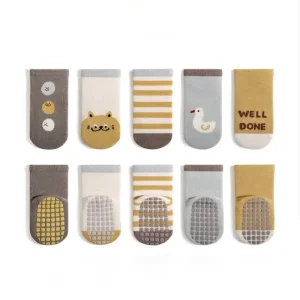
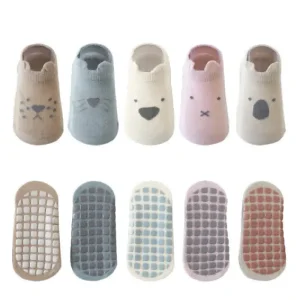
High-friction floor traction socks developed for Montessori centers, indoor toddler play zones, and daycares. Features high-coverage silicone tread soles that prevent slippage on polished surfaces while maintaining machine-wash durability.
Seasonal Climate-Engineered Lines
Ultra-breathable open-mesh pointelle ankle socks for tropical, high-humidity summer markets; knee-high mosquito-deterrent cotton weaves; and thermal terry cushion socks with brushed interior loops for cold winter regions.
Technological Roadmap & Next-Generation Sustainability (2025-2030)
Leading the hosiery transformation with zero-waste digital 3D knitting, bio-circular circular fibers, and smart health-monitoring textiles.
Pioneering Circularity & Smart Pediatric Textiles
As sustainability regulations intensify—including the EU Ecodesign for Sustainable Products Regulation (ESPR) and the mandatory introduction of Digital Product Passports (DPP)—MiFo is actively investing in next-generation hosiery tech.
- Post-Consumer & Bio-Degradable Regenerated Yarns: Integrating Global Recycled Standard (GRS) certified nylon with biodegradable synthetic alternatives that break down harmlessly in municipal landfill environments within 36 months, without generating microplastic residues.
- Waterless Dyeing & Supercritical CO2 Processing: Scaling clean dye technologies that eliminate toxic wastewater runoff, reducing industrial water usage by 85% and saving thermal energy across the dyeing phase.
- Integrated Biometric Sensing Fibers: Our advanced research lab is co-developing conductive, wash-stable silver yarn arrays capable of integrating with low-energy baby vital monitors (tracking skin temperature and pulse variations) directly inside the fabric without rigid electronic boxes.
- Closed-Loop Zero-Waste Knitting: Transitioning our computerized knitting lines to AI-assisted yarn tensioners that cut fiber discard to under 0.8% across the entire knitting floor.
Frequently Asked Questions: Baby Socks Manufacturing
Clear, direct technical answers for supply chain directors, brand founders, and institutional wholesale buyers.
What is the standard Minimum Order Quantity (MOQ) for custom baby socks?
Our standard custom OEM MOQ is 1,000 to 2,000 pairs per design, colorway, and size combination. For clients testing initial market launches or introducing niche boutique prints, we provide flexible low-run programs starting at 500 pairs utilizing stock-dyed combed cotton yarns. For bulk enterprise programs, our production floor easily handles monthly volumes exceeding 5,000,000 pairs.
How do you prevent loose interior thread loops that cause toe tourniquet syndrome?
We deploy two mechanical and structural safeguards. First, our high-needle knitting cylinders run programmed tuck-stitch techniques that secure and reverse all transition floats behind the knit wall. Second, after automated knitting, each sock undergoes manual interior inspection followed by ultrasonic precision trimming, ensuring no exposed float thread exceeds 1.5mm inside the sock toe or foot chamber.
Are your non-slip silicone soles completely phthalate-free and infant-safe?
Yes. We refuse to use cheap plastisol PVC inks that require phthalate plasticizers to maintain flexibility. All MiFo baby grip socks utilize 100% medical-grade, platinum-cured liquid silicone rubber (LSR). Our silicone passes FDA 21 CFR 177.2600 food-contact safety tests, EN 71 Part 3 migration limits, and California Proposition 65 toxicity criteria. It remains soft, flexible, and completely non-toxic even if chewed on by teething infants.
What is the typical production timeline from initial design brief to shipment?
Our rapid prototyping team creates digital 2D/3D knit CAD files within 24 to 48 hours. Physical counter-samples are typically knitted, vulcanized, and dispatched via express courier (DHL/FedEx) within 5 to 7 business days. Upon sample approval and purchase order confirmation, bulk production runs take 20 to 30 calendar days, followed by final needle detection, packaging, and shipping container loading.
Can you provide custom retail packaging, header cards, and barcodes?
Yes, we offer complete turnkey packaging engineering. We manufacture recyclable cardboard header cards with plastic or paper J-hooks, banded sleeves, polybags with anti-suffocation warnings compliant with US/EU safety guidelines, and multi-pair presentation gift boxes. All barcodes (EAN-13, UPC-A, GS1-128) are verified using optical verification equipment to ensure 100% first-pass scannability in warehouse hubs.
What audit documentation can you provide for institutional compliance teams?
We provide full documentation transparency. Clients can inspect our latest BSCI (Business Social Compliance Initiative) audit report, Sedex SMETA 4-Pillar audit, OEKO-TEX Standard 100 Class I certificate, ISO 9001:2015 quality management documentation, and third-party laboratory test reports covering lead, phthalates, colorfastness, and tensile seam burst strength.
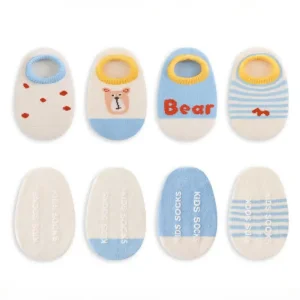
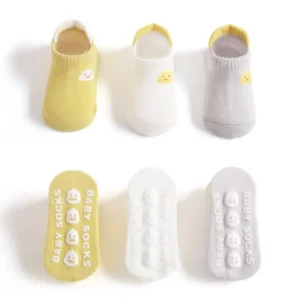
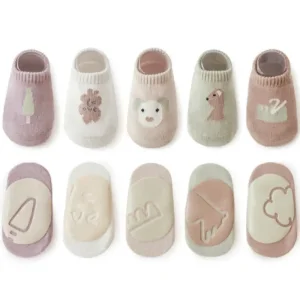
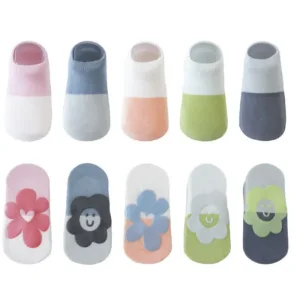
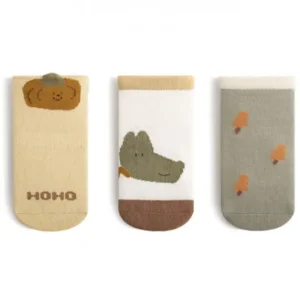
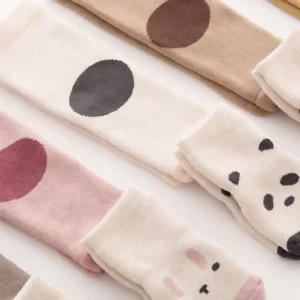
Toddler Floor Grip & Specialty Infant Hosiery Series
Engineered for crawlers and early walkers: silicone traction soles, reinforced heels, anti-mosquito weaves, and cushioned soles for protection.
Initiate Your Custom Baby Socks Technical Brief
Collaborate with our hosiery engineers and compliance consultants. We provide complimentary technical design assessments, fiber specification analysis, and certified prototype sampling within 7 business days.