
Flagship Baby Sock Architectures for Kazakhstan Regional Distribution
Engineered for breathable continental summers and indoor microclimates, utilizing certified long-staple combed cotton and micro-mesh knitting structures.
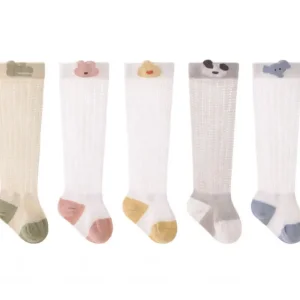
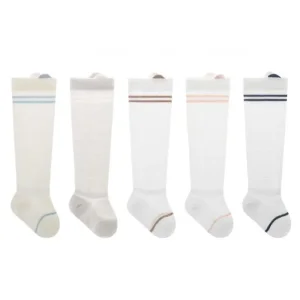
Ultrathin Anti-Mosquito Knee-High Breathable Baby Socks
View Engineering Specs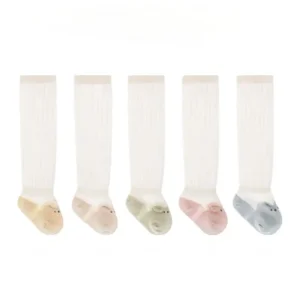
Thermo-Regulating Cooling Cartoon Jacquard Infant Knee Socks
View Engineering Specs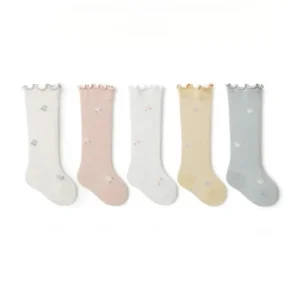
100% Organic Combed Cotton Eco-Certified Infant Knee Socks
View Engineering SpecsNavigating the Kazakhstan Children’s Hosiery Landscape
The Republic of Kazakhstan represents the most dynamic consumer goods economy in Central Asia. Driven by robust national birth rates (averaging over 380,000 to 400,000 newborns annually) and an expanding urban middle class across Almaty, Astana, Shymkent, and Karaganda, parent procurement behavior has undergone a profound qualitative transformation.
Historically dominated by unbranded Turkish and Uzbek open-market bazaars such as Barakholka in Almaty, infant apparel distribution has aggressively transitioned toward institutional modern retail formats. Major multi-store operators such as Marwin/Meloman, Detsky Mir Kazakhstan, and burgeoning domestic retail boutique networks demand rigorous batch-to-batch consistency, barcode compatibility, localized packaging, and full documentation compliance under the Eurasian Economic Union (EAEU).
Concurrently, the rapid digitization powered by platforms like Kaspi.kz and regional marketplaces (Wildberries, Ozon KZ) has empowered independent baby apparel labels to capture unprecedented market share. However, domestic manufacturing within Kazakhstan remains constrained by spinning mill limitations and a lack of high-gauge computerized circular hosiery machinery. Sourcing directly from MiFo’s certified Sichuan manufacturing plant fills this critical industrial void, linking high-precision manufacturing with the direct trade arteries of the Silk Road Economic Belt.
Technical Regulation TR CU 007/2011 Compliance
Exporting baby wear into Kazakhstan mandates total adherence to TR CU 007/2011 ("On the Safety of Products Intended for Children and Adolescents"). For infant products in direct contact with skin (1st layer apparel), strict biochemical limits apply:
- Free Formaldehyde: Undetectable (< 20 mg/kg), strictly verified via gas chromatography.
- Hygroscopicity Threshold: Minimum 9% moisture absorption capability to prevent dermatological micro-trauma.
- Air Permeability: Exceeding 100 dm³/(m²·s) across infant mesh and jersey zones.
- Color Fastness: Grade 4-5 to washing, dry friction, and perspiration without heavy metal migration.
Automated circular knitting machines running 24/7 across our 42,000 m² industrial facility.
Complete batch testing protocols compliant with EAEU EAC safety accreditations.
Direct rail & bonded trucking freight corridors linking Sichuan hubs straight to Almaty depots.
Certified OEKO-TEX Standard 100 Class I long-staple combed cotton and medical silicones.
The Global Infant Hosiery Shift: From Commodity to Precision Textile Engineering
Evaluating material breakthroughs, mechanical automation, and safety metrics setting modern standards across Tier-1 consumer product ecosystems.
Yarn Morphometrics & Fiber Purity
The global industry has abandoned low-twist carded cottons in favor of long-staple combed cotton (staple length > 32mm) blended with covered Lycra (elastane wrapped in double-filament polyamide). This eradicates surface pilling while preventing bare synthetic fibers from irritating vulnerable infant stratum corneum.
Automated Seamless Toe Linking
Traditional Rosso overlock seams produce an abrasive raised ridge inside the toe box that causes pediatric blistering and micro-vascular pinching. MiFo deploys automated "hand-linking" (computerized seamless linking machines) where each needle stitch is looped flush, creating an imperceptible zero-friction interior profile.
Eco-Plastisol & Food-Grade Silicone Grips
As modern parents gravitate toward hardwood, laminate, and porcelain indoor tiling, slip protection is critical. Modern standards eliminate phthalates and PVC in anti-slip applications, switching exclusively to liquid silicone rubber (LSR) screen printing cured through infrared tunnels to resist peel degradation over 60+ commercial wash cycles.
Tailored Application Scenarios Across Kazakhstan’s Microclimates
From sub-zero Siberian air masses in Northern Kazakhstan to the arid steppes of the South, infant sock requirements demand custom engineering.
Astana & Petropavl Extreme Winters (-35°C)
Northern Kazakhstan experiences prolonged periods of severe freezing temperatures. Infant outdoor layering relies on heavy insulated booties, which can cause sweat accumulation followed by rapid chilling.
Industrial Solution: Dual-sided reverse terry loops with a high-ratio Australian merino wool / combed cotton blend. Traps warm micro-air pockets while wicking moisture to keep feet dry and insulated.
Shymkent & Turkistan Arid Summers (+40°C)
Southern regions endure blistering, dry heat accompanied by outdoor insects. Parents require knee-high protection against sunburn, dust, and mosquito bites without causing heat rash or excessive thermal build-up.
Industrial Solution: Ultra-thin 168-needle pointelle mesh knit incorporating certified organic bamboo fiber. Naturally antibacterial, highly breathable, and engineered with non-constricting wide welt elastic ribbing.
Urban Apartments & "Tusau Kesu" Ceremonial Gifts
In modern Almaty multi-story developments with underfloor radiant heating, toddlers walk barefoot or in socks. Additionally, the Kazakh tradition of Tusau Kesu (cutting of the fetters as baby takes first steps) drives demand for luxury ceremonial sock gift sets.
Industrial Solution: Full-coverage silicone traction lugs combined with metallic Lurex accent threading, packed in rigid magnetic gift boxes with localized Kazakh/Russian descriptive typography.
Engineering Specifications for OEM / ODM Baby Socks
Precision mechanical configuration matrix for brand managers, quality assurance teams, and commercial buyers.
| Age / Size Category | Needle Count & Cylinder Size | Recommended Fiber Composition | Grip & Sole Technology | Primary Functional Benefit |
|---|---|---|---|---|
| Pre-Walker / Newborn (0-6M) | 120N – 144N (3.5" Single Cylinder) | 82% Combed Organic Cotton, 15% Nylon, 3% Spandex | Zero-pressure soft sole, non-grip to avoid skin sensitivity | Roll-top relaxed cuff, non-binding micro-circulation preservation |
| Crawling / Infant (6-12M) | 144N – 168N (3.5" Cylinder) | 78% Bamboo Viscose, 18% Polyamide, 4% Elastane | Silicone dot array spanning heel to metatarsal zone | Reinforced dual-knit knee panels for floor friction resistance |
| First-Step Walker (12-24M) | 168N – 200N (3.75" Cylinder) | 75% Long-Staple Cotton, 20% Polyester, 5% Spandex | Full perimeter anti-slip chevron LSR silicone vulcanization | Arch-compression band stabilizing sock position during motion |
| Toddler / Kindergarten (2-4Y) | 168N – 200N (3.75" Cylinder) | 80% Carded Combed Cotton, 17% Nylon, 3% Elastane | Custom branded geometric grip (logos, animal patterns) | High abrasion-resistant nylon reinforced heel and toe pockets |
| Thermal Winter Arctic Edition | 108N – 132N (Terry Knitting) | 45% Merino Wool, 35% Cotton, 17% Nylon, 3% Spandex | High-density thermal terry cushioning with cold-flex grip | Sub-zero thermal barrier certified for continental winter wear |
Technology Roadmap: Intelligent Hosiery Production 2025–2030
How MiFo integrates Industry 4.0 automation, automated visual quality inspection, and zero-discharge dye houses into infant manufacturing.
Optical Sensor Inspection
High-resolution AI vision cameras fitted at machine cylinders detect dropped stitches, broken elastane yarns, or color deviations within milliseconds, pausing knitting to prevent downstream batch defects.
Green Solventless Silicones
Transitioning 100% of our grip printing to zero-VOC water-based biocompatible silicones, eliminating chemical odors that trigger infant olfactory sensitization.
Supercritical CO2 Dyeing
Scaling waterless supercritical carbon dioxide dyeing for synthetic accents, decreasing water consumption by 92% and ensuring dye molecules bond tightly to prevent color migration when chewed.
Biodegradable PLA Wrapping
Automated bagging lines utilizing compostable cornstarch-derived polylactic acid (PLA) film, satisfying EU and progressive EAEU packaging sustainability mandates.
Belt & Road Express: Khorgos Gateway Direct to Almaty & Astana
Logistics reliability is the lifeline of seasonal retail. A delayed shipment of winter terry socks arriving in January instead of October causes massive inventory write-downs. MiFo eliminates marine transit bottlenecks by capitalizing on Sichuan’s position as the primary hub of the China-Europe Railway Express (CR Express).
Departing our manufacturing campus in Sichuan, cargo moves through the Khorgos Land Port Special Economic Zone directly across the Kazakh border, clearing customs under unified EAEU protocols before deconsolidation in Almaty or Astana.
- Transit Time: 7 to 10 days door-to-door from factory exit to Almaty central distribution centers.
- Incoterms Flexibility: FOB China Port, CIF Khorgos, or turnkey DDP (Delivered Duty Paid) directly to your retail warehouse, with Kazakh import VAT and customs clearance handled seamlessly.
- Barcode & Labelling Compliance: Pre-application of EAC mark, DataMatrix digital tracking codes (Chestny ZNAK / IS MET), Kazakh/Russian dual-language care labels, and Kaspi warehouse-ready carton identifiers.
Comprehensive Private-Label Packaging Formats
We convert your vector branding into shelf-ready retail packaging tailored to modern merchandising fixtures.
Frequently Asked Sourcing Questions
Clear, direct answers regarding production capacities, laboratory testing, EAEU import certifications, and custom sample runs.
What is the minimum order quantity (MOQ) for custom baby socks delivered to Kazakhstan?
Our standard production MOQ is 1,000 pairs per design/colorway for custom-knitted jacquard patterns, which can be split across 2–3 standard baby size brackets (e.g., 0-6M, 6-12M, 12-24M). For fully stock-yarn programs or high-frequency retail programs, low-volume trial runs can be negotiated to assist emerging brands building traction on Kaspi.kz.
How does your factory ensure compliance with Eurasian Union TR CU 007/2011 regulations?
Every lot of combed cotton, spun bamboo, and synthetic elastane is pre-certified under OEKO-TEX Standard 100 Class I (safe for infants and babies under 36 months). We formulate our dyeing and silicone grip curing to pass laboratory verification for absence of carcinogenic aromatic amines, free formaldehyde, and phthalates. We supply raw material test reports and Declarations of Conformity documentation for your EAC registration.
Can you manufacture baby socks with dual Kazakh and Russian language packaging?
Yes. Our in-house pre-press packaging team regularly prints dual-language (Kazakh and Russian) tags, header cards, care labels, and master cartons according to the Law of the Republic of Kazakhstan "On Consumer Protection". This includes ingredient disclosure, EAC mark placement, manufacturer and importer details, and local barcode standards (EAN-13).
What are the typical shipping lead times and freight corridors from Sichuan to Almaty?
Sampling and prototyping typically require 5 to 7 business days. Bulk production takes 20 to 30 calendar days depending on order volume. Once dispatched from our factory, rail and bonded road transport through the Khorgos border hub reaches Almaty bonded consolidation terminals in approximately 7 to 12 days, presenting an enormous time advantage over traditional 45-day ocean freight routes.
How do you prevent elastic cuff constriction on newborn and toddler ankles?
We utilize specialized double-covered Lycra run at dialed-in feeder tensions on our 144N/168N machines. We produce single-welt relaxed mock cuffs, roll-top borders, or ribbed pointelle welt structures that distribute circumferential tension uniformly across the calf. This completely eliminates deep pressure rings on delicate baby skin while maintaining enough retention to keep the sock firmly in place.
Are your anti-slip silicone soles safe if infants chew on their socks?
Yes. Our non-slip grips are produced with 100% medical/food-grade Liquid Silicone Rubber (LSR). Unlike low-cost plastisols containing PVC and plasticizer migration risks, our silicone is odorless, vulcanized at high temperatures, chemically inert, and completely non-toxic even if subjected to teething and prolonged salivary contact.
Specialized Infant & Toddler Grip Collections Available for Bulk Order
Engineered for commercial retail programs, indoor play zones, and kindergarten daycare distribution across Kazakhstan.
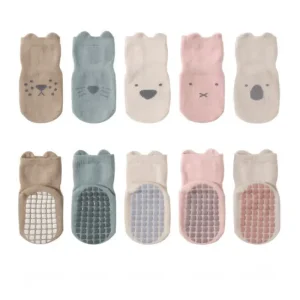
Non-Slip Infant Socks with 3D Novelty Cartoon Animal Designs
View Engineering Specs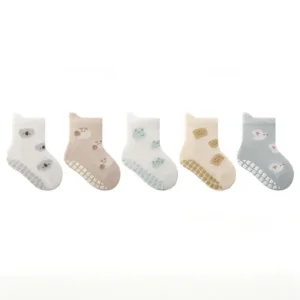
Ultralight Anti-Slip Cotton Socks for Newborn & Toddler Summer Wear
View Engineering Specs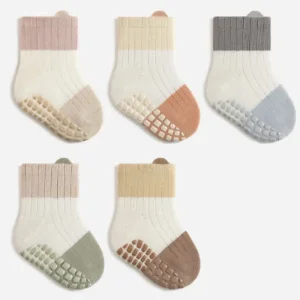
Indoor Floor Traction Anti-Slip Grip Socks for Active Babies
View Engineering Specs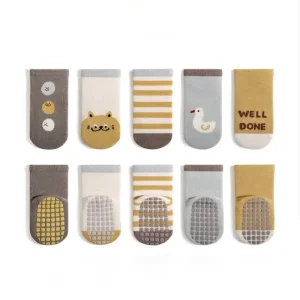
Mid-Tube Floor Grip Socks with Cartoon Characters for Autumn Wear
View Engineering Specs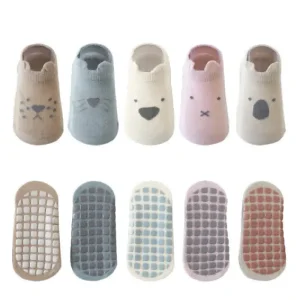
Soft Anti-Slip Newborn Cotton Crew Socks with Medical Silicone Grips
View Engineering Specs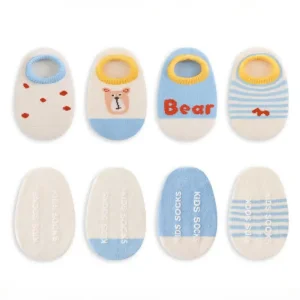
Ergonomic Anti-Slip Cotton Low-Cut Ankle Socks for Active Kids
View Engineering Specs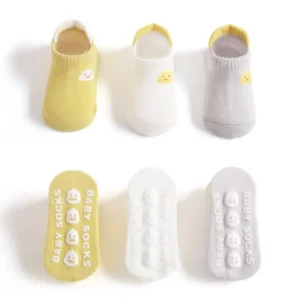
High-Elastic Soft Ankle Walking Socks with Safety Grip Tread
View Engineering Specs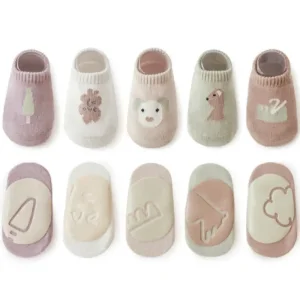
Cute Cartoon Crew Walking Socks with Full Silicone Safety Grips
View Engineering SpecsLaunch Your Custom Baby Socks Line for Kazakhstan Today
Connect directly with Sichuan MiFo Technology’s hosiery engineering team. Request material swatches, custom jacquard digital proofs, and an all-inclusive DDP Khorgos logistics quotation within 24 hours.