
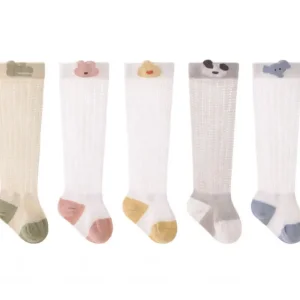
Spring / Autumn Nordic Line
Precision-manufactured utilizing OEKO-TEX Class 1 certified organic yarns, seamless linking, and ultra-gentle elastane containment for high-end Scandinavian baby retailers.
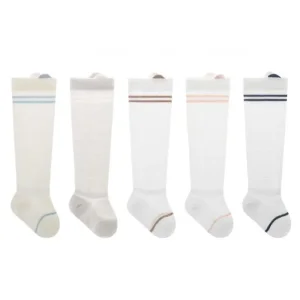
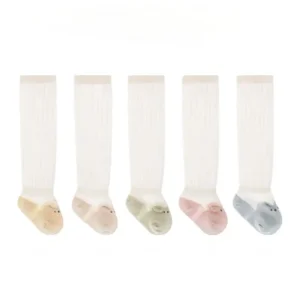
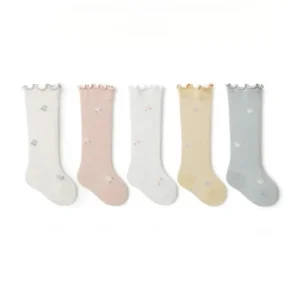
Denmark represents one of the world's most discerning markets for baby goods. B2B buyers must navigate uncompromising eco-labels, circular durability expectations, and distinct Scandinavian design ethics.
The Danish Safety Technology Authority (Sikkerhedsstyrelsen) enforces zero tolerance for loose threads, detachable embellishments, and chemical residues. Our manufacturing processes align strictly with Nordic Swan criteria and REACH Regulation (EC) No 1907/2006 to ensure immediate retail authorization.
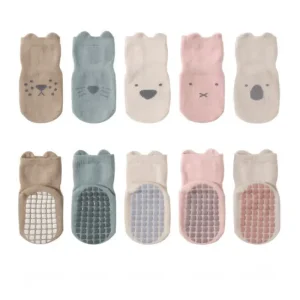
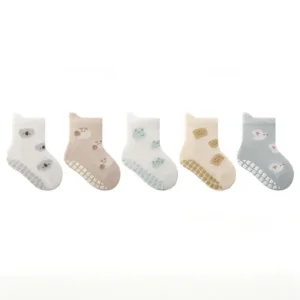
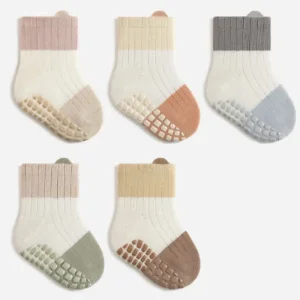
Danish consumers reject overt, garish branding in favor of muted earth tones, soft pastels (sage, oat, terracotta, dusty blue), and functional minimalism. Our design lab collaborates directly with Copenhagen private labels to achieve sophisticated aesthetic cohesion across seasonal capsules.
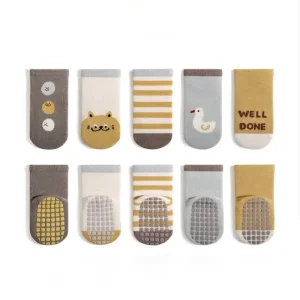
With Danish municipal daycares (Vuggestuer) placing children on lacquered wooden and heated vinyl floors from 10 months old, certified anti-slip footwear is an absolute institutional necessity. Socks must endure heavy 60°C sanitary wash cycles without silicone degradation.
For procurement managers sourcing baby hosiery for Danish retail chains, supermarkets (such as Salling Group and Coop Danmark), and specialty e-commerce boutiques, small manufacturing discrepancies can result in catastrophic recall risks or custom border detentions. Engineering infant socks for Northern Europe demands a multi-tiered approach spanning fiber science, structural knitting, ergonomic safety, and ethical factory transparency.
Infant feet have a dramatically higher sweat gland concentration per square centimeter than adult feet, yet their epidermal barrier is 30% thinner and extraordinarily prone to mechanical friction. Traditional cheap promotional socks utilize coarse 96N or 108N needles that create rough internal loops and uneven yarn distributions.
Our 42,000 m² Sichuan production facility deploys computerized single and double-cylinder Lonati knitting machines running high-density 144-needle and 168-needle configurations for infant lines, extending to 200-needle ultrafine gauges for newborn capsules. This ensures a silky, compact knit surface that minimizes skin friction while establishing superior structural elasticity without overly tight internal rubber threading.
Sourcing directly from our ISO 9001, BSCI, and Sedex-audited manufacturing campus delivers definitive commercial advantages to Scandinavian distributors facing skyrocketing European warehousing and labor overheads:
| Segment | Yarn Composition | Knitting Gauge | Safety Standard | Danish Use Scenario |
|---|---|---|---|---|
| Organic Newborn Crew | 82% GOTS Organic Cotton, 16% Nylon, 2% Spandex | 168N / 200N Seamless | OEKO-TEX Class 1, Zero Bleach | Maternity hospital bags, infant welcome boxes |
| Vuggestue Grip Socks | 78% Combed Cotton, 20% Polyester, 2% Elastane + Non-Toxic Silicone | 144N Terry Sole Cushion | EN 71-3, REACH Annex XVII | Indoor daycare hardwood & linoleum crawling |
| Nordic Winter Thermal | 45% Fine Merino Wool, 35% Organic Cotton, 18% Polyamide, 2% Lycra | 132N / 144N Heavy Terry | Mulesing-Free Certified Wool | Pram napping down to -10°C, stroller footmuffs |
| Summer Breathable Mesh | 80% Bamboo Viscose / Combed Cotton, 18% Nylon, 2% Spandex | 168N Open Knit Rib | Hypoallergenic Reactive Dye | Coastal Danish summer outings, park play |
Understanding local lifestyle habits is what transforms a standard manufacturer into an invaluable strategic partner. In Denmark, outdoor sleeping in prams (barnevogne) is a standard tradition across both private homes and municipal institutions, even during freezing autumn and winter months. Baby socks are not merely aesthetic garments; they form the frontline thermal defense against peripheral frostbite and circulation constriction.
Simultaneously, Danish residences almost universally embrace untreated hardwood or polished parquet flooring paired with underfloor hydronic heating systems. Standard PVC grip dots melt or release chemical odor when exposed to floor heating, while un-gripped socks cause severe slip injuries. Our specialized silicone formulations retain flexible traction coefficient (CoF > 0.65) across temperature fluctuations from -15°C to 45°C without adhesive migration or plasticizer leeching.
From raw combed organic fiber spinning to direct multimodal shipping into the Port of Aarhus or Copenhagen Airport, our infrastructure mitigates commercial and regulatory risks.
Every production lot is documented from yarn supplier lot certificates to knitting technician logs. We supply comprehensive testing reports covering color fastness to saliva, tensile grip shear, and heavy metal testing via accredited third-party laboratories (SGS / Intertek).
Meeting Danish EPR (Extended Producer Responsibility) packaging mandates is effortless. We design and print recycled kraft paper hangtags, FSC-certified header cards, soy-ink vegetable boxes, and biodegradable cornstarch polybags matching your brand’s sustainability pledge.
We handle comprehensive customs clearance paperwork, EUR.1 / REX trade compliance declarations, and optimized DDP / CIF shipping options into Denmark through established maritime routes, rail freight, and express air corridors.
Select from our proven, laboratory-tested base designs for customized branding, modified yarn ratios, or bespoke pattern knitting for Denmark and international distribution.
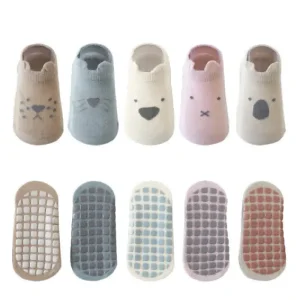
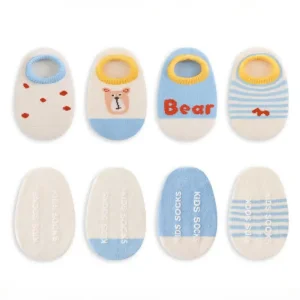
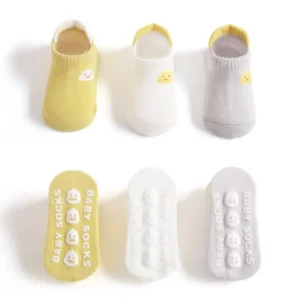
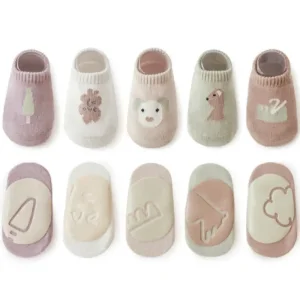
Clear, direct answers regarding compliance, lead times, MOQs, testing protocols, and custom private label manufacturing.
We enforce strict mechanical and chemical quality controls specifically designed for EU infant footwear. Mechanically, every baby sock utilizes automatic toe linking without interior yarn ridges, eliminating the risk of thread wrapping around toes (toe-tourniquet syndrome). Chemically, our dyeing and yarn preparation facilities adhere to OEKO-TEX Standard 100 Class 1 (testing for heavy metals, formaldehyde under 16 ppm, azo dyes, and pH skin compatibility) and EU REACH Annex XVII.
For custom private-label projects requiring bespoke dyeing, unique silicone grip patterns, and customized FSC packaging, our standard MOQ is 1,200 pairs per style. This can be broken down across multiple size segments (e.g., 0-6 months, 6-12 months, 1-3 years) and complementary Scandinavian pastel color combinations to optimize stock distribution.
Yes. We utilize premium, liquid silicone rubber (LSR) cross-linked through high-temperature curing tunnels. Our grips are 100% free of phthalates, PVC, and volatile solvents. They pass repeated commercial 60°C wash cycles without detachment, embrittlement, or melting, making them completely compatible with Danish daycare sanitation standards and residential underfloor heating systems.
Absolutely. We maintain certified supply chains for GOTS (Global Organic Textile Standard) combed cotton and non-mulesed merino wool. We provide transaction certificates (TC) upon request with your production run, allowing Danish brands to legally substantiate sustainability claims under strict Danish Consumer Ombudsman (Forbrugerombudsmanden) green marketing guidelines.
Pre-production physical samples are knitted and delivered within 7 to 10 working days. Bulk production takes 25 to 35 days following sample approval. For ocean shipping into the Port of Aarhus or Copenhagen, maritime transit typically requires 28 to 34 days, while urgent replenishments can be routed via air cargo in 5 to 7 days.
Connect directly with our senior hosiery engineering and export team. Receive custom digital mockups, yarn specification sheets, and competitive B2B factory pricing within 24 hours.