
High-Spec Baby Socks Engineered for African & Global Sourcing
Curated from our ISO and BSCI audited knitting facilities, these priority styles feature calibrated elastic cuffs, reinforced friction points, and OEKO-TEX certified yarns optimized for neonatal and toddler wear.
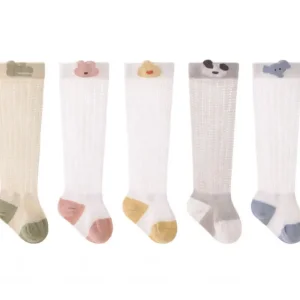
Custom Long Tube Breathable Seamless Socks (Ethiopia High-Plateau All-Season Spec)
144N single-cylinder combed cotton construction designed with 0-pressure ribbing to ensure proper microcirculation at higher altitudes.
View Specifications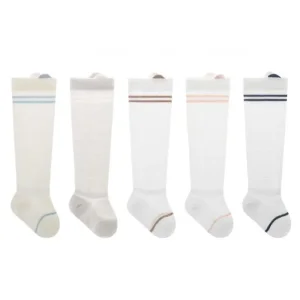
Thin Baby Knee High Mosquito Proof Socks (Sub-Saharan Vector-Shield Edition)
Ultra-dense gauge interloop knitting provides natural barrier coverage without toxic chemical topical treatments for tropical and lowland zones.
View Specifications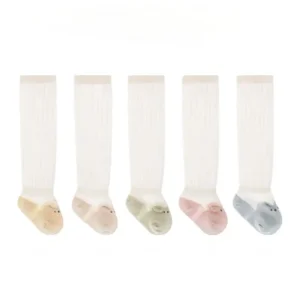
Cooling Cartoon Infant Knee-High Socks (Addis Ababa Ventilated Mesh Series)
Engineered instep aeration panels facilitate rapid thermo-evaporation during diurnal temperature swings in the East African Rift region.
View Specifications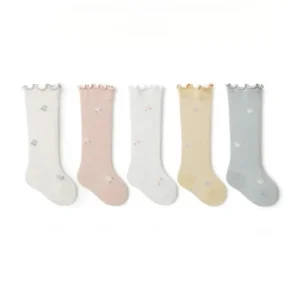
100% Organic Cotton Knee High Socks (Ethically Cultivated Rift-Valley Fiber Grade)
Zero pesticide combed organic ring-spun cotton tested to Class 1 OEKO-TEX standards for premature and sensitive infant epidermis.
View SpecificationsEthiopia's Textile Ecosystem & The Baby Hosiery Sourcing Shift
A strategic breakdown of manufacturing infrastructure across the Bole Lemi, Hawassa, and Dire Dawa industrial corridors, evaluating tariff frameworks and bilateral production models.
Industrial Parks Modernization
Over the last decade, the Ethiopian Industrial Parks Development Corporation (IPDC) has built state-of-the-art textile clusters in Hawassa, Bole Lemi, and Kombolcha. These zero-liquid-discharge (ZLD) certified facilities feature advanced water-recycling and uninterrupted hydro-power from the Grand Ethiopian Renaissance Dam (GERD), bringing low-carbon baseload manufacturing to hosiery brands.
AfCFTA & Trade Duty Arbitrage
With the operational rollout of the African Continental Free Trade Area (AfCFTA), production within Ethiopia unlocks preferential tariff-free access across 54 African countries. Concurrently, duty-free trade corridors into the European Union under the Everything But Arms (EBA) agreement provide a 12% landed cost edge over traditional Southeast Asian hosiery suppliers.
Domestic Fiber vs. Tech Import
While Ethiopia produces over 55,000 metric tons of cotton annually across the Awash and Omo river basins, high-performance baby hosiery relies on a dual-hub framework. Domestic cotton is combined with imported low-denier covered elastane (Lycra®) and medical-grade organosilicon to maintain structural rebound across washing cycles.
Pediatric Biomechanics & Yarn Construction Matrix
Infant dermis is roughly 30% thinner than adult skin, necessitating tighter friction controls, chemical inertness, and precise elastic retention thresholds.
The Mechanics of Pressure-Free Elasticity
A primary failure mode in generic infant socks is vascular constriction around the saphenous vein, caused by uneven distribution of tension within high-denier elastic cuffs. Our automated knitting infrastructure leverages computerized Italian Lonati and Santoni cylinders running 108N, 120N, and 144N configurations specifically calibrated for delicate calves.
By blending 32S/1 or 40S/1 long-staple combed cotton with custom double-covered 20/75 spandex yarns, we keep sock-top pressure below 8.5 mmHg, well within clinical thresholds for pediatric comfort while ensuring non-slip retention during vigorous crawling.
- Hand-Linked Seamless Toes: We deploy automated Rosso linkers and precision manual linking to eliminate protruding seam bumps that cause abrasion blister trauma in premature babies.
- Zero Formaldehyde & Azo Dye Ban: Dyes are formulated without aromatic amines, chlorinated phenols, or heavy metal mordants, complying strictly with Ethiopia ECAE standards and EU REACH Annex XVII.
- Low-Thermal Conductance Fibers: For high-altitude urban centers like Addis Ababa (2,355m), we incorporate multi-channel hollow cotton to retain core foot temperature without inducing sweat dermatitis.
Medical-Grade Food-Contact Sole Grips
When infants transition from crawling to autonomous standing, biomechanical balance relies on sensory feedback from the plantar mechanoreceptors. Traditional industrial plastisol grip prints release volatile phthalates (DEHP, DBP) and become brittle after standard laundry cycles.
Our Ethiopian distribution programs utilize high-viscosity liquid silicone rubber (LSR) dispensed through high-temperature curing tunnels. This cross-linked polymer matrix provides an exceptional coefficient of dynamic friction (μ > 0.85) on polished terrazzo, hardwood, and smooth tile flooring commonly used in modern residential developments across Africa.
- Tensile Tear Resistance: Grip dots withstand shear forces exceeding 45 Newtons, preventing micro-fragment shedding that poses ingestion hazards.
- Breathable Grip Dispersion: Dot spacing is algorithmically mapped to leave transverse arch venting channels unblocked, preventing localized sweat buildup.
- Thermal Stability: Retains elasticity across hot lowland savannah climates (+42°C) and highland winter chill down to 4°C without hardening or tackiness.
| Target Age Group | Needle Count & Gauge | Yarn Architecture (Core/Cover) | Grip Compound Spec | Clinical Compliance Baseline |
|---|---|---|---|---|
| Preemie / Newborn (0-3M) | 108N Single Cylinder / 14 Gauge | 100% Combed Organic Cotton (40S) + 15D Nylon Core | Zero-Grip (Ultra-Soft Seamless Sole) | OEKO-TEX Class 1, ISO 14184-1 (Formaldehyde Free) |
| Infant Crawler (3-12M) | 120N Terry / Single Cylinder | 82% Combed Cotton, 15% Nylon, 3% Spandex | Plantar Multi-Dot LSR Silicone | CPSIA Sec. 101/108, EN 71-3 (Mechanical Pull Test) |
| First-Steps Toddler (12-24M) | 144N Double Cylinder | 78% Cotton, 18% Polyamide, 4% Covered Lycra | Full-Sole Anatomical Tread Grip | ASTM F963-17 / Ethiopian ES 3165:2021 Safety Code |
| Active Child (2-4 Years) | 168N High-Density Needle | 75% Organic Ring-Spun, 20% Poly, 5% Spandex | Directional Chevron High-Wear LSR | BSCI Verified, AATCC 135 Dimensional Stability |
Multimodal Logistics: Djibouti Port to Addis Ababa Corridor
How our dual-hub production system eliminates supply bottlenecks, accelerates customs transit, and keeps landed baby sock freight costs predictable.
Ethio-Djibouti Railway (EDR)
By routing containerized shipments through the electrified 759 km Addis Ababa–Djibouti Railway corridor, port dwell times drop from 18 days by conventional highway trucking to under 20 hours direct to Modjo Dry Port. This cuts inbound raw yarn transit by 62% and significantly reduces intermediate carbon emissions.
Dual-Hub Manufacturing Strategy
To hedge against regional foreign exchange shortages and raw material volatility, our enterprise model combines rapid sample iterations and high-density Jacquard knitting in our Chinese headquarters with bulk packaging, finishing, and regional African order fulfillment, ensuring uninterrupted inventory continuity.
Customs Bonded Warehousing
Our operations leverage Modjo and Bole Lemi Special Economic Zone (SEZ) bonded warehousing facilities. International retail clients can position semi-finished baby hosiery inventory duty-free, applying custom branding, header cards, and localized Barcode packaging on-demand for swift regional distribution.
High-Velocity Wholesale Infant & Toddler Hosiery
Built on automated high-speed machinery, these styles support private-label branding, customized silicone grips, and tailored yarn compositions for global baby brands.
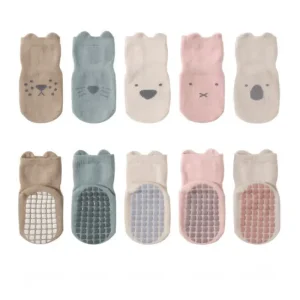
Non-Slip Infant Socks Cartoon Animal Design (East Africa Nursery Grip Series)
High-friction silicone animal prints on the sole prevent floor slipping while maintaining soft, comfortable foot contact for daily toddler play.
View Specifications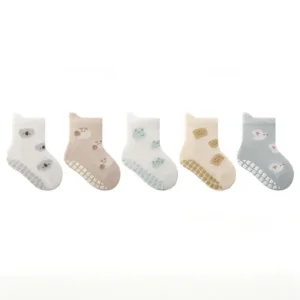
Anti-Slip Newborn Toddler Summer Socks (Lowland Climate Breathable Sole)
Constructed with an open-cell porous weave for warm environments, speeding evaporation to help prevent heat rashes and fungal irritations.
View Specifications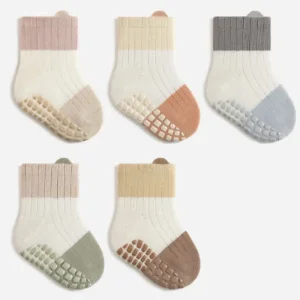
Custom Indoor Floor Anti-Slip Baby Socks (Bole Lemi High-Traction Silicone)
Features food-contact tested silicone treads covering heel-to-toe strike zones, designed for infant playrooms and tiled daycares.
View Specifications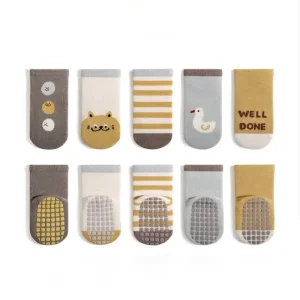
Mid-Tube Floor Grip Baby Socks Cartoon Character (Hawassa Export Grade)
Mid-tube silhouette with multi-color jacquard patterns; yarn is pre-washed and tumble-treated to keep residual shrinkage under 3.5%.
View Specifications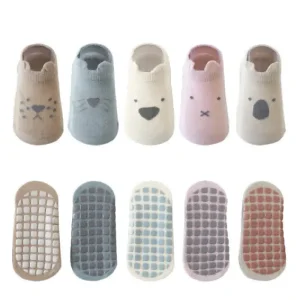
Soft Anti-Slip Newborn Cotton Crew Socks (Clinical Hospital Maternity Spec)
Hypoallergenic combed cotton with hand-linked flat toe seams, engineered specifically for post-delivery maternity hospital supply packs.
View Specifications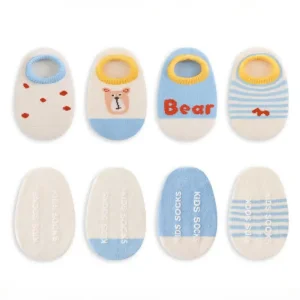
Colorful Soft Baby Ankle Socks Anti-Slip (AfCFTA Duty-Optimized Distribution Grade)
Lightweight low-cut profile with ergonomic heel Y-gore pockets that stay firmly seated on active feet without slipping downward.
View Specifications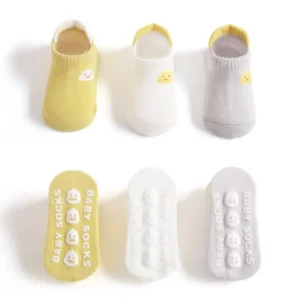
Non-Slip Soft Ankle Baby Toddler Socks (Reinforced Elasticity Zero-Bind Ankle)
Soft-stretch top welt prevents calf marks and constriction while maintaining a dependable grip during high-motion active play.
View Specifications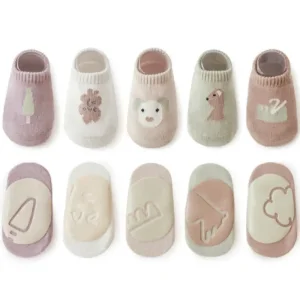
Non-Slip Toddler Walking Crew Socks (ECAE Standard Anti-Slip Performance)
Thickened terry cushioning along the metatarsal and heel absorbs landing shock on hard domestic floors, building early walking stability.
View SpecificationsECAE, OEKO-TEX Standard 100 & Global Traceability
Stringent compliance protocols to ensure institutional safety across international infant footwear and apparel regulations.
Ethiopian Standards Agency (ECAE)
All finished infant wear undergoes pre-export physical and chemical testing under Ethiopian Standard ES 3165:2021. Audited metrics include colorfastness to saliva, alkaline perspiration testing, and strict absence of free formamide blowing agents in applied silicone treads.
CPSIA Section 101/108 & EU REACH
Baby socks destined for North America and European retail are certified to carry less than 90 ppm total lead content in all surface coatings and under 0.1% of listed phthalates (DINP, DIDP, DnOP). We provide batch-level third-party testing reports via SGS, Intertek, and TÜV Rheinland.
Social & Fair-Wage Audit Baseline
Our manufacturing and logistics partners operate under full social accountability frameworks, holding verifiable BSCI (Business Social Compliance Initiative) and Sedex SMETA 4-Pillar audits. We enforce fair labor practices, safe working conditions, and complete prohibition of child labor.
Total Cost of Ownership (TCO): Ethiopia Hub vs. Alternative Regions
A data-driven cost comparison for wholesale baby sock procurement, assessing labor arbitrage, trade tariffs, freight corridors, and delivery reliability.
| Evaluation Parameter | Ethiopian Industrial Hub | Coastal China (Direct Hub) | South Asian Hub (Pakistan / India) |
|---|---|---|---|
| Direct Labor Cost Index | Lowest $0.35 - $0.55 / hr | $3.20 - $4.50 / hr | $0.95 - $1.35 / hr |
| Electricity & Power Stability | $0.035 / kWh (GERD Hydro) | $0.09 - $0.12 / kWh | $0.11 - $0.15 / kWh (Frequent Peaking) |
| Tariffs to EU (EBA / GSP) | 0% Duty (Everything But Arms) | 12.0% MFN Duty Rate | 9.6% - 12.0% (Varied Duty) |
| Tariffs to African Union (AfCFTA) | 0% Preferential | 15% - 35% Cross-Border Duty | 20% - 35% Import Tariffs |
| Ocean Lead Time to EU/US East Coast | 14-19 Days (via Djibouti Port) | 28-35 Days (via Malacca Strait) | 22-26 Days (via Indian Ocean) |
| Advanced Jacquard / Silicone Agility | High (via Hybrid Dual-Hub) | Exceptional (Native Machine Clusters) | Moderate (Yarn dependent) |
Frequently Asked Sourcing & Manufacturing Questions
Detailed technical answers for procurement directors, product designers, and private-label buyers sourcing baby socks in the East African economic zone.
Q: What is the Minimum Order Quantity (MOQ) for custom baby socks?
Our baseline production runs start at 1,200 pairs per style/colorway/size. For custom Pantone-dyed organic yarns or complex molded silicone grip geometries, standard entry thresholds begin at 3,000 pairs to optimize automated machine setups and minimize setup scrap waste.
Q: Can we incorporate Ethiopian raw cotton into private-label collections?
Yes. We can integrate gin-certified Ethiopian combed cotton into ring-spun yarns for bulk nursery programs. To maintain elasticity, wash-cycle retention, and skin comfort, we balance local fiber with premium core elastane yarns.
Q: How do you prevent thread unraveling and loose loops inside baby socks?
Loose floating threads pose severe tourniquet syndrome risks to infant toes. We mandate automated thread-trimming down to < 2mm, followed by 100% manual flip-side quality inspection before boarding and polybag sealing.
Q: What is the average sampling and lab-dip lead time?
Digital technical flat-knitting proofs are generated within 48 hours. Physical yarn lab dips (Pantone TCX matching) require 5 to 7 business days, and fully knit pre-production samples with silicone grip tooling take 10 to 14 days before bulk order signoff.
Q: What packaging solutions are available for international retail distribution?
We provide retail-ready cardboard header cards with FSC-certified recycled pulp, self-adhesive OPP/CPE matte soft bags, custom 3-pack or 6-pack gift boxes with clear PET windows, and master cartons lined with silica desiccants for ocean transit moisture control.
Q: Which HS codes are applied for Ethiopian customs clearance and export declaration?
Baby socks and booties are classified under HS Code 6115.95 (Hosiery, knitted or crocheted, of cotton) or HS Code 6111.20 (Babies' garments and clothing accessories of cotton), qualifying for targeted tariff exemptions under major bilateral regional treaties.
Q: How are non-slip silicone grips tested for adhesion and baby safety?
Silicone grip dots undergo 50 mechanical wash cycles at 40°C followed by high-velocity tensile pull tests (≥ 45N). They are also certified non-cytotoxic, formaldehyde-free, and skin-neutral according to OEKO-TEX Appendix 4 infant parameters.
Q: How does the China-Ethiopia twin-hub manufacturing model work?
Technical R&D, complex Jacquard master programming, and functional chemical treatments are handled across our advanced domestic facilities, while high-capacity finishing, multi-pack assembly, and pan-African / European export dispatch leverage Ethiopian corridor efficiencies for cost and tariff advantages.
Initiate Your Custom Baby Sock Sourcing Project
Partner with an audited manufacturing leader producing over 200 million pairs annually. Request physical yarn swatches, review our engineering portfolio, or submit your private-label tech pack for a rapid quotation.
Send Inquiry Now