
South Africa Climate-Optimized Baby Socks Lineup
Breathable, mosquito-resistant, non-slip engineered knits configured for South Africa's diverse seasonal shifts between Highveld dry winters and coastal humid summers.
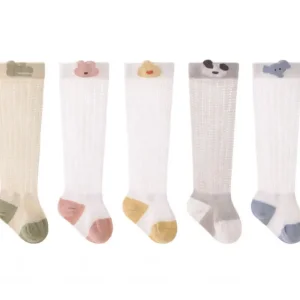
South Africa Spring/Summer Long Tube Breathable Seamless Baby Socks
View Specifications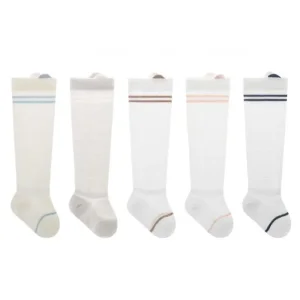
Outdoor Bushveld Mosquito-Proof Knee-High Cotton Thin Baby Socks
View Specifications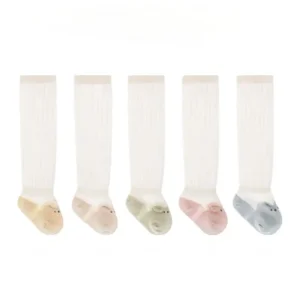
High-Quality Cooling Cartoon Knee-High Infant Socks for Durban Subtropics
View Specifications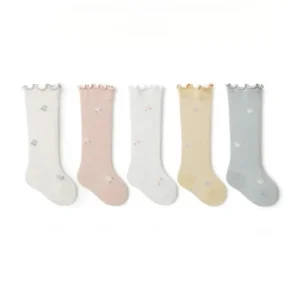
100% Organic Combed Cotton Eco Knee-High Baby Socks (Woolworths Grade)
View SpecificationsThe South African Commercial & Industrial Hosiery Landscape
The infant apparel sector across the Republic of South Africa (RSA) represents one of the most commercially resilient segments in Sub-Saharan Africa. Characterized by a dual retail ecosystem—comprising national corporate retail chains (e.g., PEP Stores, Ackermans, Mr Price Group, Woolworths, and Truworths) alongside an expanding tier of boutique e-commerce aggregators and regional pharmacy chains like Dis-Chem and Clicks—demand for infant apparel and baby hosiery has sustained an upward trajectory despite macroeconomic headwinds.
However, the domestic South African textile manufacturing sector faces chronic structural constraints. Ongoing operational vulnerabilities related to municipal power instability (load shedding), elevated logistical tariffs across Transnet freight corridors, and a lack of specialized ultra-fine gauge computerized knitting machinery (144N, 168N, and 200N baby sock cylinders) have compelled national retail buyers and institutional importers to partner directly with tier-1 overseas manufacturing facilities. For commercial sourcing managers operating out of Johannesburg, Durban, and Cape Town, securing an agile, vertically integrated Chinese production partner is no longer merely an exercise in cost optimization—it is an absolute prerequisite for inventory security and margin stability.
Under the International Trade Administration Commission of South Africa (ITAC) tariff frameworks, textile apparel imports are scrutinized under stringent customs classifications. Achieving commercial success in this regulatory environment requires a manufacturing partner capable of optimizing yarn content documentation, ensuring full compliance with the South African Bureau of Standards (SABS), and maintaining clear fiber labeling under SANS 10235 guidelines. Our manufacturing operation directly bridges this gap, providing export-ready shipments fully harmonized for seamless entry through Durban (Pier 1 and Pier 2) and Cape Town Container Terminals.
SABS & SANS Compliance
Every lot undergoes rigorous fiber composition certification, azo-free dye validation, and safety verifications matching South African child apparel directives.
Durban Port Direct Logistics
Optimized consolidated container load planning (FCL/LCL) through major shipping lines, drastically trimming transit latency to South African regional distribution hubs.
Value Tier to Luxury Specs
Capable of supporting aggressive high-volume value retail price-points (PEP/Ackermans specifications) up to high-density organic combed collections (Woolworths quality).
Localized Application Scenarios: Engineering for South African Homes & Outdoors
A generic baby sock engineered for European or North American domestic environments often fails in South Africa due to distinct architectural styles, flooring materials, and extreme regional climate variations. Our product engineering department develops custom solutions informed by real-world usage patterns across the country:
1. Architectural Flooring Realities: Porcelain Tile & Polished Concrete Traction
Modern South African residential architecture extensively employs glazed porcelain tiles, polished screed, and natural slate flooring to mitigate hot summer conditions. For infants in the crawling and early cruising stages (6 to 24 months), these ultra-smooth surfaces present severe slipping hazards. Standard PVC dotting frequently hardens, loses friction, or peels away during hand washing. Our manufacturing platform integrates medical-grade liquid silicone rubber (LSR) screen dispensing. These anti-slip grip matrices maintain dynamic traction even on cool polished surfaces while resisting degradation from South Africa’s mineral-rich water supplies.
2. Climatic Diversity: Highveld Dry Winters vs. Coastal Humid Summers
South Africa’s climatic zones require highly differentiated fabric compositions:
- The Gauteng Highveld (Johannesburg, Pretoria): Winter nights routinely plunge toward freezing temperatures (0°C to 5°C) with dry atmospheric conditions and zero municipal central heating. Infant socks engineered for this market require high-density inner terry looping (cushioned sole) spun from long-staple combed cotton blended with micro-polyester to trap body warmth without constricting delicate circulation.
- KwaZulu-Natal (Durban Coast) & Lowveld: Summer temperatures bring high relative humidity and peak heat. Baby socks for this market must prioritize micro-mesh venting panels on the instep, seamless toe closures (hand-linked finishing) to prevent chafing, and high capillary wicking yarns that rapidly disperse sweat.
- Western Cape (Cape Town): Characterized by wet, blustery Mediterranean winters, necessitating moisture-repelling yet thermo-insulating yarn constructions that dry quickly on household washing lines.
3. Outdoor & Bushveld Protection: Insect-Deflective Knee-High Designs
South African families have an outdoor lifestyle centered around coastal camping, game reserves, and suburban gardens. Young toddlers require reliable protection against biting midges, ticks, and mosquitoes. Our long-tube, knee-high baby socks feature reinforced, high-elastic ribbing that grips the upper calf softly without cutting into circulation, keeping the lower legs protected during outdoor exploration.
| Target Segment | Needle Count & Gauge | Material Engineering | Grip & Functional Chemistry | Target Retail Channel |
|---|---|---|---|---|
| Crawling/Pre-Walker Grip Socks | 144N / Single Cylinder | 80% Combed Cotton, 17% Nylon, 3% Spandex | Bio-compatible High-Tack Silicone Grid | Baby Specialists, Online Boutiques |
| Highveld Thermal Winter Terry | 108N / 120N Heavy Cushion | 85% Compact Cotton, 12% Polyester, 3% Elastane | Full Footbed Non-Slip Hexagonal Print | Department Stores, Retail Chains |
| Subtropical Mesh Ventilated Ankle | 168N / 200N Ultra-Fine | 75% Organic Bamboo Viscose, 22% Polyamide, 3% Spandex | Breathable Instep Knit, OEKO-TEX Standard 100 | Pharmacy Chains (Clicks, Dis-Chem) |
| Anti-Mosquito Knee-High Socks | 144N Elastic Ribbed Tube | 82% Mercerized Cotton, 15% Nylon, 3% Lycra | High-Density Knit Deflection, Non-Toxic Finish | Outdoor & Lifestyle Retailers |
Chinese Factory Supply Chain Resilience & Manufacturing Efficiencies
In a globalized procurement environment where South African importers face supply chain disruptions, fluctuating exchange rates (ZAR/USD volatility), and tight retail delivery windows, the vertical operational architecture of our Sichuan and coastal manufacturing facilities provides an unmatched competitive advantage.
While smaller domestic operations struggle with yarn replenishment cycles and fragmented subcontractor dependency, our 42,000 m² smart manufacturing base consolidates every phase of hosiery production under a singular, ISO9001-certified operational chain:
Computerized Knitting Precision
Our fleet of fully automated Lonati and Sangiacomo computerized hosiery machines delivers consistent stitch tension, flawless jacquard articulation, and zero loose thread loops inside the toe pouch that could cause tourniquet syndrome in infants.
Autonomous Power Backup
Our plants operate on continuous, unthrottled green energy and dedicated industrial backup systems. Unlike regional facilities subject to unpredictable downtimes, our continuous 24/7 manufacturing lines ensure guaranteed dispatch dates for critical seasonal drops.
Automated Seamless Linking
Traditional manual sock linking creates a rigid ridge over the infant's toes. We utilize high-speed optical automated Rosso toe linking and genuine hand-linked seamless seams, guaranteeing friction-free comfort for tender baby toes.
Furthermore, our scale-driven raw material procurement cushions South African enterprise buyers from market price swings. We procure premium OEKO-TEX certified combed cotton slivers, modal fibers, and high-tensile Invista Lycra in multi-hundred-ton batches. This bulk purchasing power enables us to deliver factory-direct pricing that allows South African retailers to maintain healthy gross margins even after accounting for import duties, shipping freight, and inland transportation.
Global Industry Trends & Technology Roadmap: Future-Proofing Hosiery
The global baby apparel hosiery sector is undergoing a paradigm shift driven by stringent consumer chemical screening, demands for circular sustainability, and the integration of functional smart textiles. South African consumer brands that adopt these global innovations gain an immediate first-mover advantage in the domestic retail marketplace.
1. Eco-Safe Chemistry and Non-Toxic Grip Formulations
Historic baby sock production often utilized phthalate-heavy plastisol for anti-slip patterns. Under updated global benchmarks (including European REACH, US CPSIA, and emerging SABS safety revisions), endocrine-disrupting plasticizers are completely prohibited. Our factory leads the sector with solvent-free, food-grade liquid silicone vulcanization. This process ensures zero heavy metal leaching, zero phthalate emissions, and extraordinary wash durability—retaining its anti-slip grip even after 50+ intensive commercial wash cycles.
2. Sustainable Fiber Integration: Organic Cotton & Botanical Cellulosics
South African mothers are increasingly discerning, mirroring global European trends toward chemical-free garments. We support private-label brands transitioning into GOTS-certified (Global Organic Textile Standard) cotton yarns, OEKO-TEX Standard 100 Class I certified spun yarns (safe for oral contact by infants), and naturally hypoallergenic bamboo rayon that provides natural thermoregulation and antibacterial properties.
3. Future Horizon: Biometric & Temperature-Responsive Fibers
Looking ahead across our R&D technical roadmap, we are piloting phase-change microencapsulated yarns capable of absorbing excess thermal energy during warm daytime play and releasing it when temperatures plummet in unheated South African bedrooms. This smart thermoregulation minimizes sleep disruptions caused by cold extremities in young infants.
Quality Assurance Architecture & South African Customs Compliance
Importing textile goods into South Africa demands rigorous compliance management to prevent customs impoundment at the port of entry or costly retail product recalls. Our manufacturing and export management framework provides complete risk mitigation through each stage of production:
9-Point Metal Needle Detection
Every single pair of baby socks passes through automated, ultra-sensitive 9-point magnetic needle detection systems to guarantee zero broken needle fragments remain within the knit matrix.
70-Newton Pull-Force Testing
Any 3D decorative appliqués, ears, bows, or embroidered elements undergo calibrated pneumatic pull tests exceeding 70 Newtons to eliminate detachment and infant choking hazards.
Customs Documentation Mastery
Accurate HS Code classifications, precise fiber breakdown certificates, and bilingual labeling compliance (English/Afrikaans care symbols) facilitate rapid SARS customs clearance.
We work directly with major logistics forwarders serving Durban, Ngqura, Port Elizabeth, and Cape Town, as well as air freight handling via OR Tambo International Airport (Johannesburg) for rapid sample approvals and seasonal inventory replenishment.
Frequently Asked Questions: Sourcing Baby Socks for South Africa
Practical answers to the operational, technical, and regulatory questions South African procurement directors and brand founders ask before placing bulk purchase orders.
For fully customized OEM designs featuring custom jacquard patterns, Pantone-matched dyed yarns, and custom silicone grip molding, our standard production MOQ is typically 1,000 to 2,000 pairs per colorway and size. For catalog base styles with customized packaging (branded header cards, belly bands, or organic gift boxes), we can accommodate trial runs starting at 500 pairs per style, enabling emerging South African baby brands to test market demand with minimal capital exposure.
Under South African customs code, finished knitted textile garments can attract significant duty structures. While duty rates are mandated by ITAC and SARS, our export documentation specialists optimize commercial declarations by ensuring accurate HS Tariff Classification (typically under Chapter 6111 for babies' garments and clothing accessories of textile materials). Furthermore, our aggressive factory-direct unit pricing substantially lowers the dutiable value base, reducing your total landed cost in South African Rands (ZAR).
From pre-production sample approval, bulk manufacturing typically requires 20 to 30 calendar days depending on order volume. Ocean freight transit from Chinese ports (Shanghai/Ningbo/Shenzhen) to the Port of Durban takes approximately 22 to 28 days via direct liner services. Transit to Cape Town takes approximately 26 to 32 days. For urgent seasonal launches or replenishment, consolidated air express shipments directly into OR Tambo (JNB) or Cape Town International (CPT) can be delivered within 5 to 7 business days.
Yes. Our factory operations undergo recurring annual third-party ethical social audits under BSCI (Business Social Compliance Initiative) and Sedex (SMETA). Every batch of baby socks is produced strictly adhering to OEKO-TEX Standard 100 Class I guidelines, certifying that the knits are completely free of formaldehydes, toxic heavy metals, nickel, and banned aromatic amine azo dyes. Comprehensive laboratory testing dossiers from accredited agencies like SGS or Intertek are readily available to accompany retail client audits.
Absolutely. We provide complete end-to-end retail packaging services. We routinely print and apply retail header cards with EAN-13 barcodes, multi-packs with branded ribbon wraps, FSC-certified recycled paper hanging tags, and retail-ready display cartons. Packaging includes all mandatory South African care labeling symbols, fiber breakdowns, and importer address disclosures configured exactly to your retail specifications.
High-Velocity Wholesale Baby & Toddler Socks Collection
Engineered for high-volume retail rotation: Proven anti-slip floor grips, novelty designs, and premium cotton blends ready for South African private label customization.
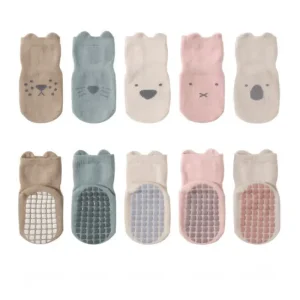
Safari Safari-Animal Novelty Non-Slip Infant Socks for South Africa
View Specifications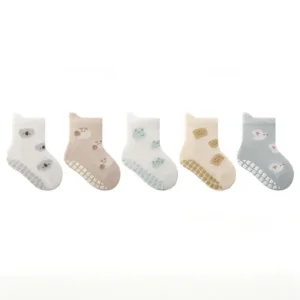
Summer Anti-Slip Lightweight Kids Socks for Coastal Durban & Cape Town
View Specifications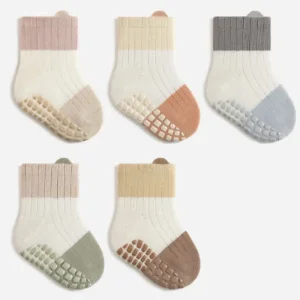
Indoor Floor Non-Slip Colorful Baby Socks for Polished Tile Surfaces
View Specifications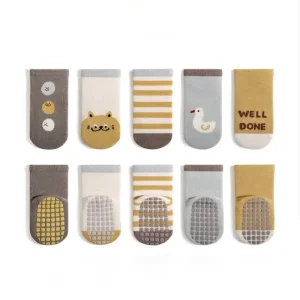
Highveld Autumn/Winter Floor Grip Mid-Tube Socks with Playful Characters
View Specifications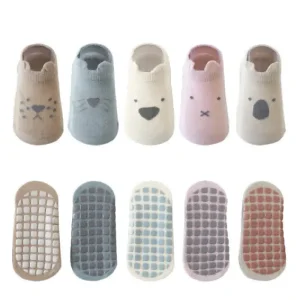
Newborn Ultra-Soft Cotton Crew Socks with Medical-Grade Silicone Grips
View Specifications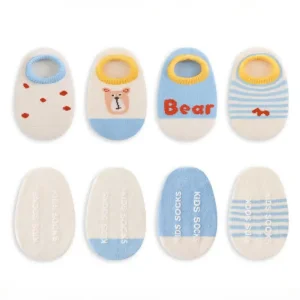
Colorful Soft Cotton Baby Ankle Socks for High-Volume Retail Chains
View Specifications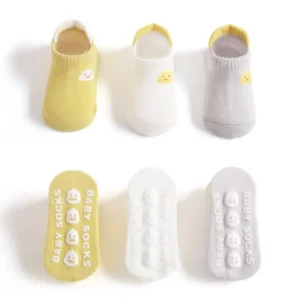
Soft Non-Slip Ankle Baby Toddler Socks for Nursery & Pre-Primary Daycares
View Specifications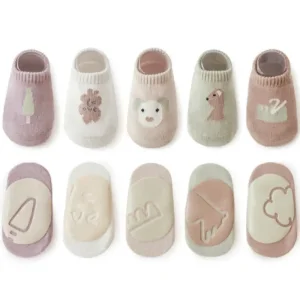
Premium Walking Crew Baby Socks with Traction Grips for Early Steps
View SpecificationsLaunch Your Custom Baby Socks Line for South Africa Today
Connect directly with our engineering and overseas export trade desk. Receive tailored physical samples, comprehensive technical tech packs, and factory-direct DDP quotation options to Durban, Cape Town, or Johannesburg within 24 business hours.