
High-Velocity Engineered Footwear for the Brazilian Market
Pre-tested against tropical humidity, mechanical friction standards, and high-frequency laundering requirements for retail distributions in São Paulo, Rio de Janeiro, and southern regions.
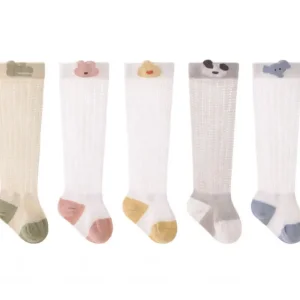
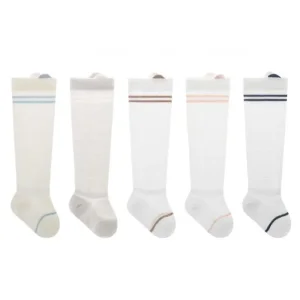
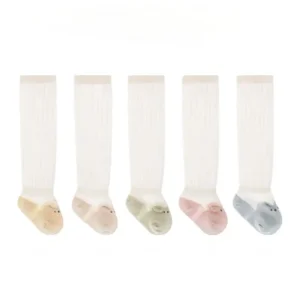
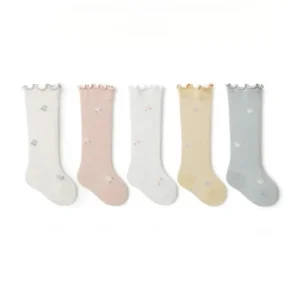
Macro Dynamics of the Brazilian Baby Footwear Industry
Navigating Brazil's multi-tier retail terrain requires understanding local production bottlenecks, raw fiber pricing, and geographic consumption divergence.
Local Domestic Mill Constraints
While domestic textile production centers in Santa Catarina and Americana (SP) provide conventional hosiery, local manufacturers struggle with rising energy overheads, Custo Brasil logistics, and limited high-needle automated machines for ultra-soft infant socks under 9-11 cm sole lengths.
Climatic and Functional Bifurcation
Brazil exhibits severe geographical microclimates. The North and Northeast require ultra-breathable, open-mesh, anti-mosquito knee-highs all year round. In contrast, the South (Paraná, Rio Grande do Sul) demands winter thermal terry cushioning and double-knit fleece blends during middle quarters.
Regulatory Framework (INMETRO & ABNT)
Textile labeling governed by INMETRO (Portaria 118/2021) dictates strict disclosure in Portuguese regarding fiber composition, country of origin, importer CNPJ, and precise care labeling (ABNT NBR NM-ISO 3758). Defective seams or hazardous yarn fibers lead to heavy customs clearance penalties.
Strategic China-to-Brazil Supply Chain Advantages
How Sichuan MiFo Technology balances technical hosiery production, volume purchasing power, and trade integration to help Brazilian importers outcompete local market benchmarks.
42,000 m² Integrated Infrastructure
Housing automated computerized knitting cylinders (96N, 108N, 120N, 144N, 168N, 200N) capable of seamless toe linking (Rosso and hand-linked options) delivering 200M+ pairs annually with zero subcontracting risk.
Eco-Safe Toxicology Testing
All yarns adhere strictly to OEKO-TEX Standard 100 Class I (safe for newborn skin contact), free from azo dyes, formaldehyde, phthalates, and heavy metals, passing SGS and Intertek certifications required for import clearance.
Port of Santos Logistics Optimization
Experienced shipping workflows offering FCL/LCL ocean freight via Ningbo/Shanghai directly into Port of Santos, Paranaguá, and Itajaí, fully documented with accurate NCM classification (6115.95.00) to streamline Siscomex radar clearance.
Advanced Polymeric Grip Dispensing
Proprietary non-migrating, phthalate-free silicone/PVC dotting systems engineered to endure thermal tunnel curing, ensuring non-slip floor safety for toddlers walking on porcelain tile and varnished timber common in modern Brazilian apartments.
Technical Specification & Material Selection for Tropical Retail
Strategic yarn blending guarantees form retention, moisture absorption, and skin elasticity recovery across high humidity environments.
| Sock Type / Segment | Optimal Fiber Composition | Needle Count & Machine Gauge | Functional Value Proposition | Brazilian Retail Channel |
|---|---|---|---|---|
| Tropical Mosquito-Proof Knee-High | 80% Combed Cotton, 17% Nylon, 3% Spandex | 168N Single Cylinder, Open Mesh Stitch | Mechanical barrier protection against dengue/insects without thermal build-up; ultra-breathable. | Pharmacies (Raia Drogasil), Boutique Baby Stores |
| Pre-Walker Anti-Slip Floor Sock | 75% Organic Cotton, 20% Polyester, 5% Elastane | 144N Terry Footbed + Full Silicone Sole | Slip-fall reduction on polished ceramic and hardwood flooring; cushioned heel and toe. | Department Stores (Lojas Renner, Riachuelo, C&A) |
| Newborn Seamless Bootie Sock | 85% Bamboo Viscose, 12% Polyamide, 3% Spandex | 200N High-Density Hand-Linked Toe | Zero friction against delicate newborn skin; natural hypoallergenic and bacteriostatic properties. | Private Maternity Hospitals, E-commerce (Mercado Livre) |
| Winter Thermal Terry Boot Sock | 65% Cotton, 30% Acrylic, 5% Spandex | 108N Thick Gauge Double Terry Loop | High clo-value thermal insulation designed specifically for southern Brazil's colder winter cycles. | Specialty Winter Boutiques, Regional Supermarkets |
Localized Applications Across Brazil's Commercial Landscape
How customized socks unlock higher margins and build brand equity across varied end-user settings.
Private Label Fast Fashion Chains
Brazilian retail giants require massive, seasonal SKU turnover with distinct color palettes reflecting tropical trends, paired with Portuguese cardboards, multi-pack hanger displays, and standardized EAN-13 barcodes.
Indoor Soft Play & Trampoline Parks
FECs (Family Entertainment Centers) in major shopping malls (like Iguatemi, Multiplan) mandate branded non-slip infant grip socks as compulsory tickets, transforming hygiene compliance into a major revenue center.
Maternity Gifting & Baby Hampers
Growing Brazilian e-commerce boutiques curating "Saída de Maternidade" gift sets demand ultra-refined 200-needle luxury combed cotton bootie socks with delicate lace trims, custom embroidery, and specialized rigid gift box packaging.
Enterprise Sourcing Solutions: Overcoming the 'Custo Brasil'
We provide full-spectrum engineering to help procurement directors optimize their landed Cost-Insurance-Freight (CIF) to free-on-board (FOB) ratios.
Customs Tariff (TEC) Harmonization
Misclassification in Mercosur trade zones results in fiscal retention. Our trade specialists ensure all sock shipments match optimal Mercosur Common Nomenclature (NCM 6115) sub-categories, reducing custom clearance dwell times in Santos to under 5 business days.
Packaging Compression & Freight Optimization
Baby socks represent low weight but high volume. We employ precision vacuum baling or space-engineered master carton packings that increase 40ft High Cube container volumetric utilization by up to 28%, significantly driving down per-unit ocean freight amortizations.
INMETRO Pre-Shipment Compliance
Every batch leaves our factory with complete textile composition tags printed in Portuguese, compliant wash codes, manufacturer tax identification, and dimension tolerances, completely eliminating the danger of port-side rework or confiscation by Brazilian fiscal authorities.
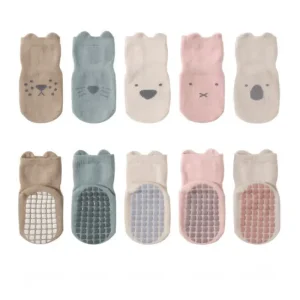
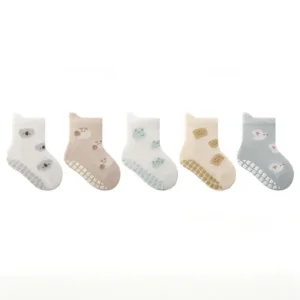
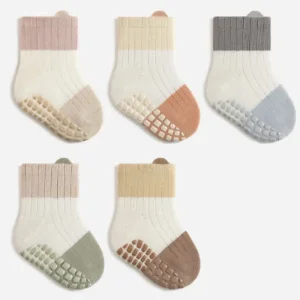
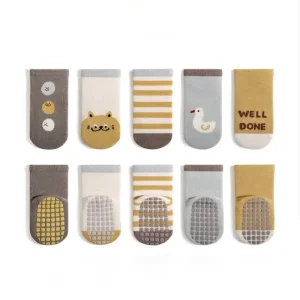
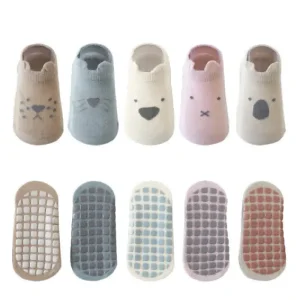
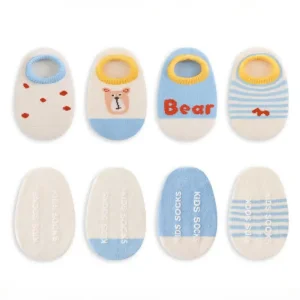
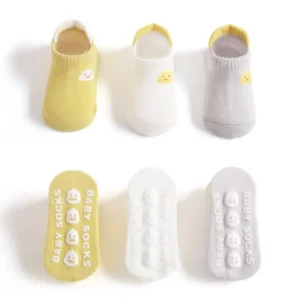
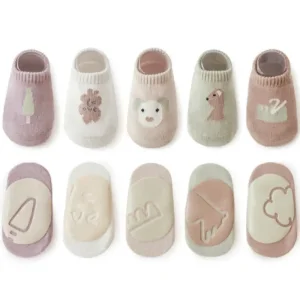
Comprehensive Baby & Kids Socks Product Portfolio
Engineered for safety, durability, and retail shelf appeal across global distribution channels.
Frequently Asked Questions for Brazilian Sourcing Directors
Critical business insights regarding MOQ, payment terms, regulatory compliance, and factory audits.
Can you provide Portuguese language packaging and INMETRO labeling?
Yes. We routinely print and attach compliant care labels, EAN-13 barcodes, and retail packaging written in Brazilian Portuguese, fully satisfying ABNT NBR ISO standards and INMETRO Portaria 118/2021 before dispatch.
What are your Minimum Order Quantities (MOQs) for Brazilian buyers?
Our standard production MOQ is typically 1,000 to 3,000 pairs per style/colorway depending on whether standard combed cotton or custom-dyed organic yarns are chosen. Flexible pilot order volumes are available for testing.
How do your anti-slip grips perform under high humidity and heat?
We use high-grade silicone and environmental PVC polymer formulations that undergo thermal tunnel curing at 180°C. They do not turn sticky, peel, or break down under the tropical humidity and hot floor conditions characteristic of Brazil.
What social and quality compliance audits does your mill hold?
Sichuan MiFo Technology is fully audited and certified under BSCI, Sedex (SMETA), and OEKO-TEX Standard 100 Class I. Audit records are available to enterprise procurement boards on request.