
Featured Technical & Specialty Hosiery Selections
Explore commercialized OEM/ODM prototypes, from multi-functional anti-slip running foundations to premium specialized yarn constructions designed for international retail markets.
Engineering High-Performance Merino Running Socks: An Industrial Whitepaper
Why modern endurance athletes, performance apparel conglomerates, and private labels are pivoting en masse toward ultra-fine Merino wool corespun architectures.
Hydrothermal Dynamic Balance
Unlike purely synthetic nylon or polyester athletic socks that rely exclusively on surface capillary action, Merino wool is an active bi-component fiber. It absorbs up to 35% of its dry weight in moisture vapor internally before feeling damp, preventing kinetic surface friction, heat accumulation, and dermal maceration during marathon distances.
Corespun Fiber Mechanics
Pioneering manufacturers wrap < 18.5µm superfine Merino wool fibers around high-tenacity multi-filament Cordura nylon or elastane cores. This achieves exceptional tensile strength and superior Martindale rub resistance (>50,000 cycles) while keeping natural, ultra-soft, anti-odor protein fibers in direct contact with the epidermis.
Zoned Anatomical Compression
Using computerized multi-feed knitting cylinders (144N, 168N, and 200N), modern running socks incorporate targeted midfoot plantar fasciitis arch bands (15–20 mmHg), true hand-linked seamless toe boxes (Rosso or auto-linking), and 3D instep ventilation zones that release heat without compromising Achilles cushion padding.
China Factory 4.0: Supply Chain Resilience & Production Scale
How Sichuan MiFo Technology Co., Ltd. fuses traditional textile expertise with Industry 4.0 automation to deliver unmatched cost efficiency and speed to global markets.
Automated Knitting Floorage
Our 42,000 m² Sichuan campus houses hundreds of automated single and double-cylinder high-speed electronic knitting machines, ensuring consistent stitch density, minimal human intervention, and zero dimensional drift.
MES Cloud Process Tracking
Every batch of raw wool yarn is tracked from creel spinning to final boxing via cloud-based MES (Manufacturing Execution Systems). Real-time optical inspection detects broken filaments and dropped stitches within 12 milliseconds.
Upstream Raw Yarn Alliances
Strategic relationships with spinning mills across Australasia and domestic high-grade polymer producers secure stable raw yarn pricing, mitigating volatility and guaranteeing uncompromised fiber supplies year-round.
Intermodal Logistic Nodes
Headquartered in Chengdu, Sichuan, we leverage direct China-Europe Railway Express rail freight corridors and major maritime sea routes via Shenzhen, Ningbo, and Shanghai ports, optimizing delivery times to Europe and North America.
Wool Running Socks: Technical Roadmap & Future Outlook
A strategic breakdown of upcoming material breakthroughs, intelligent sensor knitting, and ecological advancements reshaping athletic footwear markets through 2030.
Phase 1: Graphene-Infused Merino Blends
By compounding graphene nanoplatelets with the synthetic polymer sheath surrounding Merino cores, we achieve ultra-rapid thermal dispersal in high-sweat metatarsal zones, raising thermal dissipation performance by up to 28% while boosting electrostatic discharge properties.
Phase 2: Bio-Degradable Synthetic Cores
Replacing traditional petroleum nylon with PLA (polylactic acid) and bio-based Polyamide 56 filaments ensures the completed Merino wool sports sock degrades safely in municipal composting facilities within 36 months, answering corporate circularity requirements.
Phase 3: Sensor-Embedded Smart Textiles
Integrating micro-gauge conductive silver yarns directly into the plantar strike areas to measure real-time ground reaction forces, pronation patterns, and biometric foot temperatures, streaming data directly to connected athletic training platforms.
Sustainable Manufacturing & Global Traceability
Bridging corporate ESG goals with factory-floor execution. We protect enterprise brands from greenwashing risks through rigorous international certifications.
RWS & ZQ Certified Sourcing
100% of our premium raw Merino fleece is sourced through Responsible Wool Standard (RWS) and ZQ certified pastures, ensuring strict non-mulesed animal welfare protocols, sustainable land grazing management, and full farm-to-needle custody chains.
Zero Hazardous Chemistry
Dyeing and scouring processes comply comprehensively with OEKO-TEX Standard 100 (Class I & II) and bluesign criteria. Zero use of NPEOs, phthalates, PFAS/fluorinated compounds, or heavy-metal fixation agents across all color batches.
Closed-Loop Water Recycling
Our centralized finishing facility deploys multi-stage membrane filtration and biochemical wastewater treatments, reclaiming up to 72% of water used during scouring, washing, and anti-shrinkage passivation treatments.
Plastic-Free Packaging
We supply FSC-certified paper retail hangtags, vegetable soy-ink card bands, and 100% water-soluble PVA polybags, empowering retail brands to eliminate non-recyclable single-use plastics from consumer shelves.
Technical Specification Matrix: Performance Running Categories
Standard architectural parameters for technical development teams, quality assurance directors, and corporate category buyers.
| Application Category | Merino Fiber Micron | Yarn Architecture | Needle Count & Gauge | Compression Rating | Core Cushioning Zones |
|---|---|---|---|---|---|
| Ultra-Trail & Mountain Run | 18.5µm Superfine | 55% Merino / 35% Cordura Nylon / 10% Lycra | 168N Heavy-Gauge | 18–22 mmHg (Mid-Calf) | High-density terry heel, toe & Achilles buffer |
| Marathon & Road Racing | 17.5µm Ultrafine | 48% Merino / 44% High-Tenacity Polyamide / 8% Elastane | 200N High-Density | 15–18 mmHg (Arch lock) | Micro-terry pads at first metatarsal head only |
| Sub-Zero Winter Endurance | 19.5µm Fine | 68% Merino / 24% Thermal Nylon / 8% Spandex | 144N Thermal Terry | 12–16 mmHg (Mild graduated) | Full-sole loop pile with air-pocket thermal insulation |
| Summer Lightweight Trail | 17.2µm Ultrafine | 42% Merino / 50% Coolmax Polyamide / 8% Lycra | 200N Precision | 15–20 mmHg (Plantar fascia) | Targeted ball-of-foot cushioning & open-mesh instep |
| Active Recovery & Travel | 18.5µm Superfine | 50% Merino / 40% Medical-grade Nylon / 10% Spandex | 168N Graduated | 20–25 mmHg (True Class II) | Uniform anatomical low-profile knit from ankle to calf |
Localized Support, Customs Protocols & Compliance Assurance
Navigating cross-border regulatory frameworks across North America, the European Union, the United Kingdom, and the Asia-Pacific region.
EU REACH & UKCA Conformity
All finished goods strictly satisfy Regulation (EC) No 1907/2006 (REACH) Annex XVII restrictions regarding SVHC candidate substances, Azo colorants, dimethylformamide (DMF), and nickel release standards, backed by third-party testing reports from SGS and Intertek.
US Wool Products Labeling Act & FTC
We provide exact fiber breakdown documentation matching United States FTC Wool Products Labeling Act regulations, verifying genuine 100% natural sheep wool origin, clear country of origin declarations, RN identity indexing, and care instruction compatibility (ASTM D3938).
Ethical Audits: BSCI & Sedex SMETA
Both Sichuan MiFo Technology Co., Ltd. and Chengdu MiFo Biological Technology Co., Ltd. operate under active, verifiable BSCI and Sedex SMETA 4-Pillar social compliance audits, guaranteeing non-child labor, fair living wages, workplace safety, and environmental stewardship.
Global Enterprise Procurement: OEM & ODM Frameworks
A streamlined path from rapid digital prototyping to commercial container-load production for athletic apparel brands, running specialty chains, and corporate buyers.
Flexible Tiered MOQs
We support growth brands with starting runs of 1,000 pairs per colorway/size combination, while easily scaling to mega-volume releases exceeding 500,000 pairs monthly for established global athletic labels.
7-Day Sample Turnaround
Equipped with dedicated sample prototyping rooms, CAD engineering masters turn digital vector sketches into tactile physical samples within 5 to 7 working days, complete with pantone yarn matches and custom jacquard logos.
In-House Physical Lab
Every commercial production roll undergoes testing for dimensional stability to washing (ISO 6330), colorfastness to perspiration (ISO 105-E04), bursting strength, and Martindale abrasion resistance before release.
End-to-End Private Labeling
Custom laser-cut barcode cards, embossed foil sleeve packaging, multi-pack bundling, anti-theft RFID micro-tag integration, and carton-level pre-distribution for Amazon FBA or regional 3PL fulfillment networks.
Frequently Asked Questions: Technical Sourcing & Manufacturing
Critical answers to questions posed by supply chain directors, merchandise planners, and technical designers sourcing wholesale wool running socks.
Direct Technical Consultation
Need custom compression graphs, specialized yarn blend approvals, or factory audit verification?
Contact Our Engineering Desk →Why is Merino wool superior to synthetic fibers for marathon and trail running socks?
Synthetic fibers like polyester and nylon are hydrophobic; they do not absorb moisture internally and instead rely on capillary channels that quickly saturate in high humidity. Merino wool is an amphiphilic keratin fiber that absorbs up to 35% of its dry weight in aqueous vapor within its interior cortex without feeling wet on the skin. This prevents the moisture buildup and skin maceration that cause friction blisters during long-distance endurance events. Furthermore, natural lanolin traces and the complex biochemical structure of Merino wool inhibit bacterial colonisation, neutralizing odors across multiple days of continuous trail wear.
How does your manufacturing prevent shrinkage and maintain shape over commercial wash cycles?
Untreated wool shrinks when mechanical agitations lock the microscopic cuticles together (felting). We utilize advanced eco-scouring and chlorine-free plasma/Hercosett anti-felting treatments that smooth these cuticular scales. When combined with core-spinning techniques (wrapping wool around high-recovery Lycra and polyamides) and steam-shaping boarding at 125°C under controlled tension, our socks retain dimensional stability well within 3% tolerance after 50 cycles of standard domestic machine washing and drying.
What is the optimal fiber ratio for a high-performance wool running sock?
Decades of field-testing prove that a 100% wool sock lacks the dimensional memory, abrasion endurance, and recovery tension required for intensive athletics. The industry benchmark for technical road and trail running is 45%–55% superfine Merino wool (17.5–18.5µm) for thermal equilibrium and moisture buffering, 38%–45% multi-filament high-tenacity nylon or Cordura for structural strength in the heel and forefoot, and 5%–8% Lycra spandex for dynamic plantar arch compression and slip prevention.
What knitting machinery gauge and needle counts do you deploy for thin racing socks vs. trail styles?
For ultra-thin marathon racing socks, we utilize computerized 200-needle single-cylinder machines with fine gauges, yielding a dense, second-skin low-volume weave that fits snugly inside tight track spikes or competitive carbon-plated road shoes. For ultra-trail, obstacle course, and winter endurance styles, we deploy 144-needle and 168-needle cylinders capable of producing dense, shock-absorbing loop terry cushions under the heel counter, metatarsal zone, and Achilles tendon shield.
Are your manufacturing facilities audited for social compliance and environmental safety?
Yes. Sichuan MiFo Technology Co., Ltd. and its affiliated processing units hold active BSCI (Business Social Compliance Initiative) and Sedex SMETA compliance credentials, confirming ethical labor practices, occupational safety, fair living wages, and non-discriminatory hiring. Furthermore, our raw materials maintain OEKO-TEX Standard 100 Class I (safe for direct skin contact) certifications, verifying the complete absence of harmful chemicals, heavy metals, or carcinogenic colorants.
What are your commercial lead times from artwork sign-off to FOB shipping?
Initial CAD blueprints and digital knitting visualizations require 48 hours. Physical counter-samples with designated yarn shades are produced and dispatched in 5 to 7 working days. Following client approval of the golden prototype, bulk manufacturing typically spans 25 to 35 calendar days, depending on custom yarn dye runs and packaging specifications. Repeat orders using verified yarn formulas can ship in as few as 18 to 21 calendar days.
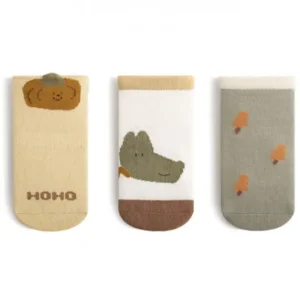
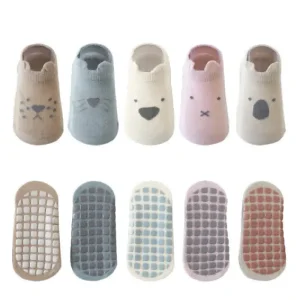
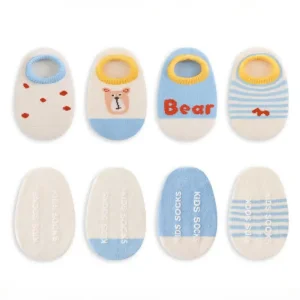
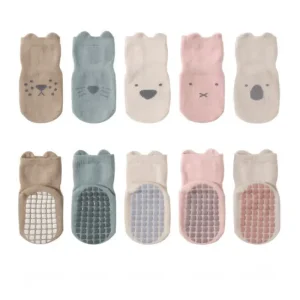
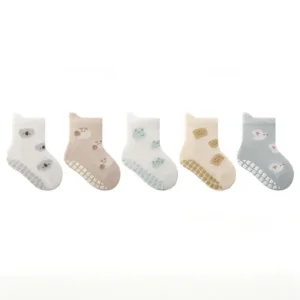
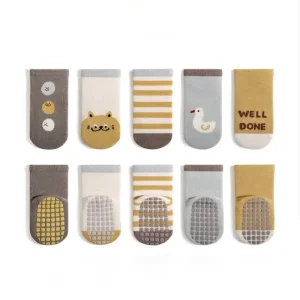
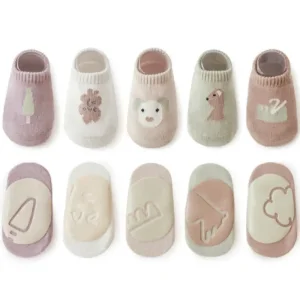
High-Volume Specialized Hosiery & Anti-Slip Solutions
Explore additional high-demand catalog selections engineered across our 42,000 m² automated production campus for global brands, institutional facilities, and private labels.
Ready to Launch Your Wool Running Socks Collection?
Partner with an audited, vertically integrated hosiery manufacturer. Receive a technical evaluation, tailored yarn proposals, and rapid sampling within 7 business days.