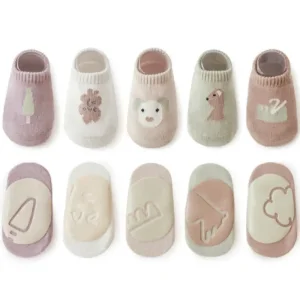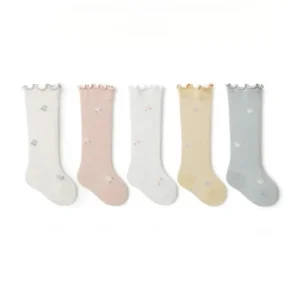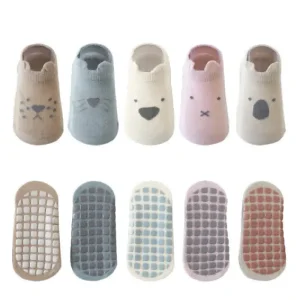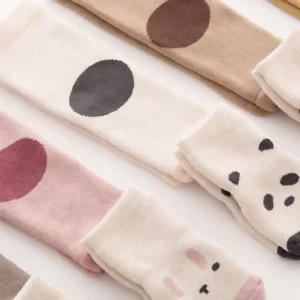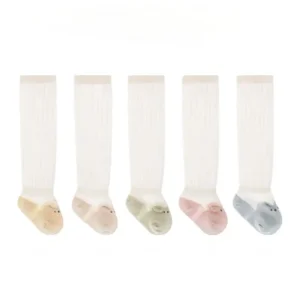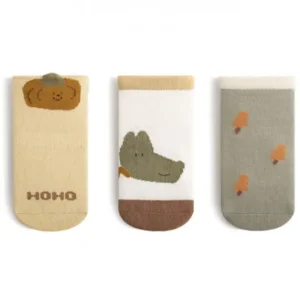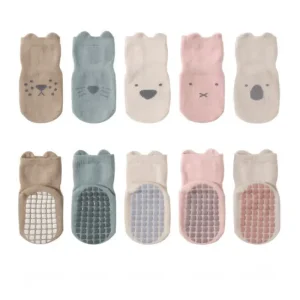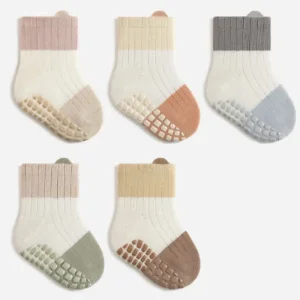
High-Performance Wholesale Infant & Toddler Hosiery
Engineered for high breathability, active crawling grip security, and certified hypoallergenic contact compliance.
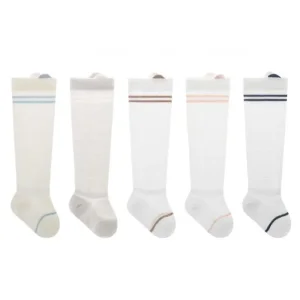
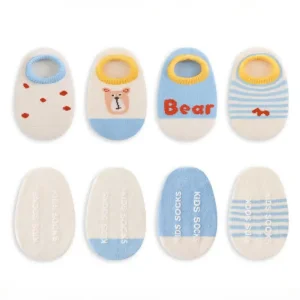
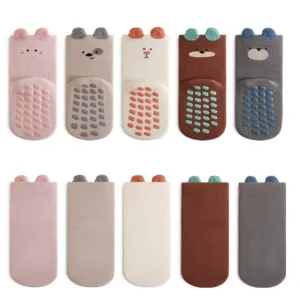
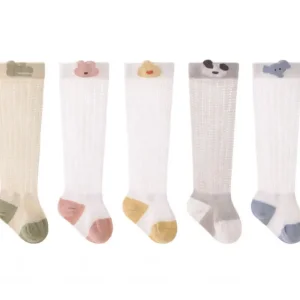
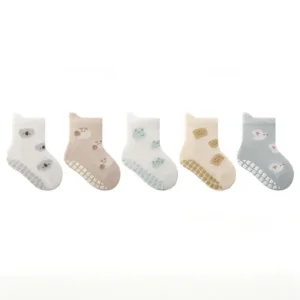
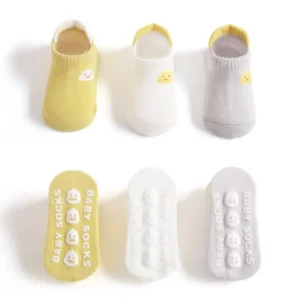
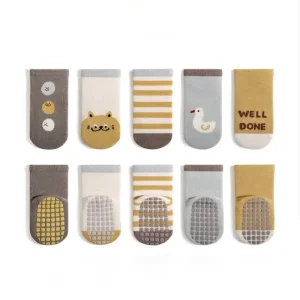
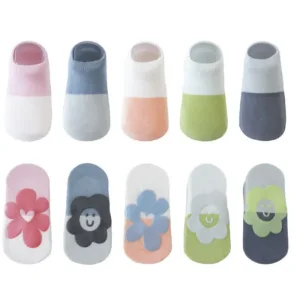
The Global Infant Hosiery Landscape: Shifts in Quality, Safety & ESG
An authoritative analysis of manufacturing standards, international regulatory constraints, and shifts in consumer purchase intent across North America, Europe, and the Asia-Pacific region.
The manufacturing landscape for wholesale infant socks has transitioned from low-cost transactional labor to high-precision engineering governed by stringent biomechanical safety and eco-toxicological standards. Modern buyers—ranging from multinational retailers and infant safety distributors to direct-to-consumer digital-native brands—no longer evaluate infant socks solely as decorative apparel. Today, an infant sock serves as critical dermal protective gear, requiring advanced friction regulation for early mobility development, seamless toe closure to prevent micro-vascular constriction, and completely nontoxic raw materials certified against allergen migration.
At Sichuan MiFo Technology Co., Ltd. (operating modern facilities across 42,000 m² with an annual output exceeding 200 million pairs), we bridge the gap between medical-grade manufacturing rigor and scalable commercial volume. With an export network covering over 100 countries, our facility addresses the structural challenges global procurement departments face: managing raw material yarn traceabilities, maintaining zero-tolerance standards for formaldehyde and heavy metals, and mitigating supply chain volatility through automated, computerized circular knitting.
Pediatric Foot Anatomy & Knitting Engineering Specifications
Infant feet are not miniature adult feet: they are primarily composed of soft cartilage, requiring non-restrictive cuffs and low-friction interiors.
Non-Constrictive Micro-Rib Welt
Infant ankles feature high circumference variability and sensitive subcutaneous tissue. Our engineered welts use covered Lycra spandex with graded longitudinal tension, ensuring the sock stays firmly positioned without exceeding 8 mmHg radial pressure—completely eliminating venous constriction rings.
Hand-Linked Seamless Toe Closure
Conventional machine stitching produces bulky raised ridges inside the toe box that cause epidermal abrasion against infant digits. We implement computerized automated hand-linking (Rosso-free toe linking), producing an entirely flat interior seam that eliminates pressure points.
Proprioceptive Grip Placement
For transitional crawlers and walkers (ages 6–24 months), grip placement must accommodate biomechanical propulsion. MiFo patterns high-density silicone micro-dots along the metatarsal head and calcaneus areas, optimizing tactile feedback without destabilizing natural center-of-gravity shifts.
Stringent Material Auditing: From Long-Staple Cotton to Inert Silicones
Because infants frequently chew on their footwear, chemical purity, saliva fastness, and mechanical pull resistance are paramount.
Sichuan MiFo enforces chemical tracing from the raw spun yarn stage through reactive dyeing and finishing. Our foundational fiber portfolio includes combed organic Xinjiang cotton (GOTS-certified), premium long-staple combed cotton (counts 32s/2, 40s/2), Lenzing modal blends for high-breathability summer articles, and thermal merino wool blends for sub-zero retail programs.
| Material / Component | Technical Composition | Performance & Biocompatibility | Certified Standard |
|---|---|---|---|
| Combed Ring-Spun Cotton | 100% Long-Staple (≥33mm length) | Ultra-low pill rating (Grade 4.5), exceptional sweat absorption, zero chemical residue. | OEKO-TEX Standard 100 Class I |
| Organic Bamboo Viscose | 70% Bamboo / 25% Poly / 5% Elastane | Natural hypoallergenic profile, thermal regulation, porous moisture-wicking structure. | GOTS / FSC Certified Pulp |
| Eco-Friendly Liquid Silicone | Food-Contact Grade Siloxane Polymer | Wash fastness up to 60°C; zero migration of phthalates (DEHP, DBP, BBP, DINP). | CPSIA Sec. 108 / EN 71-3 / FDA 21 CFR |
| Spandex Core-Spun Yarn | Air-Covered Spandex/Polyamide | Ensures full shape recovery over 50 wash cycles; prevents fabric elongation and sag. | REACH Annex XVII compliant |
End-to-End Automated Manufacturing Infrastructure
Eliminating human margin of error through computerized single-cylinder knitting machines, automated linkers, and computerized silicone vulcanization tunnels.
1. Automated Needle Knitting
Equipped with 96N, 108N, 120N, and 144N single-cylinder computerized machines dedicated specifically to infant hosiery dimensions. Needle cylinder pressures are synchronized to ensure uniform stitch densities across complex multi-color jacquards.
2. Digital Silicone Screen Dispensing
Custom rotary or flatbed screen dispensing applies exact anti-slip grip geometries. Infrared vulcanization stabilizes silicone molecular cross-linking, passing 50N peel strength tests without separating from knit loops.
3. Calibrated Steam Boarding & Sizing
Custom micro-scale aluminum foot forms subject finished articles to controlled 110°C steam pressure setting. This relieves internal fiber residual strain, preventing shrinkage and skewing during post-consumer laundering.
Localized Applications & Segmented Channel Strategies
How distributor, retail, and hospital clients leverage MiFo's custom infant sock manufacturing across distinct sales channels.
Global Department Stores & Retail Chains
Multi-pack boxed sets, hang-tag bundles, and thematic holiday releases. Engineered with high-yield retail packaging (FSC-certified paperboard cards, recyclable poly-hooks), barcode calibration, and pre-applied anti-theft tags ready for inventory racking.
Maternity & Pediatric Hospital Systems
Sterilizable newborn booties featuring gentle, non-compression cuffs and dual-sided high-friction floor grips for infant transport, wellness clinics, and neonatal recovery units. Fully customizable with color-coded sizing identification bands.
Early Childhood Centers & Playparks
Wholesale anti-slip socks designed specifically for soft play facilities, infant crawling academies, and indoor gymnasiums. Maximizes sole coverage with abrasion-resistant silicone pads that endure repeated sanitize-wash cycles.
Zero-Defect Inspection Protocols: Protecting Infant Safety
Every lot undergoes six-stage quality verification, ensuring our export partners encounter zero recalls or regulatory border rejections.
Dual-Probe Needle Detection
100% of finished infant socks pass through calibrated conveyor metal detectors (detecting ferrous particles down to 0.8mm) to completely eradicate broken needle hazards.
70N Pull Force Testing
Any attached 3D design, cartoon patch, bow, or silicone dot is subjected to mechanical tensile testers according to ASTM F963-17 small parts detachment regulations.
Color Fastness & Saliva Check
Tested in artificial saliva and sweat solutions (DIN 53160-1/-2) to verify that zero reactive azo dye transfer or bleed occurs under prolonged oral contact.
Dimensional Stability Testing
Random samples undergo continuous laundering cycles at 40°C and tumble drying. Shrinkage and torque distortion rates must maintain within a tight ±3% tolerance.
Precision OEM/ODM Workflow: From Concept to Container
A transparent, milestone-driven technical project timeline engineered for seamless execution across international time zones.
Phase 1: Digital Blueprint
Client submits target age range (0–6m, 6–12m, 12–24m), vector artwork, and Pantone color references. Our technicians develop CAD pixel files mapped precisely to needle cylinder resolution within 24 hours.
Phase 2: Prototyping
Pilot knitting on dedicated sampling machines. Physical swatches and full sock samples undergo internal stretch profiling and are dispatched via express courier for hands-on review and tactile sign-off.
Phase 3: Scaled Mass Run
Upon sample approval, automatic bulk yarn feeding begins. Automated computerized machinery produces thousands of pairs per line with inline optical checking to detect broken strands or loop drop instantly.
Phase 4: Pack & Multimodal Dispatch
Steam setting, metal detection pass, automated packaging into retail presentation units, followed by five-ply reinforced export corrugated boxing and palletized logistics coordination.
Next-Generation Infant Hosiery: The 2026–2030 Roadmap
Pioneering advancements in smart biosensing textiles, closed-loop circular sustainability, and active dermatological protection.
Smart Temperature-Reactive Chromic Yarns
Integrating non-toxic thermochromic fiber coatings that shift color if an infant develops a sudden high fever (above 38°C). This passive monitoring feature offers direct functional differentiation for wellness and clinical consumer lines.
100% Biodegradable Polymeric Grips
Replacing traditional petroleum-based polymers with bio-based PHA/PLA elastomeric non-slip dispersions. These compounds degrade cleanly in industrial composting environments without leaving behind persistent microplastic fragments.
Probiotic & Zinc Dermal Micro-Encapsulation
Infusing non-allergenic, skin-calming natural zinc oxide and probiotic peptides into cotton core filaments. Active microcapsules break gradually through gentle friction, helping soothe and safeguard sensitive skin.
Frequently Asked Questions for Wholesale Infant Sock Buyers
Direct technical and operational answers from our chief textile engineers and international export trade team.
How does Sichuan MiFo ensure wholesale infant socks comply with CPSIA, REACH, and OEKO-TEX standards?
What is the standard Minimum Order Quantity (MOQ) and sample lead time for custom baby socks?
How do you resolve the issue of socks easily slipping off an infant's foot?
Can our brand specify specialized anti-slip grip designs, logos, and pantone colors?
What retail and e-commerce packaging formats are supported?
Advanced Grips, Knee-High & Organic Pediatric Collections
Premium options for active toddlers, seasonal mosquito defense, and specialized multi-pack retail presentation.