Certified Medical Hosiery & Anti-Slip Clinical Product Catalog (Part 1)
Factory-direct high-density textile solutions engineered for venous return augmentation, pediatric stability, and regulated healthcare institution fall-prevention workflows.
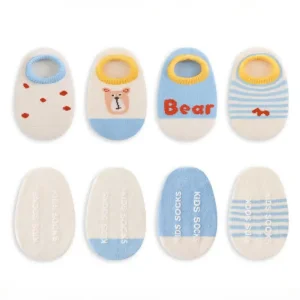
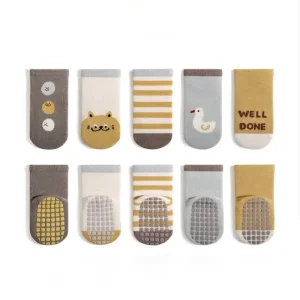
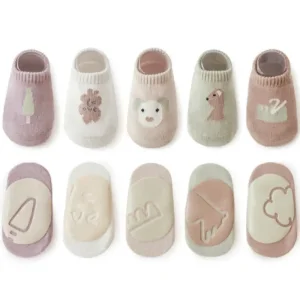
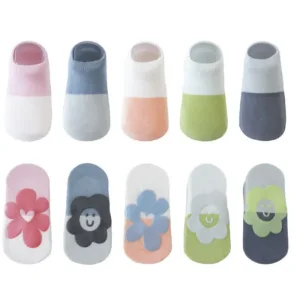
Technical Anatomy of Medical Decompression & Graduated Hosiery
Medical decompression socks (also internationally recognized as graduated compression hosiery or thromboembolism deterrent stockings) are sophisticated elastomeric medical garments designed to combat ambulatory venous hypertension, prevent Deep Vein Thrombosis (DVT), and accelerate postoperative hemodynamic recovery.
Precise Graduated Pressure Profiles
Strict architectural compliance with RAL-GZ 387 and ENV 12718 international standards. The decompression gradient delivers 100% designated hydrostatic pressure at the malleolus (ankle), systematically tapering to 70% across the maximum calf circumference, and reducing to 40% at the sub-inguinal thigh zone to mechanically drive venous return against gravity.
Micro-Calibrated Inlaid Elastane Knit
Utilizing multi-feed computerized circular knitting machinery (Lonati & Santoni calibrated cylinders), our manufacturing inserts double-covered Spandex/Lycra yarns within every stitch course. This structural inlay maintains uniform hysteresis loops, ensuring tension retention across extended 30-day continuous wear cycles without elastomeric breakdown.
Therapeutic Biocompatibility & Skin Contact
Woven with certified long-staple combed cotton, cooling micro-polyamide, and bacteriostatic silver-ion matrices. Clinically proven non-cytotoxic, hypoallergenic, and OEKO-TEX Standard 100 Class I verified for compromised dermatological interfaces, neonatal care units, and sensitive geriatric epidermises.
Clinical Pressure Grading & Engineering Matrix
Standardized industrial specifications guiding overseas procurement teams, pharmacy chains, and biomedical brand engineers.
| Class Rating | Compression Range (mmHg) | Primary Clinical Indications | Technical Fiber Formulation | Recommended Knitting Gauge |
|---|---|---|---|---|
| Class 0 (Prophylactic) | 15 – 20 mmHg | Long-haul travel edema, minor spider veins, occupational fatigue (nursing, flight crews), sports recovery | 75% Combed Cotton / 18% Polyamide / 7% Lycra Spandex | 168N / 200N High-Density Flat Knit |
| Class I (Mild Decompression) | 18 – 21 mmHg | Early varicose veins, mild post-thrombotic syndrome, pregnancy-related venous insufficiency | 70% Microfiber Polyamide / 30% Double-Covered Elastane | 240N Medical Circular Inlay |
| Class II (Moderate Clinical) | 23 – 32 mmHg | Severe varicosities, post-sclerotherapy, healed venous stasis ulcers, surgical DVT prophylaxis | 65% Polyamide / 35% Synthetic Elastomeric Core | 280N – 320N Multi-Zone Tension Knit |
| Class III (Severe Decompression) | 34 – 46 mmHg | Refractory chronic venous insufficiency (CVI), primary lymphedema, massive post-traumatic edema | 60% High-Tenacity Nylon / 40% Medical Elastodiene | Reinforced 360N Double-Layer Matrix |
| Anti-Embolism (TED) | 18 mmHg (Targeted Bedridden) | Non-ambulatory surgical inpatient DVT prophylaxis with open-toe inspection window | 80% Spun Poly / 20% Inlaid Hypoallergenic Elastane | Seamless Hydrophilic Breathable Knit |
Localization Support & Global Regulatory Compliance Frameworks
Navigating global healthcare customs and medical device directives demands uncompromised quality systems, comprehensive audit records, and localized market readiness.
US FDA & European MDR Readiness
All decompression sock lines manufactured by MiFo align with US FDA Class I Medical Device regulations (510(k) exempt status) and European Medical Device Regulation (EU MDR 2017/745). Complete Technical Documentation, Declarations of Conformity (DoC), and CE marking dossiers are systematically archived for partner audits.
Localized Pharmaceutical Packaging
We configure localized retail boxes, blister packaging, multi-language IFU (Instructions for Use) leaflets, and barcode systems (GS1-128, UDI, EAN-13, Datamatrix). Full compliance with regional pharmacy shelf protocols across North America, the European Union, Australia, and the Middle East.
Social Governance & Ethical Chain (BSCI / Sedex)
Social compliance remains paramount for multinational health conglomerates. Our facilities in Sichuan undergo continuous annual SMETA (Sedex) 4-Pillar and BSCI audits, guaranteeing fair labor, verified occupational health safety, zero child-labor practices, and low-carbon emission footprint controls.
China Factory Supply Chain Ecosystem: Scale, Speed & Vertical Integration
How Sichuan MiFo Technology Co., Ltd. operationalizes the raw material clusters of Southwest China to deliver institutional price elasticity and resilient continuity.
Vertical Yarn Spinning to Finishing
From centralized procurement of functional polymer pellets and custom spinning to elastane wrapping, automated knitting, silicone grip dispensing, and automated steam setting—vertical control eliminates subcontracting delays and intermediate price margins.
Institutional Sourcing Economies
Consolidated procurement of medical yarns generates up to 28% unit-cost reductions compared to European or domestic converters. This cost optimization protects distributor wholesale gross margins, enabling competitive pharmacy and hospital contract pricing.
Agile Rapid Prototyping Laboratory
CAD drawing, elastomeric stitch programming, and physical sample production dispatched in as few as 72 hours. Equipped with specialized Salzmann pressure measuring instrumentation to validate millimetric pressure gradients before bulk production runs.
Multimodal Export Freight Pipelines
Headquartered in Chengdu, our logistics harness direct access to the China-Europe Railway Express (reducing rail transit to Europe to 14 days) and major coastal maritime hubs (Shanghai, Shenzhen, Ningbo) for containerized sea shipments.
Future Industry Trends & Localized Clinical Application Scenarios
The medical decompression hosiery sector is pivoting rapidly beyond purely clinical hospital environments into lifestyle, athletic, and pediatric domains.
Surgical & Inpatient Thrombo-Prophylaxis
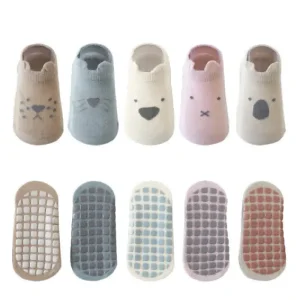
Mandatory post-orthopedic and abdominal surgery fall-prevention and anti-embolism socks featuring high-friction medical silicone tread patterns on the sole. Delivers dual-action benefits: graduated venous acceleration combined with critical bedside-to-washroom anti-slip slip fall mitigation.
Active Recovery & Endurance Athletics
Adoption of 20-30 mmHg compression socks among marathoners, cycling teams, and cross-fit athletes. Graduated decompression limits muscular micro-tears, dampens oscillatory impact vibrations during ground strikes, and increases post-exertional lactic acid clearance.
Pediatric Neuro-Sensory & Gait Development
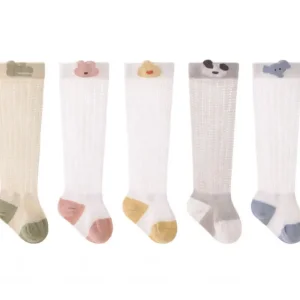
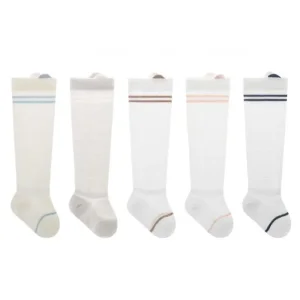
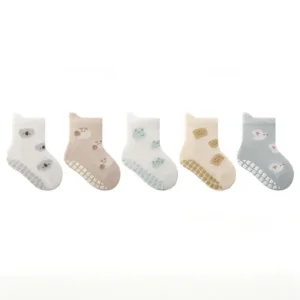
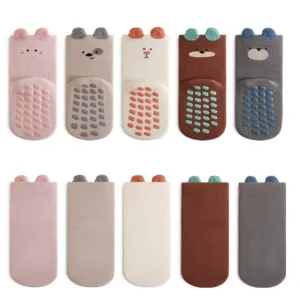
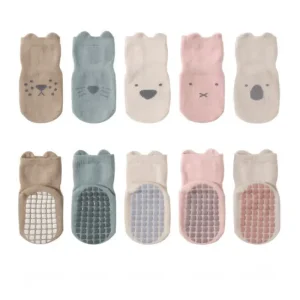
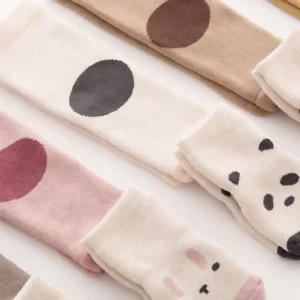
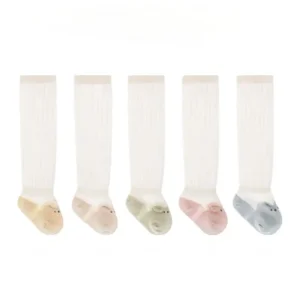
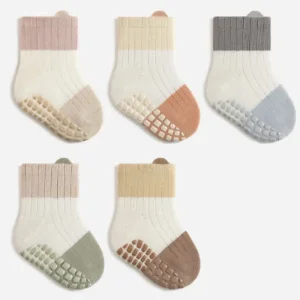
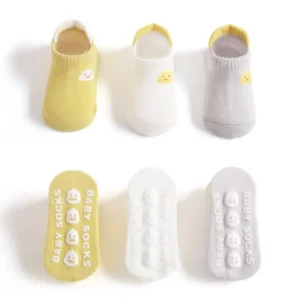
Transitioning compression principles into soft-gauge, non-constrictive support socks for toddlers and children. Integrates localized proprioceptive compression with certified medical-grade non-slip silicone traction dots for safe balance development on slippery residential and institutional surfaces.
Frequently Asked Questions (Institutional Sourcing & Engineering FAQ)
Critical technical and procurement insights answered directly by MiFo's senior medical hosiery textile engineers.
How does your factory verify and certify the graduated decompression curve across production batches?
Every medical decompression sock batch is subjected to rigorous mechanical tensile and hydrostatic testing using digital Salzmann MST MK IV pressure measurement units and automated HOSY testing instruments. We sample lots per ISO 2859-1 AQL 1.0 standards, checking calibrated pressure at the ankle (point B), tendon-calf transition (point B1), maximum calf circumference (point C), and popliteal space (point D) to guarantee the decreasing gradient slope satisfies international medical norms.
What are your minimum order quantities (MOQ) and production lead times for private-label medical programs?
For custom private-label OEM programs involving bespoke graduated compression curves and custom packaging, our baseline MOQ is typically 1,000 to 3,000 pairs per size/colorway. For existing standard inventory frames with customized heat-transfer logos or branded grip patterns, MOQs can be flexed to 500 pairs. Prototype sampling takes 5–7 working days, while bulk batch manufacturing cycles require approximately 20–30 business days based on order scale.
Can you integrate medical-grade anti-slip silicone grip patterns without compromising graduated compression elasticity?
Yes. Our engineering division operates precision automatic screen-dispensing and silicone vulcanization lines. We apply medical-grade biocompatible silicone (certified skin-safe, phthalate-free, non-toxic) onto the plantar sock surface. The silicone formula and geometric distribution are specifically configured to maintain multi-directional elasticity, ensuring that the sole traction pattern never constricts longitudinal or circumferential decompression performance.
What specific materials and antibacterial finishes are used for medical hygiene environments?
We source certified combed natural cotton, moisture-wicking polyamide 6.6, and high-recovery elastane. For institutional infection-control applications, our yarns can be infused with permanent zinc-pyrithione or silver-ion (Ag+) antimicrobial formulations that inhibit 99.9% of Staphylococcus aureus and Klebsiella pneumoniae proliferation across more than 50 commercial wash cycles (AATCC 100 test method).
What third-party social responsibility and technical audits do you support?
Sichuan MiFo Technology Co., Ltd. is fully audited under BSCI (Business Social Compliance Initiative) and Sedex SMETA. We welcome direct customer-initiated audits or third-party inspections by certified agencies including SGS, TÜV Rheinland, Bureau Veritas, and Intertek prior to carton dispatch.
Certified Medical Hosiery & Anti-Slip Clinical Product Catalog (Part 2)
Discover our extended line of medical-grade silicone grip hosiery, infant non-slip walkers, and specialized soft-tube protective decompression solutions.