
High-Performance Hosiery Catalog: Initial Series
Explore high-density knit selections, anti-slip innovations, and precision anatomical garments manufactured in our certified facility.
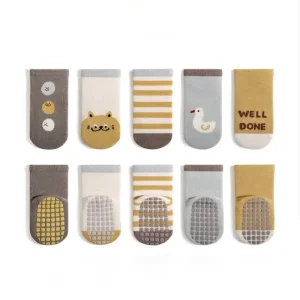
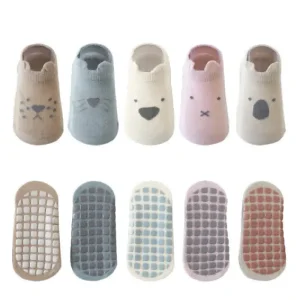
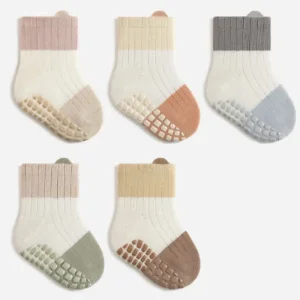
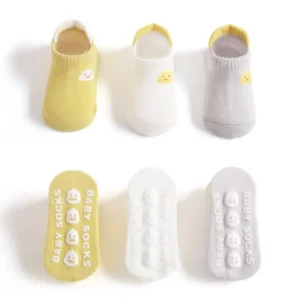
The Paradigm Shift in Marathon Running Socks Manufacturing
From commodity knitwear to bio-engineered athletic interfaces: How competitive road racing, ultra-marathons, and endurance sports have revolutionized global sock engineering.
Kinetic Micro-Zoning
Modern marathon runners strike the pavement between 30,000 and 45,000 times during a standard 42.195 km race. Modern factories utilize 200-needle high-density computerized single and double cylinder machines to map differential impact zones, applying localized terry looping to the calcaneus and metatarsal regions while preserving an ultra-thin profile over the instep to minimize pressure necrosis.
Targeted Thermoregulation
Moisture accumulation within running footwear drastically accelerates frictional blisters and dermal breakdown. Next-generation marathon socks transition away from standard carded cotton toward functional hybrid blends—incorporating cross-sectional grooved polyester (e.g., CoolMax), ultra-fine Merino wool (19.5-micron), and hollow polyamide microfibers that draw perspiration away via capillary siphonage.
Friction Force Mitigation
Blister prevention is governed by coefficient of friction (COF) engineering. Sourcing directors require dual-layer friction-dissipating weaves or PTFE (Polytetrafluoroethylene) yarn infusions on the heel and toe caps. Factory-level integration of completely seamless, hand-linked toe closures eliminates friction-induced blistering across extended endurance durations.
Graduated Vascular Elasticity
Long-distance running induces peripheral venous pooling and foot arch collapse. Tier-1 marathon sock suppliers integrate medical-inspired graduated compression (15-20 mmHg at the ankle tapered to 10-14 mmHg below the knee) alongside targeted 360-degree plantar fascia support bands knitted with encased DuPont Lycra spandex fibers.
Enterprise Sourcing Specifications for Marathon Running Socks
Strategic purchasing guidelines for global sports conglomerates, running specialty retailers, marathon race organizers, and e-commerce private labels seeking OEM/ODM excellence.
Technical Spec Matrix: Engineering Requirements for Performance Marathon Socks
Professional athletic sourcing teams evaluate manufacturing partners not merely on FOB pricing, but on stringent yarn rheology, gauge consistency, structural resilience, and compliance matrices. Sourcing marathon socks requires balancing four core parameters: Yarn Denier Composition, Needle Density (Gauge), Linking Methodology, and Elasticity Decay Curves.
- Fiber Composition: 65-75% Combed Polyamide / CoolMax, 20-25% Nylon 6.6, 5-10% Invista Spandex.
- Machine Cylinder: 168N to 200N high-speed computerized mono/dual-drum circular knitters.
- Toe Closure: 100% Hand-Linked Seamless ("Rosso" linking rejected for marathon racing grade).
- Elastic Longevity: Retaining >88% tension recovery modulus after 60 industrial wash test cycles.
| Performance Class | Primary Applications | Needle Count & Machine Spec | Material Engineering | Quality Verification Test |
|---|---|---|---|---|
| Elite Race Day (Sub-3 Hr) | Road marathons, Olympic trials, fast 10K/Half marathons | 200N Ultra-Fine Single Cylinder with Rosso-Free Linked Toe | Ultra-light 40D Polyamide + Cordura friction points + 15D Lycra | ASTM D4970 Pilling Resistance Class 4.5+; AATCC 195 Liquid Moisture Management |
| Trail & Ultra-Endurance | 50K/100M mountain trails, rugged terrain, technical ascents | 168N Double-Cylinder High-Density Terry Channeling | 45% Merino Wool (19.5μm) + 40% High-Tenacity Nylon + 15% Spandex | Martindale Abrasion Test (ISO 12947-2) > 50,000 cycles without fiber rupture |
| Training & High-Mileage | Daily long runs (LSD), tempo workouts, recovery sessions | 168N / 200N Anatomical Left/Right specific knit | High-Grade Combed Cotton (Long-Staple) or Moisture-wicking Polyester blend | Dimensional Stability to Laundering (ISO 5077) < 2.5% shrinkage variance |
| Recovery & Travel | Post-race metabolic waste flush, international travel flight sock | 240N Computerized True Graduated Compression Knitter | Dual-covered elastane core yarn engineered for controlled 18-22 mmHg | Salzmann MST MK IV pressure profile verification along ankle-calf gradient |
China Factory 4.0: Scale, Digitalization, and Supply Chain Resilience
How state-of-the-art Chinese hosiery industrial clusters deliver cost optimization, agile product lifecycles, and institutional consistency for world-class sporting brands.
Automated Knitting Clusters
Modern sock manufacturing facilities leverage hundreds of computerized circular knitting machines equipped with intelligent yarn-break sensors, real-time loop-length adjustment, and robotic pneumatic sock unloading. This digital automation mitigates human operator error, achieving an optical defect rate beneath 0.3% across 1,000,000-pair production runs.
Vertical Supply Integration
China's comprehensive industrial supply chain clusters allow factories to source raw combed yarns, functional antimicrobial masterbatches, spun elastane, custom packaging, and recycled paperboard within a 50 km logistics radius. This vertical integration drastically shrinks sample turnaround times down to 3–5 working days and accelerates mass production lead times by up to 40%.
Rigorous Compliance & ESG
Top-tier Chinese export factories operate fully in accordance with Sedex SMETA, BSCI (Business Social Compliance Initiative), and ISO 9001/14001 frameworks. Dyeing and finishing lines feature closed-loop effluent treatment plants complying with Zero Discharge of Hazardous Chemicals (ZDHC) and OEKO-TEX Standard 100 Class I/II specifications, safeguarding brand reputation against international regulatory sanctions.
Predictable Scale Economics
By amalgamating immense automated manufacturing capacity (spanning tens of thousands of square meters with outputs surpassing 200M+ pairs annually), advanced factories offer scalable tier-pricing. Global buyers capture high margin thresholds while securing priority container line allocations and expedited customs clearance protocols through China's premier international deep-water ports.
International Hosiery Sourcing & Commercial Landscape
Strategic demand profiling across key regional markets: North America, Western Europe, Asia-Pacific, and emerging consumer demographics.
Macro Trends Driving Enterprise Sock Sourcing
The global sports sock sector has exhibited an annual compound growth rate exceeding 6.2%, significantly outperforming generic commodity knitwear. This surge is predominantly driven by the post-pandemic running boom, the proliferation of World Athletics Platinum Label road races, and the explosion of trail running disciplines. Below is an analytical breakdown of purchasing behavior across key international commerce hubs:
1. North America (United States & Canada): The North American market is distinguished by high average order values (AOV) and a robust appetite for direct-to-consumer (DTC) athletic apparel subscription models. Buyers mandate GRS-certified (Global Recycled Standard) rPET polyester yarns, seamless toe construction, and specialized multi-pack retail presentation cards ready for immediate Amazon FBA and big-box distribution.
2. Western & Northern Europe (UK, Germany, France, Nordics): European purchasing directors enforce the most stringent chemical and traceability criteria globally. Compliance with REACH regulations, PFAS-free durable water-repellency (DWR) on trail socks, and zero-plastic biocompostable packaging are non-negotiable prerequisites. Functional merino wool blends reign supreme in the UK and DACH regions due to erratic temperate climate profiles.
3. Asia-Pacific & Latin America: Rapidly expanding marathon registration figures across China, Japan, Southeast Asia, and Brazil have triggered substantial OEM orders for commercial event sponsorship kits. Event organizers require high-volume production capabilities (100,000+ pairs per single production window) capable of integrating custom colorways, sponsor jacquard crests, and size-differentiated silicone grippers without inflating production cycle durations.
Engineering for the Stride: Localized Application Scenarios
Real-world testing scenarios demonstrate why specialized marathon sock architecture cannot be supplanted by ordinary activewear socks.
Major City Asphalt Road Marathons
Hard asphalt surfaces generate relentless, repetitive vertical shock forces and substantial shear stress between the foot bed and the insole. Marathon running socks engineered for city racing feature micro-density cushioned pads directly beneath the ball of the foot and the heel spur, combined with silicone traction pads on the sock sole to prevent foot slip within carbon-plated racing shoes.
Alpine Mountain & Trail Ultras
Navigating loose scree, stream crossings, and continuous elevation changes demands extreme dirt-shielding cuffs and hydrophobic yarn constructions. Quarter and crew height designs with double-ribbed compressive ankle collars prevent trail particulates from penetrating the sock, while quick-dry polypropylene yarn matrices expel moisture rapidly following creek traverses.
Extreme Climate & Badwater Desert Runs
Subtropical humidity or dry desert heat can elevate internal footwear temperatures above 45°C. Factory-level integration of cooling yarn minerals (such as jade powder or mica-infused polymers) creates an instantaneous cooling effect against the skin, while micro-mesh open-knit ventilation chimneys running along the dorsal arch channel heat vapor out through the shoe upper.
Frequently Asked Sourcing & Engineering Questions
Detailed technical, operational, and commercial answers for international textile buyers and enterprise merchandising teams.
Why is a 200-needle machine specification preferred over 144N or 168N for marathon socks?
Needle count determines the density of the knit cylinder. A 144N or 168N configuration utilizes thicker yarn plies suitable for casual or heavy boot socks. A 200N machine utilizes significantly finer microfibers, creating an ultra-dense, tight weave. This high-gauge density provides three critical benefits for marathon runners: smoother skin contact that minimizes mechanical shear forces, superior elastic shape retention during moisture exposure, and precise anatomical compression mapping across tight spatial zones.
How does your factory resolve toe friction and seam discomfort over 42 kilometers?
Conventional hosiery relies on automated "Rosso" overlock sewing, which leaves a raised ridgeseam over the toes that inevitably triggers blistering during high-mileage runs. Our marathon sock manufacturing lines feature 100% automated hand-linking (seamless toe closure) where loops from both sides of the toe are coupled stitch-by-stitch by robotic circular linkers. This creates an entirely flat, imperceptible seam indistinguishable from the surrounding knit body.
What Minimum Order Quantities (MOQ) and production turnaround cycles apply to custom OEM orders?
For fully customized OEM designs featuring custom pantone-dyed yarns, structural jacquard logos, and tailored compression profiles, our standard production threshold is 1,200 to 2,400 pairs per design/colorway across split sizing. Physical prototype lab dips and pre-production technical samples are typically dispatched within 5 to 7 working days. Once client sign-off is logged, high-speed automated mass knitting and finishing require approximately 20 to 30 calendar days for full containerload orders.
Can customized functional anti-slip silicone grip patterns be applied to marathon socks?
Yes. Our finishing workshops feature multi-station screen-printing and high-temperature curing ovens designed for environmentally inert liquid silicone rubber (LSR). We can formulate custom silicone patterns—such as micro-hexagonal grids, directional arrows, or brand typography—precisely on the foot sole. The silicone compound is heat-vulcanized at 160°C to guarantee adhesion durability through 50+ wash cycles without peeling, cracking, or causing hot spots.
What international quality certifications and audit accreditations do your facilities hold?
Our production facilities maintain comprehensive social and chemical governance protocols verified by accredited third-party inspection firms (SGS, Intertek, TÜV). Accreditations encompass BSCI, Sedex SMETA 4-Pillar, ISO 9001:2015 quality management systems, ISO 14001 environmental frameworks, and OEKO-TEX Standard 100 Annex 6 Product Class II (direct skin contact). Comprehensive audit summaries and test reports are readily available to verified enterprise buyers.
How can brands customize retail packaging for shelf-ready and e-commerce distribution?
We supply turnkey packaging solutions encompassing customized paperboard header cards, wrapped belly bands, printed kraft boxes, matte zip-lock polybags with ventilation holes, and pre-printed GS1-compliant barcode stickers. All paper goods can be specified with FSC (Forest Stewardship Council) certified recycled paper stock, printed using soy-based biodegradable inks to meet global environmental criteria.
Factory Catalog: Complementary Lineup
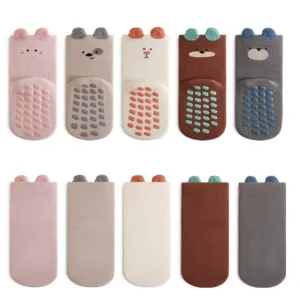
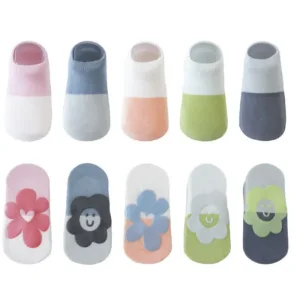
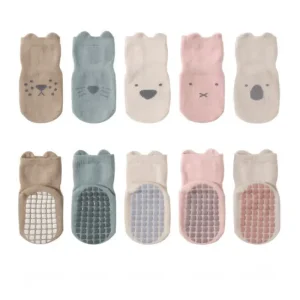
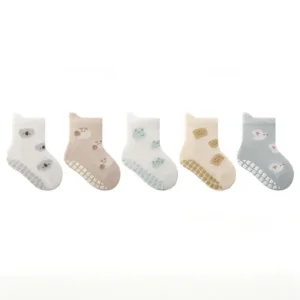
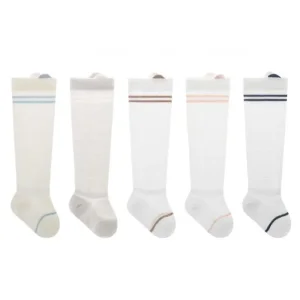
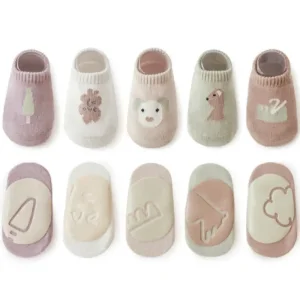
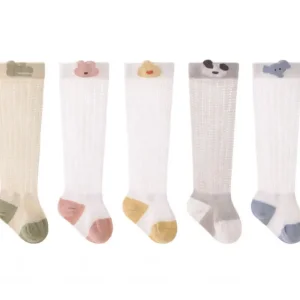
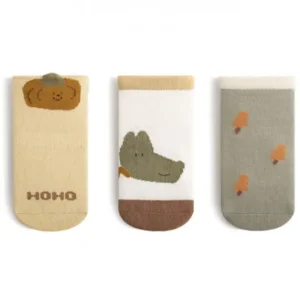
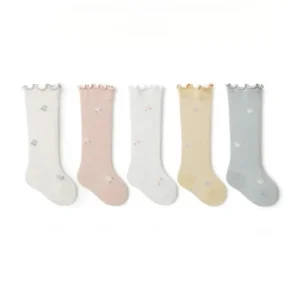
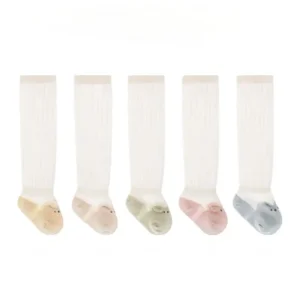
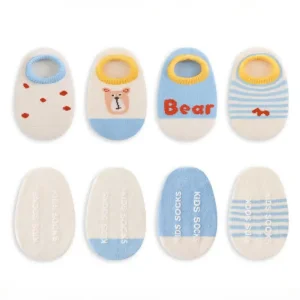
Explore additional high-traction, comfortable, and specialized hosiery styles engineered across our dedicated manufacturing divisions.
Five-Phase Factory Sourcing & Quality Governance Flow
A transparent, milestone-driven technical path from conceptual vector blueprints to ISO-inspected consolidated container dispatches.
Phase 1: Digital Prototyping
Client design files and compression specs are translated into machine-readable bitmap knitting patterns via specialized CAD textile software. Thread counts, elastic tension tensions, and structural density mappings are finalized prior to initial needle setup.
Phase 2: Yarn Lab Dip & Sampling
Raw filaments undergo precision spectrophotometer color-matching using certified low-impact reactive dyes. Physical pre-production samples are completed within 5–7 days, complete with yarn certificates of origin and weight metrics.
Phase 3: High-Speed Knit Run
Automated computer cylinders knit the socks according to programmed stitch densities. In-line optoelectronic needle-break detectors monitor each machine, halting instantly should tension flutter or fiber breakage occur.
Phase 4: Linking, Boarding & QA
Socks pass through seamless automated toe-closing stations, followed by high-pressure steam boarding on custom metal leg forms to stabilize dimensions. Multi-stage QA inspectors verify gauge, elasticity, and dimensional tolerances.
Phase 5: Packaging & Dispatch
Items receive retail labeling, barcodes, and master-carton moisture barriers before export loading. Complete documentation packages (Bills of Lading, Packing Lists, Certificates of Inspection) ensure rapid customs processing worldwide.