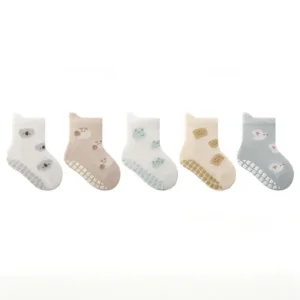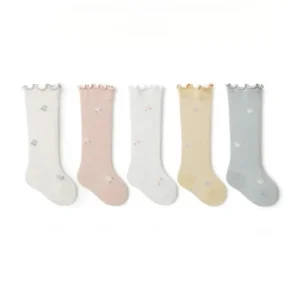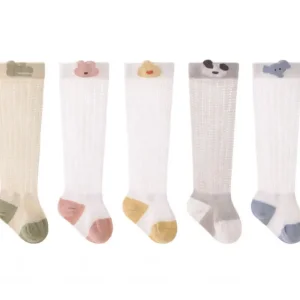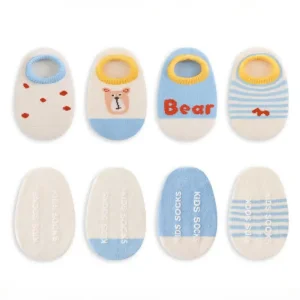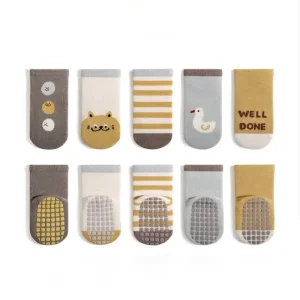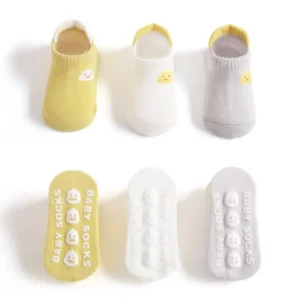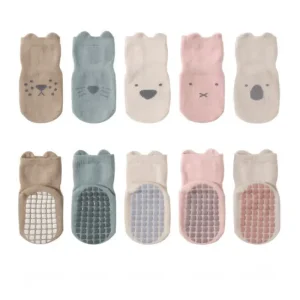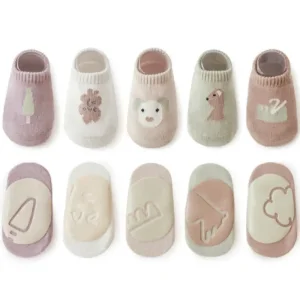
Featured Precision-Knit Product Lines (Batch 01)
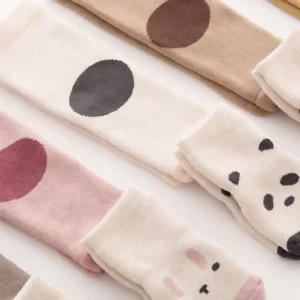
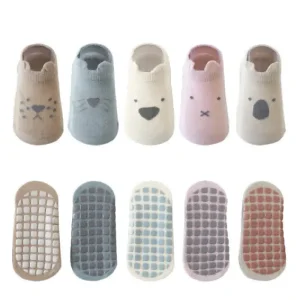
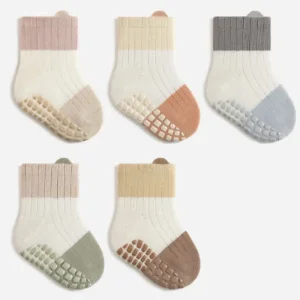
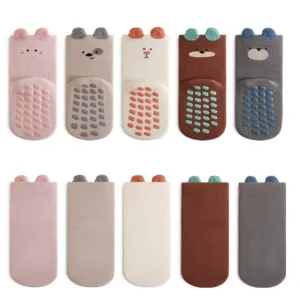
Integrated with high-gauge Lonati jacquard units, seamless toe-closing machinery, and customized anti-slip silicone dispensing systems tailored for baby, athletic, and specialty applications.
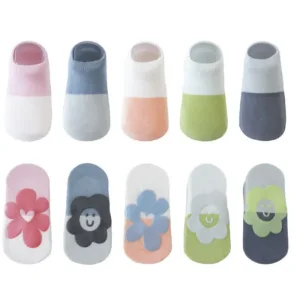
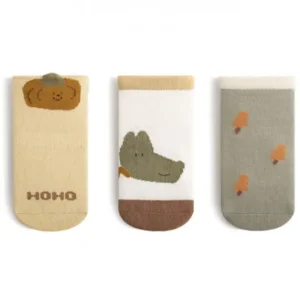
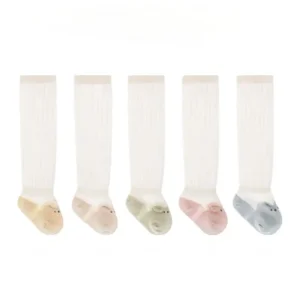
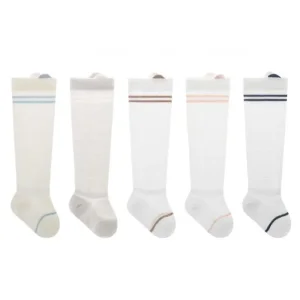
Global Merino Wool Hosiery Landscape: Market Dynamics & Semantic Evolution
From single-season mountaineering niche to a multi-billion-dollar year-round performance essential, Merino wool has transformed international retail, medical, and athletic markets.
Biomimetic Thermoregulation and Moisture Buffering
Merino wool represents an extraordinary biological polymer. Unlike synthetic fibers such as polyester or polypropylene that merely wick liquid sweat via surface tension, Merino wool possesses an active cortex capable of absorbing up to 35% of its dry weight in moisture vapor without feeling damp or cold. Through hygroscopic desorption, the fiber releases micro-calories of heat during wet condensation, insulating the foot during freeze-thaw cycles, while acting as an evaporative micro-cooler in sweltering conditions.
Global Sourcing Migration & Ethical Certifications
Procurement leaders across North America, Europe, and Japan no longer evaluate wool hosiery solely by yarn count. Modern compliance dictates strict traceability: the Responsible Wool Standard (RWS) and non-mulesed wool certifications guarantee non-harmful animal husbandry across Australia, New Zealand, and South America. Meanwhile, industrial buyers demand OEKO-TEX Standard 100 Class I (safe for infant contact) and Bluesign-verified dyeing processes that minimize ecological effluent.
Global enterprises now avoid legacy "heavy blend" knits in favor of ultra-fine core-spun yarns that merge 17.5–19.5 micron Australian Merino fleece with multi-filament nylon and Invista Lycra, unlocking unprecedented longevity and burst resistance.
Fiber Grading, Spinning Metallurgy & Circular Knitting Calibrations
The gap between a consumer-grade wool sock and an expedition-grade Merino garment is defined by fiber micron geometry, spun architecture, and automated cylinder tension controls.
Micron Precision & Prickle Threshold
Standard coarse wool fibers exceed 24 microns, triggering skin mechanoreceptors and causing itching. We utilize 17.5μ (Superfine) to 19.5μ (Extra Fine) Merino wool tops. Because human sensory nerve endings only register cutaneous discomfort at fibers thicker than 21 microns, our wool tips bend effortlessly upon tactile impact, delivering silk-like smoothness suitable for delicate infant ankles and hypersensitive diabetic skin.
Sirospun & Core-Spun Composite Yarns
100% pure wool yarn lacks the tensile bursting strength required for high-friction heel and ball-of-foot zones. We implement Core-Spun & Compact Sirospun processing, wrapping superfine Merino wool outer helical plies around a continuous filament Nylon 6.6 or Recycled Polyamide core. This delivers 280% higher abrasion tolerance (Martindale cycles >30,000) while ensuring that 100% of the fiber touching human skin remains natural Merino.
Chlorine-Free Total Easy Care (TEC)
Untreated wool fibers possess microscopic imbricated scales that irreversibly interlock when agitated in hot water, causing extreme felting shrinkage. We deploy modern plasma and enzyme anti-felting passivation treatments that smooth scale edges without harsh chlorine compounds. Our yarns fulfill ISO 6330 machine wash criteria (<3% dimensional variation) across 50 wash-and-dry cycles.
China's Factory Efficiency Advantage: High-Throughput Vertical Systems
Why the world's most exacting technical outdoor apparel and medical hosiery brands anchor their mass manufacturing programs within our fully integrated Sichuan production campus.
Italian Lonati Electronic Knitting Lines
Our facility operates over 350 state-of-the-art Italian Lonati electronic computerized circular knitting machines, spanning 96N, 120N, 144N, 168N, and ultra-dense 200N needle counts. We engineer variable-gauge terry loops, dynamic compression arch bands, and anatomical left/right toe boxes in single uninterrupted passes.
Seamless Rosso & Hand Toe Linking
Traditional ridge seams create blistering pressure points under heavy boots or baby shoes. Our automated robotic toe-linking floor provides 100% flat seamless looping (stitch-by-stitch linkage), eliminating yarn ridge elevation to zero millimeters and delivering frictionless comfort during intense athletic motion.
Proprietary Silicone Grip Integration
As a recognized pioneer in functional grip technologies, our workshop merges thermal silicone screen printing and rotary vulcanization. Our medical-grade, phthalate-free silicone grip profiles bond permanently to Merino wool blends without cracking or peeling, ensuring wash stability across high-temp commercial laundry cycles.
Sedex & BSCI Socially Audited Campus
Operating from our 42,000 m² advanced facility in Sichuan, China, our groups ensure ethical manufacturing transparency, clean hydro-electric energy utilization, fair wages, zero child labor, and rigorous chemical management (compliant with REACH and US CPSIA lead/phthalate limits).
Technical Sourcing Matrix: Merino Sock Blends & Calibrations
Direct engineering specifications across primary B2B application verticals. Tailored for enterprise procurement teams preparing formal RFQs.
| Application Tier | Typical Yarn Composition | Needle Count | Cushion Density | Functional Performance Profile |
|---|---|---|---|---|
| Alpine Expedition & Mountaineering | 72% Merino (19.5μ), 25% Nylon 6.6, 3% Spandex | 96N - 120N | Heavy Full Terry Loop (Sole, Toe, Shin) | Thermal rating down to -30°C; maximum shock absorption; vapor dissipation under stiff shell boots. |
| Trail Running & Endurance Athletics | 54% Merino (17.5μ), 42% Recycled Polyamide, 4% Lycra | 168N - 200N | Targeted Micro-Terry (Heel & Metatarsal) | Blister prevention via friction suppression; high-breathability mesh dorsum; graduated 15-20 mmHg arch compression. |
| Infant & Pediatric Anti-Slip Warmth | 80% Superfine Merino (17.5μ), 17% Organic Cotton, 3% Elastane | 144N - 168N | Soft Cloud Terry Interior | Zero-prickle baby skin safety; non-binding elastane cuff; vulcanized food-grade silicone safety floor traction. |
| Executive Dress & Luxury Lifestyle | 65% Merino (17.5μ Compact Spun), 32% Polyamide, 3% Spandex | 200N Fine Gauge | Flat Knit (Zero Terry Ridge) | Ultra-thin silhouette fitting oxford dress shoes; high sheen; self-supporting rib top without calf strangulation. |
| Tactical, Military & Fall-Risk Healthcare | 60% Merino (19.5μ TEC), 36% Nylon, 4% Anti-Static Fiber | 132N - 144N | High-Density Double Terry Cushion | Flame retardance compliant (natural wool keratine non-melting property); anti-microbial longevity across multi-day deployments. |
Targeted Engineering: Localized B2B Application Environments
Optimizing knit structure, tension mapping, and fiber selection to meet stringent commercial operational demands across global target markets.
Sub-Zero Alpine & Backcountry Skiing
In high-altitude mountaineering, sweat buildup is the precursor to frostbite. We utilize dense 3D terry cushioning that holds open insulating air cells even when compressed inside rigid ski boots. Moisture is pulled away from the plantar epidermis into the wool core, maintaining continuous thermal equilibrium throughout extreme temperature shifts.
Pediatric Care & Sensory Sensitive Toddlers
Young children have thinner epidermis layers and fluctuating metabolic rates. Our 17.5μ Superfine Merino baby socks prevent chill during nocturnal sleep while preventing damp overheating during daytime crawling. Combined with non-toxic, non-slip silicone traction patterns, these socks promote steady, safe balance on hardwood and tile surfaces.
Commercial Healthcare & Fall Prevention
Specialty clinics and convalescent facilities require thermo-stable, edema-friendly socks that stay non-restrictive over swollen feet while providing uncompromising grip. Our non-binding cuff calibrations avoid restricting vascular circulation, while high-tensile wool fiber blends ensure long garment lifespan despite industrial laundering.
Global Procurement Criteria & Quality Assurance Parameters
Enterprise buyers must guarantee that production lots adhere to non-negotiable international mechanical, chemical, and dimensional stability benchmarks.
Martindale Abrasion Test
ASTM D4966 Standard: Merino socks reinforced with high-tenacity nylon cores are tested past 25,000 to 40,000 cycles under 9kPa downward pressure without thread rupture or severe surface pilling, outperforming 100% carded wool threefold.
Colorfastness to Washing
AATCC 61 2A / ISO 105-C06: Color change and adjacent fabric staining must attain Grade 4-5 at 40°C wash cycles. Eco-reactive dyestuffs preserve deep, vibrant hues across high-contrast jacquard patterns without bleeding into adjacent light yarns.
Dimensional Shrinkage
ISO 6330 Tumble Dry Test: Following 5 successive home laundering cycles, longitudinal and transverse dimensional changes are held within ±3.0%, preventing downstream fit shrinkage complaints from end consumers.
AQL 1.5 / 2.5 Strict Inspection
Incoming yarn lots undergo optical spectrophotometer verification. Finished goods pass inline metal detection, needle detection, elastic recovery load checks, and strict AQL 1.5 major / 2.5 minor finished carton QA prior to container sealing.
Technological Horizons: Merino Hosiery Evolution (2025–2030)
How technical yarn chemistry, automated circular mechanics, and sustainability imperatives are reshaping global high-performance sock manufacturing.
Bio-Based & Recycled Reinforcement Filaments
While Merino wool is naturally biodegradable (breaking down within 12 months in soil), traditional elastane and synthetic cores persist for decades. The next generation of performance manufacturing blends RWS-certified Merino with biodegradable polyamides and bio-synthesized PDO elastanes. This produces socks that deliver high performance on the trail, yet compost safely at the end of their operational lifecycle without shedding persistent microplastics.
Digital Pressure-Mapped Automated Knitting
Leveraging automated CAD software interfaced with Lonati knitting cylinders, sock structures are now tailored using biomechanical sensor data. Variable needle stitch depths apply pinpoint compression along the peroneal tendon and plantar fascia, accompanied by ultra-thin ventilation channels over the dorsal zone. This provides runners and skiers with custom orthopedic stability straight from mass manufacturing lines.
Enterprise Buyer Technical Q&A: Engineering & Sourcing
Direct technical answers to common queries submitted by brand owners, sourcing directors, and industrial distributors.
Why is Australian Merino wool superior to conventional sheep wool for performance socks?
Conventional domestic sheep wool typically ranges between 26 and 38 microns in diameter. These thick, rigid fibers cannot flex when touching human skin, triggering cutaneous nerve prickle sensations. In contrast, Merino sheep bred in Australia and New Zealand produce fleeces with diameters between 17.5 and 19.5 microns, with natural crimp frequencies exceeding 8 to 10 crimps per centimeter. This fine diameter allows the fibers to bend effortlessly on contact, avoiding itching. Furthermore, the natural crimp creates millions of dead-air insulating micro-pockets, providing superior thermal efficiency at half the weight of traditional carded wool.
Can 100% pure Merino wool socks withstand heavy daily wear without nylon reinforcement?
From an engineering standpoint, 100% pure Merino wool socks lack the structural abrasion resistance required for modern performance footwear. In high-friction zones—such as the calcaneus (heel) and metatarsal heads—unreinforced wool fibers quickly abrade through friction. We recommend a balanced technical blend: 60%–75% Merino wool on the surface for thermoregulation and odor suppression, co-knitted with 20%–35% continuous filament Nylon 6.6 or recycled polyamide in high-wear areas, supported by 3%–5% Invista Lycra for elastic recovery. This creates durable socks that retain wool's natural comfort while surviving tens of thousands of abrasion cycles.
How does your China manufacturing campus maintain strict dimensional stability against wash shrinkage?
Our facility manages shrinkage across three rigorous stages: First, all raw Merino tops receive certified Total Easy Care (TEC) Hercosett or eco-plasma passivation treatments that permanently smooth down scale edges, preventing mechanical felting. Second, during automated Lonati circular knitting, positive yarn feeders ensure constant tension, preventing residual internal stress in the knit loops. Third, all finished socks undergo pre-steaming and dimensional boarding on industrial boarding equipment before final QC packaging. This process guarantees residual shrinkage stays well within ISO 6330 machine wash criteria (<3.0%).
What are your minimum order quantities (MOQ), prototype lead times, and bulk turnaround?
For custom private-label programs utilizing our stock-dyed technical Merino yarns (available in over 60 verified pantone shades), our typical production MOQ is 1,000 to 2,000 pairs per design/colorway. Fully custom pantone yarn-dye runs typically start at 3,000 pairs per shade. Physical technical pre-production samples—including custom jacquard patterns, custom packaging, and customized silicone grip shapes—are prepared and delivered within 7 to 10 working days. Mass volume production is completed within 25 to 35 calendar days following formal prototype approval, backed by an established 99.4% on-time delivery track record.
Can customized silicone grips be vulcanized directly onto high-content Merino socks?
Yes. As a leading manufacturer of functional grip hosiery, our facility has perfected high-adhesion silicone screen-printing for wool and wool-blend surfaces. Conventional plastisol or PVC grips tend to peel off wool due to the fiber's natural surface wax. We utilize a proprietary food-grade, liquid silicone rubber (LSR) compound paired with multi-zone infrared baking tunnels. The liquid silicone penetrates deep into the outer yarn matrix before thermal curing, achieving cross-linked bonding that endures commercial laundering without peeling, cracking, or off-gassing.
Specialized Hosiery & Wholesale Production Series (Batch 02)
High-demand styles engineered for baby, toddler, and multi-functional performance wear. Available for OEM/ODM private labeling and high-volume container orders.