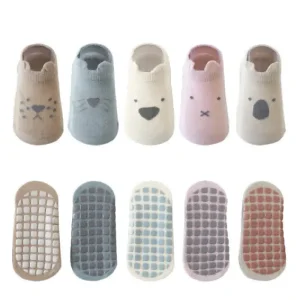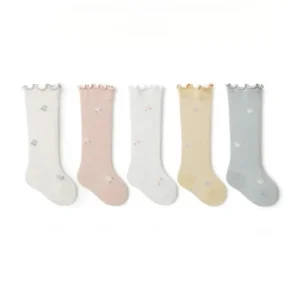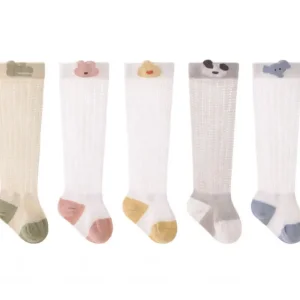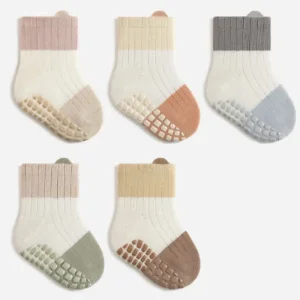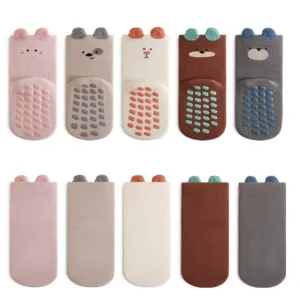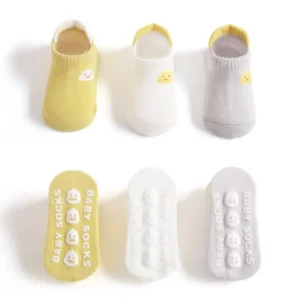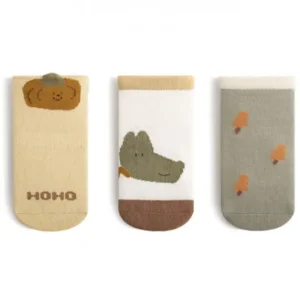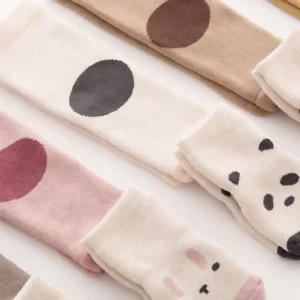
Featured Industrial Line: High-Performance Crew Solutions
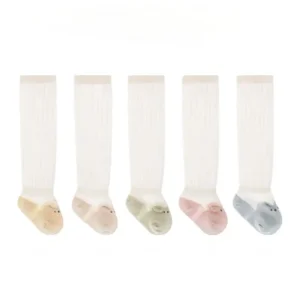
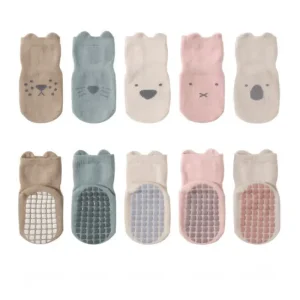
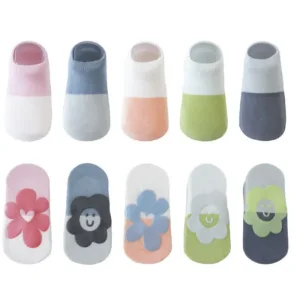
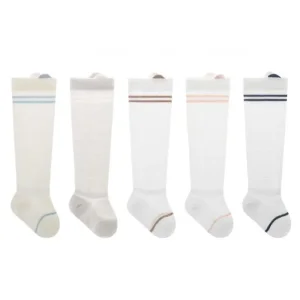
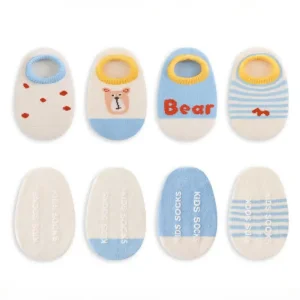
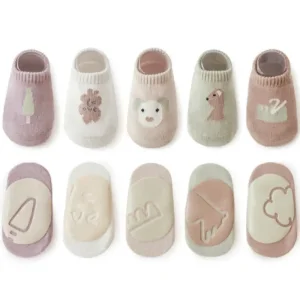
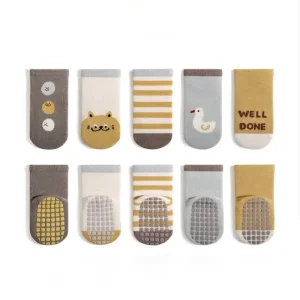
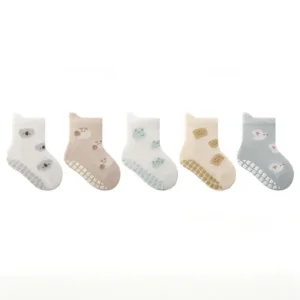
Explore certified OEM/ODM manufacturing references engineered for long-cycle wear, tactical impact distribution, and verified anti-slip performance.
Global Hosiery Economics: The Shift Toward Technical Men's Crew Engineering
The traditional perception of men's crew socks as an undifferentiated, bulk-knit commodity has experienced an aggressive technical paradigm shift. Modern enterprise buyers, department stores, and athletic private labels demand high tensile recovery, zone-targeted arch support, and verified sustainability credentials.
Cost-Elasticity vs. Durability
Global retail channels have faced rising consumer return rates tied to heel blowout and cuff sagging. Enterprise supply contracts are migrating from uncombed ring-spun cottons toward compact-siro combed yarns blended with dual-covered Spandex, ensuring dimensional stability beyond 80 commercial wash cycles.
Consolidated ODM Ecosystems
Fragmented, multi-broker trading intermediaries have proven vulnerable to freight bottlenecks and raw fiber price spikes. Top-tier brands have shifted to integrated single-campus manufacturers capable of handling carding, computerized cylinder knitting, robotic linking, and direct shelf packaging.
Performance Crossover Trends
The boundary between casual corporate wear and performance athletic hosiery has dissolved. Men's crew socks now integrate architectural mesh zones for vapor dissipation, micro-terry soles for plantar pressure absorption, and graduated cuff tension suitable for 14-hour wear cycles.
Localized Application Scenarios: Climate, Culture, and Utility Alignment
A truly capable global crew sock manufacturer must formulate distinct gauge densities, needle counts, and elastomeric profiles based on regional climate loads, lifestyle habits, and regulatory mandates.
North America: Heavy Athletic & Workwear
Demands robust 108N–144N terry-loop sole engineering with reinforced Cordura or ballistic nylon heel-toe reinforcement. Geared toward steel-toe boots, heavy cross-training, and commercial wash tolerance with antimycotic chemical treatments.
Western Europe: Sustainable Sartorial Standards
Dominance of fine-gauge 168N–200N circular knits using OEKO-TEX Step and GOTS-certified organic cotton or recycled polyamide. Characterized by flat, hand-linked "Rosso-free" seamless toe closures and calibrated dress cuffs suited for executive wear.
Nordic & Alpine: Advanced Thermal Retention
Formulated with Merino wool blends (19.5-micron fine tops) interwoven with core-spun hollow core polyester. Prioritizes moisture wicking while retaining trapped micro-air pockets to prevent damp chilling during extreme sub-zero thermal exposure.
East Asia & Gulf: High-Ventilation Anti-Odor
Designed for hot, humid climates with heavy daily shoe-removal customs. Integrates silver-ion permanent extruded yarn, bamboo-charcoal fibers, and top-of-foot micro-mesh matrices that inhibit anaerobic microbial replication and odor emergence.
Supply Chain Architecture: Sichuan MiFo's Integrated Manufacturing Model
Operating since 2013 across an integrated 42,000 m² industrial facility in Sichuan, China, Sichuan MiFo Technology Co., Ltd. eliminates intermediate supply friction by housing advanced fiber prep, computerized knitting, automated silicone grip vulcanization, and carton logistics in a unified hub.
| Process Dimension | Traditional Fragmented Supply Base | Sichuan MiFo Integrated Facility | Procurement Advantage |
|---|---|---|---|
| Fiber Sourcing & Blending | Multiple external yarn brokers, high lot-to-lot color & tensile variance | Direct partnership with tier-1 spinning mills, lab-certified yarn tension consistency | Zero lot color drift, zero unraveled yarn defects during high-speed runs |
| Knitting Automation | Outdated mechanical cylinders (84N-120N), manual pattern changes | 300+ Lonati & computerized multi-needle machines (96N, 144N, 168N, 200N) | Micron-precise jacquard, engineered cushion zones, and zero needle lines |
| Toe-Closing Engineering | Traditional machine Rosso stitching (bulky abrasive ridge at toe) | Automated seamless hand-linking imitation (zero seam pressure point) | Elimination of blister friction; meets Tier-1 premium retail expectations |
| Silicone Anti-Slip Curing | Subcontracted thermal transfer (low wash fastness, prone to peeling) | In-house screen and molded eco-grade silicone curing tunnels | Withstands 60°C commercial laundering without tensile degradation |
| Social Compliance Audits | Non-certified shadow workshops, high ESG trade barrier risks | BSCI, Sedex (SMETA), and ISO9001 certified and documented facilities | Seamless import clearance into US, EU, and Australasia corporate channels |
The 5-Stage Zero-Defect Manufacturing Lifecycle
Technical Vectoring
CAD conversion into cylinder-specific pixel knitting matrices with precise elastic warp ratios.
Polymer & Yarn Prep
Ring-spun long staple cottons paired with Lycra spandex, calibrated for precise stretch memory.
Computerized Knitting
Continuous sensor-monitored needle rotation delivering uniform gauge density across all sizes.
Steam Boarding & QC
Dimensional boarding under calibrated steam pressure, followed by multi-point optical inspections.
Barcoded Palletizing
Private-label packaging, automated bagging, and moisture-controlled master export crating.
Engineering Roadmap: High-Tech Men's Crew Knitting for 2026–2030
Hosiery is undergoing high-performance material evolution.四川 MiFo Technology Co., Ltd. invests continuously in proprietary yarn polymer blends and precision knitting architecture to equip brand partners with substantial market differentiation.
Phase-Change Thermoregulation
Integration of micro-encapsulated Phase-Change Materials (PCMs) directly within hollow core fibers. The fabric absorbs latent heat when skin temperature climbs and releases stored thermal energy as external temps decline, maintaining a stable 28°C–31°C microclimate around the foot.
Closed-Loop Bio-Polymers
Moving beyond conventional recycled PET toward enzymatically recycled polyesters and algae-derived elastomers. These yarns reduce virgin petroleum usage by 74% while maintaining structural modulus and elongation recovery identical to standard spandex.
Biomechanical Kinetic Mapping
Utilizing high-speed sensor arrays to map strike-force impact in work boots and sneakers. Knit programming applies variable thread loop densities across the metatarsal, calcaneus, and Achilles areas, providing graduated impact dampening without adding bulk.
Enterprise Compliance Framework & Localized Buyer Support
Managing foreign factory procurement requires bulletproof legal, safety, and logistical guarantees. We safeguard brand integrity with comprehensive social auditing, chemical safety documentation, and dedicated engineering consultation.
Chemical & Fiber Purity Clearances
Every dye formulation and yarn lot is verified strictly compliant with REACH (EC 1907/2006), CPSIA, and California Proposition 65. Our fabrics are free from azo dyes, heavy metals, formaldehyde, and NPEOs, enabling friction-free clearance through international ports of entry.
Ethical Workplace Auditing (BSCI / Sedex)
Our production campuses operate under full Sedex SMETA and BSCI social compliance protocols. Global retail chains, department stores, and corporate promotional distributors can access transparent third-party audit reports validating ethical labor, living wages, and occupational safety.
DDP Incoterms & Regional Hub Buffers
We provide full-service freight coordination including ocean FCL/LCL, air express, and bonded customs clearance with delivered-duty-paid (DDP) options to US and European 3PLs. We provide safety-stock pallet warehousing to safeguard buyers against unexpected demand surges.
Technical Q&A: Engineering & Sourcing Specifications
Clear, engineer-level answers addressing needle configurations, minimum order thresholds, custom silicone molding, and material testing protocols.
What needle count is ideal for high-performance men's crew socks?
It depends on the target application: 108N to 144N cylinders are ideal for thick-gauge athletic, tactical, and work socks that incorporate dense terry loops. 168N to 200N needles provide an ultra-fine, smooth surface suited for dress socks, detailed jacquard patterns, and high-definition corporate graphics.
How does your factory prevent crew socks from sliding down the calf?
We utilize double-cylinder 1x1 or 2x1 ribbing architectures combined with dual-covered Lycra (Spandex core wrapped in nylon filament). This prevents elastomeric degradation from body heat and body oils, ensuring consistent 12–15 mmHg graduated hold across 80+ laundering cycles.
Can you formulate customized silicone grip patterns on crew soles?
Yes. Our in-house screen and molded silicone division engineers customized high-viscosity silicone patterns directly onto the sole. Formulations are tuned for specialized coefficients of friction required in yoga, trampoline venues, aquatic parks, and tactical sports footwear.
What is the standard lead time for sampling and container-scale production?
Digital pattern rendering and physical prototype yarn matching are typically delivered within 5 to 7 business days. Bulk production across our 42,000 m² campus requires 25 to 35 days post-sample signoff, supported by an annual capacity exceeding 200 million pairs.
Are custom branded packaging formats supported for retail-ready distribution?
Yes. We provide complete OEM packaging engineering including FSC-certified recycled paperboard header cards, wrap bands with barcoding/RFID tags, retail hang tags, polybags, and premium presentation gift boxes designed for direct warehouse intake.
How does your factory guarantee factory-direct quality across large order volumes?
We execute four tiers of quality gates: yarn tensile testing upon warehouse arrival, optical sensor monitoring on knitting machines, 100% manual inspection during hand-linking and steam boarding, and final AQL 2.5/4.0 random batch testing prior to container dispatch.
Expanded Catalog: Specialized Functional Crew & Grip Solutions
Review the rest of our verified core production portfolio, covering multi-purpose athletic, non-slip grip, and ultra-soft cotton daily crew lines.