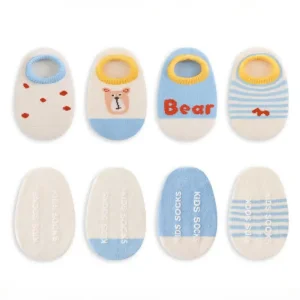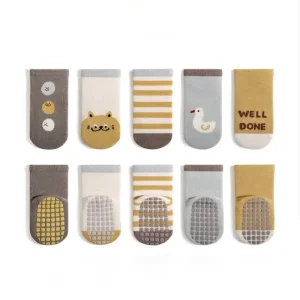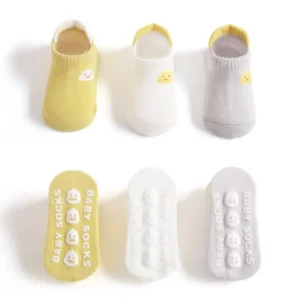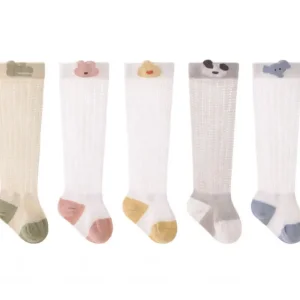
Primary Wholesale Infant & Toddler Sock Solutions
Explore our export-ready infant grip socks, combed cotton silhouettes, and summer breathability collections tailored for high-turnover retail and brand licensing.
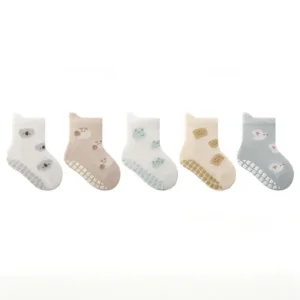
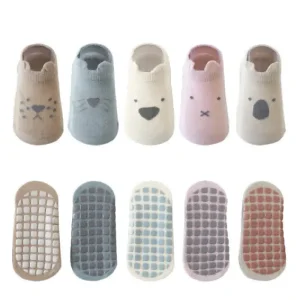
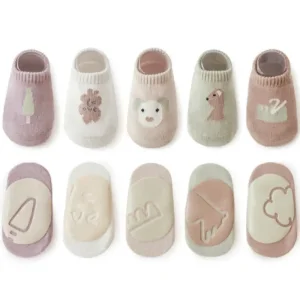
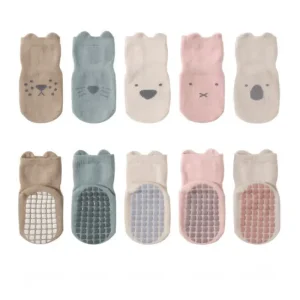
The Global Strategic Shift in Infant Hosiery Sourcing
Analyzing procurement migrations, regulatory stringency, and technical fabric requirements across international children's apparel markets.
The global infant hosiery market has experienced a transformative shift away from low-cost generic consumables toward scientifically designed pediatric foot-health garments. Today, commercial buyers, ranging from department store chains in North America to boutique baby-care labels in Western Europe, evaluate suppliers not simply on piece-rate pricing, but on toxicological safety, biomechanical non-slip metrics, and traceable supply chain compliance.
Infants and toddlers have distinct physiology: their thermal regulation is immature, their epidermis is up to 30% thinner than adult skin, and early gait formation requires unimpeded neuro-sensory feedback from the soles of their feet. Consequently, infant socks can no longer be manufactured using ordinary hosiery workflows. They require combed natural long-staple fibers, non-migratory reactive dyes that resist salivary leaching, hand-linked seamless toes (Rosso or auto-linking) to eliminate pressure points, and certified phthalate-free, non-toxic liquid silicone grip dispensing.
Stringent Chemical Compliance
Global regulatory frameworks including US CPSIA (16 CFR Part 1307), European REACH (EC 1907/2006), OEKO-TEX Standard 100 Class I (Infant Grade), and China GB 31701-2015 Category A enforce zero tolerance for lead, phthalates, AZO dyes, and extractable heavy metals. Modern China facilities operate closed-loop dye monitoring to guarantee non-toxic infant contact.
Non-Slip Biomechanical Stability
Early-stage ambulation demands dynamic traction. Conventional PVC plastisol dots are being comprehensively replaced by food-grade liquid silicone rubber (LSR). These polymers maintain friction coefficients exceeding ASTM F2913 on hardwood and polished tile while resisting degradation across aggressive industrial wash cycles.
Pediatric Ergonomics & Elasticity
Baby legs feature high subcutaneous fat ratios with sensitive blood circulation. Sock cuffs must employ dual-covered elastane knit at precise tension thresholds—preventing slippage while avoiding cutaneous indentation (constriction ring syndrome). High-precision electronic needle counts ensure smooth anatomical contouring.
China Factory Efficiency: The Modern Hosiery Manufacturing Advantage
How automation, raw material clustering, and digitalized quality engineering create an insurmountable lead in infant apparel manufacturing.
The manufacturing dominance of Chinese hosiery hubs is no longer rooted merely in labor scale; it is propelled by hyper-dense vertical supply clusters and high-automation computer-controlled knitting technology. Facilities such as Sichuan MiFo Technology Co., Ltd. have redefined the economics of custom hosiery through end-to-end integration:
Integrated Yarn Spinning to Automated Finishing
In traditional disaggregated manufacturing environments, yarn spinning, dyeing, knitting, linking, non-slip printing, and retail boxing occur across separate subcontractors, adding 18 to 25 days of transit buffer and escalating logistics overhead. In contrast, leading Chinese factories house high-speed Italian and Korean electronic knitting machines (such as Lonati and Sangiacomo 96N, 108N, and 120N infant-specific single/double cylinder units), optical vision inspection systems, and inline silicone vulcanization ovens within unified manufacturing ecosystems.
This vertical synthesis minimizes procurement friction. Raw combed organic cotton, dope-dyed technical nylon, and high-recovery Lycra are pre-qualified and stored in climate-controlled warehouses, allowing rapid machine reconfiguration and rapid prototyping cycles.
Engineering Matrix: Infant Hosiery Performance Standards
| Performance Parameter | Standard Commercial Grade | MiFo Industrial Export Grade | Testing Protocol / Compliance Reference |
|---|---|---|---|
| Yarn Composition | Standard Carded Cotton / Virgin Polyester | Combed Long-Staple Cotton (Compact Siro-Spun) / Lycra Core | OEKO-TEX Standard 100 Class I (Baby Grade) |
| Toe Closure Method | Conventional Rosso Machine Linking (Noticeable Ridge) | Seamless Auto-Linking / Precision Hand-Closure (Zero Ridge) | Zero Cutaneous Friction Protocol |
| Grip Compound Chemistry | Solvent-Based PVC Plastisol | Medical/Food-Grade Liquid Silicone Rubber (LSR) | CPSIA Phthalates < 50ppm / REACH Annex XVII |
| Grip Adhesion Durability | Cracks or peels after 10-15 wash cycles | Maintains structural integrity > 50 hot cycles (60°C) | AATCC 135 / ISO 6330 Industrial Wash Cycles |
| Colorfastness to Saliva & Perspiration | Grade 3-4 (Moderate bleed risk) | Grade 4-5 (Zero bleed / Reactive Dyes) | DIN 53160-1 & 2 / GB/T 18886 Test Standards |
| Cuff Compression Gradient | Unregulated Tension (> 18 mmHg peak pressure) | Gentle Anatomical Banding (8 - 12 mmHg Controlled) | HOSCO / SATRA Hosiery Elasticity Measurement |
Segmented Application Scenarios & Global Industry Megatrends
Understanding diverse end-user environments and anticipating consumer-driven product adaptations for multi-channel hosiery brands.
Early Childhood Hardwood & Play Centers
Modern homes predominantly feature hardwood, laminate, or glazed ceramic tile, creating hazardous slip zones for toddlers learning to stand and cruise. Specialized floor-grip socks engineered with custom traction patterns offer biomechanical grip without requiring restrictive hard-sole shoes indoors, promoting natural arch and ankle development.
Nighttime Thermal Regulation & Sleep Sacks
Infants lose heat rapidly through extremities yet are prone to overheating when overdressed. Breathable mesh-knitted crew socks incorporating combed natural cotton and temperature-regulating bamboo viscose balance insulating microclimates inside sleep sacks, eliminating sweat pooling while protecting toes from hypothermia.
Outdoor Anti-Insect Knee-High Coverage
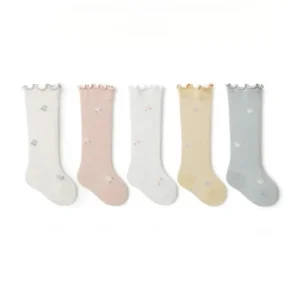
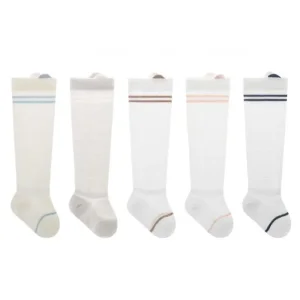
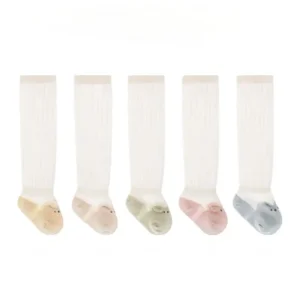
Warm-weather exploration exposes soft legs to outdoor abrasion, ticks, and mosquitoes. Ultra-thin, mesh-ventilated knee-high socks made from breathable hollow-filament yarns provide physical barrier shielding up to the knee without trapping excess ambient body heat, preventing diaper-bag bulk and sunburn risk.
Gifting, Hampers & Private Label Retail
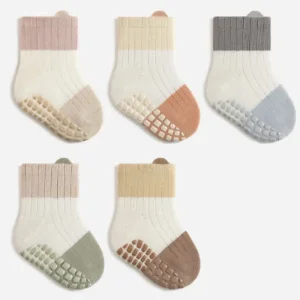
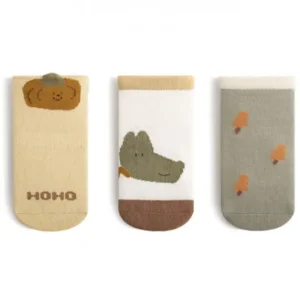
Infant socks are prime gifting products. Retailers require bespoke aesthetic presentation including organic craft wrap bands, recyclable embossed header cards, slide-out window boxes, and coordinated multi-pair themed collections (such as novelty animals, seasonal festivals, and minimalist Scandinavian palettes).
Key Macro Trends Influencing Sourcing Decisions
1. Organic and Traceable Fiber Verification: Millennial and Gen-Z parents actively inspect composition labels for GOTS-certified organic cotton, Lenzing Modal, and non-bleached natural threads. Sourcing managers must provide lot-specific yarn certifications to substantiate marketing claims on retail packaging.
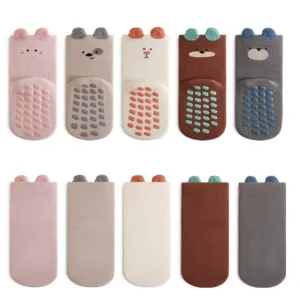
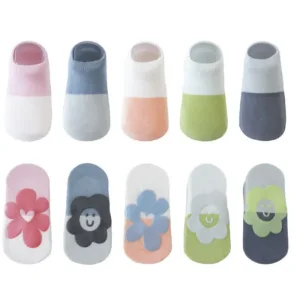
2. Ergonomic Silicone Geometry: Grip surfaces have evolved beyond generic geometric dots. Brands now leverage customized silicone molds shaped as alphanumeric characters, corporate brand logos, animal paw prints, and segmented flex grooves that bend in unison with pediatric metatarsal flex points.
3. Seamless Zero-Sensory Knitting: Sensory sensitivity in infants frequently causes distress when raised yarn loops or stiff seam threads press into tiny toes. High-gauge single-cylinder machinery with computerized auto-linking has become the non-negotiable benchmark for premium infant sock lines globally.
Enterprise Sourcing Specifications for Global Brands & Distributors
A systematic operational roadmap for merchandise managers, inventory controllers, and quality compliance directors.
Procuring baby socks at scale requires rigorous alignment between factory engineering and the brand's quality assurance (QA) documentation. Substandard batch color consistency, loose internal threads that risk toe entrapment (hair-tourniquet syndrome), or poor elastic retention can lead to customer churn, inventory recalls, and retailer penalties.
CAD Proof & Thread Spec
Translation of vector artwork into pixel-mapped stitch charts matching needle counts (96N/108N/120N), fiber blends, and Pantone TCX codes.
Pre-Production Prototyping
Physical sample creation within 5-7 business days for tactile validation, stretch curve verification, and dye-lot lab dip approvals.
Precision Bulk Knitting
Computerized knitting with inline optical thread-break sensors and automatic needle tension monitors to prevent internal yarn loops.
Silicone Vulcanization
Automated screen or nozzle transfer of liquid silicone rubber followed by temperature-controlled infrared curing chambers.
QA & Ethical Export Packing
100% metal-needle detection inspection, anti-mold silica pack insertion, barcoded export carton consolidation, and palletization.
Audited Social Responsibility & Factory Integrity
Enterprise retailers and institutional buyers mandate strict adherence to international labor standards. As an audited enterprise under BSCI (Business Social Compliance Initiative) and Sedex (SMETA), Sichuan MiFo Technology Co., Ltd. operates with total transparency regarding fair wages, occupational health, safe working conditions, and carbon-conscious wastewater discharge protocols. Our export documentation includes comprehensive fumigation, CO, and test certificates ready for direct port clearance.
Frequently Asked Procurement Questions (FAQ)
In-depth responses from our hosiery engineering, production management, and international freight desks.
What are the exact chemical and safety certifications required for infant socks exported to the US and EU?
How does your factory prevent internal loose threads that cause infant toe tourniquet syndrome?
What needle count and yarn compositions are best suited for newborn vs. toddler walking socks?
What is the difference between PVC Plastisol and Liquid Silicone Rubber (LSR) for grip socks?
What are the standard Minimum Order Quantities (MOQs) and lead times for OEM private-label infant socks?
Can you support sustainable packaging options for international retail shelves?
Specialized Seasonal & Extended Infant Footwear
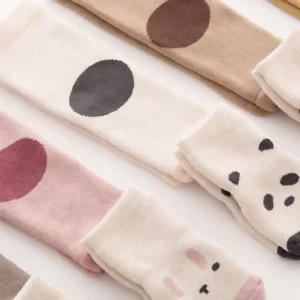
Review our specialized seasonal lines, including mosquito-proof knee-high designs, organic cotton essentials, and cartoon character grips.