
Hospital & Pediatric Clinical Grip Hosiery Range
Tested non-slip configurations engineered with medical-grade hypoallergenic elastane, dual-sided silicone treads, and ultra-soft non-ischemic welt openings for neonatal, pediatric, and adult acute-care programs.
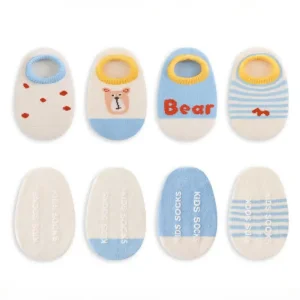
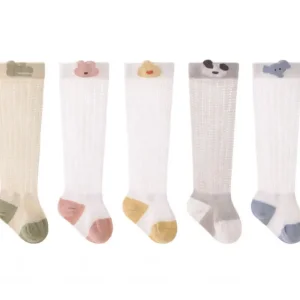
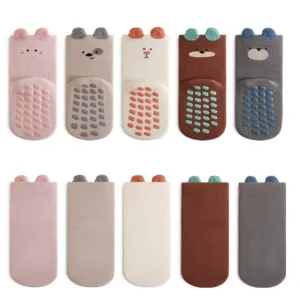
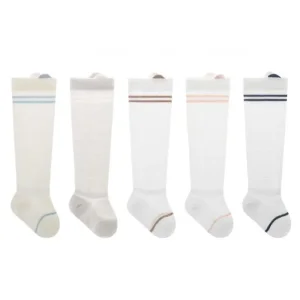
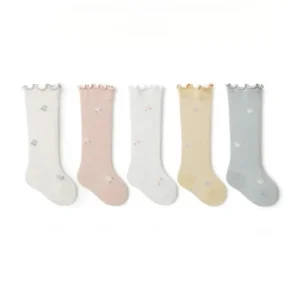
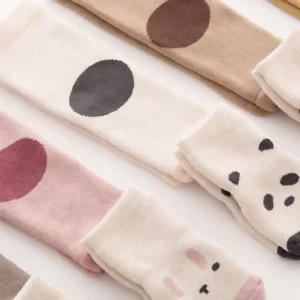
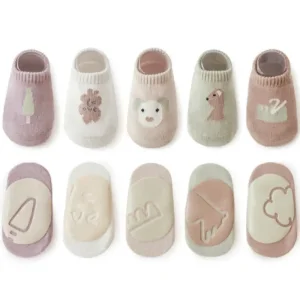
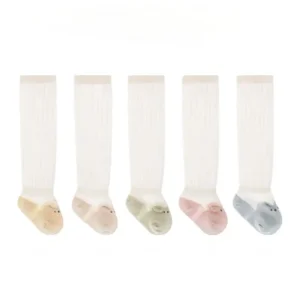
Enterprise Procurement Demands in Hospital Footwear
Inpatient fall incidents account for substantial non-reimbursable hospital costs globally. Sourcing directors and risk committees demand verified frictional efficacy, skin integrity preservation, and absolute batch traceability.
Clinical Fall Prevention Protocols
In accordance with the Joint Commission National Patient Safety Goals (NPSG) and NHS Fall Risk Assessment guidelines, medical slipper socks serve as the first physical defense against ambulatory slipping on smooth polished vinyl, terrazzo, and wet bathroom ceramics. Tier-1 hospital systems specify double-tread (360-degree top and bottom) coverage to ensure non-slip engagement even when socks twist during nocturnal transfers.
Bariatric & Edematous Accommodation
Standard elasticized cuffs can induce venous constriction, skin maceration, and deep vein thrombosis (DVT) in high-risk patients. Institutional healthcare tenders require cross-stretch ankle thresholds exceeding 14 inches without structural compromise, non-binding micro-ribbing, and seamless circular toe closures that eliminate shear pressure against fragile diabetic skin tissues.
Group Purchasing Organization (GPO) Economics
Consortium buyers, IDNs (Integrated Delivery Networks), and national healthcare bodies require contracted multi-year cost containment without vulnerability to raw textile volatility. Sourcing directly from high-capacity primary manufacturers eliminates distributor markups, guarantees palletized SKU standardization, and enforces just-in-time delivery metrics.
Hospital Color-Coded Risk Management Framework
Color-coding in patient garments provides immediate visual triage indicators for clinical nursing staffs. Our manufacturing lines implement calibrated pantone dyeing compliant with universal hospital safety standards.
| Color Triage Code | Clinical Intent & Indication | Technical Construction | Friction Polymer Spec | Compliance Metric |
|---|---|---|---|---|
| Safety Yellow | High Fall Risk Patient: Morse Fall Scale > 45. Visual alert for assisted ambulation. | Double-sided 360° chevron grips, heavy terry cushion sole, wide non-restrictive elastic. | Medical plastisol / silicone 35 Shore A durometer. | ASTM F2913 / ISO 13287 |
| Alert Red | Severe Medical Allergy: Immediate notification for medication or latex allergy. | Latex-free synthetic elastane core, combed hypoallergenic cotton yarn, seamless toe. | 100% Medical-Grade Food-Contact Silicone. | OEKO-TEX Std 100 Class I |
| Clinical Purple | DNR (Do Not Resuscitate): Sensitive end-of-life status protocol identification. | Relaxed micro-welt welt band, soft-touch spun polyester, thermal heat retention layer. | High-traction microporous silicone dots. | FDA Class I Medical Device |
| Standard Green | General Inpatient / Ambulatory: Routine admission, rehabilitation, day surgery. | Single or dual tread, breathable arch-mesh ventilation, reinforced heel pocket. | Silkscreened cured PVC polymer blend. | BSCI / Sedex Audited |
| Bariatric Royal Blue | Bariatric & Severe Edema: Circumferential stretch up to 26 inches circumference. | Continuous multi-filament nylon/spandex wrap, non-binding ladder stitch welt. | Extra-wide grip coverage pattern. | CE MDR 2017/745 Class I |
Technical Roadmap & Yarn-to-Grip Engineering
Transforming commodity knitted tubes into life-saving medical devices requires mastery over molecular polymer bonding, tensile tension balancing, and antimicrobial chemistry.
Polymer Rheology & Tread Bonding
The critical failure point of inferior slipper socks is tread delamination under ambulatory shear forces. Our production employs automated screen-print vulcanization and high-frequency thermal curing tunnels. Polymers permeate into the outer yarn loops without penetrating the interior fabric face, preserving skin contact softness while withstanding a minimum of 45 N/cm² peel stress.
Differential Gauge Circular Knitting
Utilizing Italian Lonati and high-precision computerized double-cylinder knitting machines ranging from 96-needle to 168-needle gauges, our production achieves targeted zonal density. Cushion terry loops line the plantar surface for shock dampening during early post-operative mobilization, while high-elasticity nylon cords in the midfoot offer arch stability without creating peripheral vascular constriction.
Silver-Ion & Zinc Antimicrobial Treatments
Hospital-acquired infections (HAIs) demand proactive yarn treatments. We offer organic silver-zeolite and zinc-pyrithione additive masterbatches integrated directly into the polymer matrix prior to yarn extrusion. This yields broad-spectrum bacterial reduction (>99.9% reduction against Staphylococcus aureus and Klebsiella pneumoniae per AATCC 100) without leaching onto wounded skin.
Clinical Spec Formulation
CAD dimensioning, yarn blend titration, slip-test coefficient modeling based on hospital floor substrates.
Hypoallergenic Yarn Prep
OEKO-TEX certified combed cotton, texturized filament polyester, and natural-rubber-free Spandex spandex yarn.
Automated Knitting
Computerized circular knitting, seamless Rosso toe-linking, tension-monitored non-binding cuff welt creation.
Dual-Tread Polymer Printing
Rotary screen printing of silicone or high-tack plastisol patterns with precise infrared temperature curing.
Cleanroom Pack & Release
Optical defect sorting, metal detection, automated compression bagging, and clean carton export packaging.
Global Hospital Slipper Socks Market: Manufacturing & Supply Resilience
An executive review of macroeconomic shifts, supply chain vulnerability, regulatory convergence, and factory audit imperatives for global procurement leaders.
1. The Macro Industrial Landscape and Sourcing Vulnerabilities
The global healthcare consumables industry has undergone systemic realignment over recent fiscal cycles. Historically fragmented supply chains relied on regional trading intermediaries who held minimal quality oversight over subcontractors. This led to pervasive issues in clinical environments: inconsistent tread grip adhesion causing patient slip injuries, tight welt bands triggering localized skin ischemia in geriatric wards, and unpredictable lead times during seasonal surge events (such as winter respiratory admission spikes).
Founded in 2013, Sichuan MiFo Technology Co., Ltd. has disrupted this fractured model by consolidating complete research and development, polymer formulating, high-volume automated knitting, and export trade under a unified 42,000 square meter manufacturing infrastructure. With an annual capacity surpassing 200 million pairs of functional grip and daily hosiery, MiFo supplies healthcare systems, distributors, and global brands across more than 100 countries. By bridging direct manufacturing transparency with institutional regulatory rigor, hospitals achieve uninterrupted supply continuity while reducing overall acquisition overhead.
2. Engineering for Diverse Clinical Patient Cohorts
A single standard hospital slipper sock cannot address the heterogeneous spectrum of acute, sub-acute, and specialized care environments. Modern procurement specifications necessitate distinct product categories:
- Pediatric & Neonatal Inpatients: Requires ultra-soft ring-spun cotton and water-based silicone grip dots completely free from phthalates, alkylphenols, and toxic stabilizers. The elastic tension must prevent sock loss without constricting developing microvascular systems.
- Acute Surgical Post-Op & Orthopedics: Patients experiencing anesthesia recovery and compromised balance require high-traction double-sided prints. Because disoriented patients cannot be expected to align sock seams, dual-side treads guarantee floor contact grip regardless of rotational orientation.
- Bariatric & Venous Edema Populations: Extreme ankle circumferences require specialized heavy-denier texturized yarns knitted with continuous stretch recovery. Traditional elastic threads snap or form painful tourniquets; our specialized knitting uses gentle micro-rib construction that expands up to 26 inches circumference without rolling down or exerting shear trauma.
- Long-Term Care & Memory Units: Dementia and Alzheimer care requires tactile comfort to discourage patients from removing footwear, coupled with high-contrast safety yellow or orange color profiles that assist staff in fall-risk identification across dimly lit corridors.
3. Supply Chain Nearshoring vs. Tier-1 Direct Integration
While nearshoring and local warehouse buffering have gained attention in healthcare risk management boards, localized manufacturing in North America and Western Europe faces chronic structural deficits in hosiery automation and raw synthetic yarn spinning. Local contract facilities carry up to 300% unit-cost premiums while maintaining brittle, small-scale production floors unable to absorb rapid scale spikes.
The optimal procurement model adopted by major global GPOs and healthcare distributors is direct partnership with mega-scale primary Asian producers operating social audit credentials (BSCI, Sedex) and standardized quality governance. By bypassing secondary import jobbers, institutional purchasers leverage factory-direct pricing, custom institutional branding (facility logos, custom barcode bands, automated dispenser carton packaging), and direct engineering communication.
Global Regulatory Compliance & Factory Audit Standards
Our manufacturing and biological technology divisions operate under stringent social, biological, and technical auditing frameworks to assure seamless customs clearance and hospital compliance.
BSCI & Sedex Audited
Full ethical labor compliance, fair wage guarantees, workplace health protocols, and environmental stewardship across our entire manufacturing campus.
OEKO-TEX Standard 100
Certified Class I non-toxic status. Zero prohibited aromatic amines, zero heavy metals, zero formaldehyde, and 100% skin safety for newborns and compromised skin.
FDA & CE MDR Compliant
Classification and export documentation for Class I Medical Consumables / Exempt devices. Full technical files prepared for EU and American distributor entry.
Total Lot Traceability
Every Master Carton is labeled with raw material batch codes, knitting line timestamps, and vulcanization inspector IDs for airtight medical accountability.
Frequently Asked Questions (FAQ) for Sourcing Directors
Authoritative technical and logistical answers addressing contract terms, testing protocols, custom packaging, and supply elasticity.
How do your hospital socks maintain non-slip efficacy across different hospital flooring surfaces?
Our slipper socks undergo static and dynamic coefficient of friction testing on vinyl composition tile (VCT), sealed polished concrete, glazed ceramic tile, and wet sanitary flooring in accordance with ASTM F2913 and ISO 13287 standards. By customizing polymer formulations—balancing low-durometer tackiness with high shear tear strength—our proprietary silicone and medical plastisol compounds consistently achieve friction coefficients exceeding 0.65, substantially exceeding the OSHA standard recommended minimum of 0.50.
Are your hospital slipper socks 100% natural rubber latex-free?
Yes. To prevent Type I immediate hypersensitivity reactions and contact dermatitis in sensitized patients and healthcare workers, 100% of our hospital socks are fabricated using synthetic elastodiene, spandex, or texturized polyester cores. Raw yarn lots are rigorously certified under OEKO-TEX Standard 100 Class I, guaranteeing zero natural latex proteins.
Can you manufacture custom pantone colors and custom institutional logo grips?
Yes. We operate in-house rotary and flatbed silicone vulcanization machinery. Hospital network logos, barcode tracking numbers, sizing indicia (e.g., XL, Bariatric), or risk alerts (e.g., FALL RISK) can be directly integrated into the skid-resistant tread pattern on the sole. Furthermore, yarn fibers can be custom dyed to exact Pantone Medical Triage codes for institutional standardization.
What are the minimum order quantities (MOQ) and production lead times for bulk hospital contracts?
Standard production runs for customized hospital socks typically begin at 3,000 to 5,000 pairs per size/color, while standing GPO catalog programs and high-volume baseline models scale into millions of pairs. Rapid sample prototypes are delivered within 5 to 7 business days, while volume container manufacturing is typically fulfilled within 20 to 30 days, backed by our 99.4% historical on-time dispatch metric.
How do you ensure skin integrity for long-stay bariatric and diabetic patients?
We incorporate three critical engineering features: (1) An ultra-wide, non-binding welt band using soft floating elastic courses that expand without localized constriction; (2) Hand-linked or seamless machine-linked toe closures that eradicate the ridged seam that causes distal toe ulcerations; and (3) Terry loops that absorb plantar shear friction during ambulation and wick moisture away from epidermal layers.
What packaging and carton packing configurations are available for automated dispensing?
We provide hospital-ready packaging solutions including bulk banded packs of 12 or 24 pairs, individual clean polybagged units, compressed space-saving bales, and shelf-ready dispenser cartons featuring pre-printed GS1-128 barcodes for immediate integration into hospital ERP and materials management software.
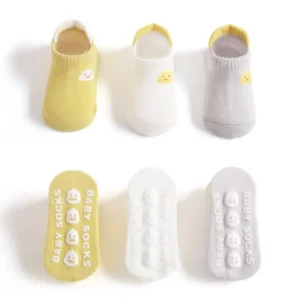
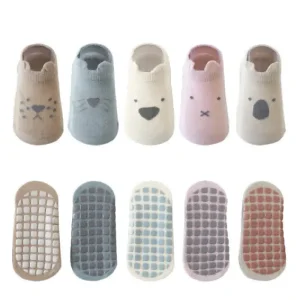
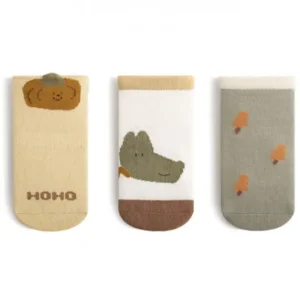
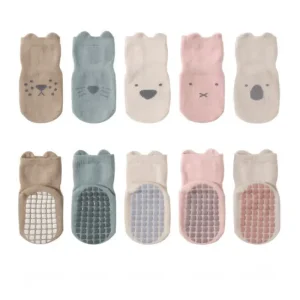
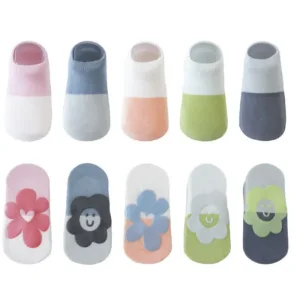
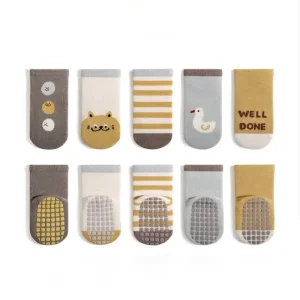
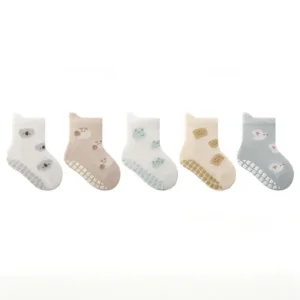
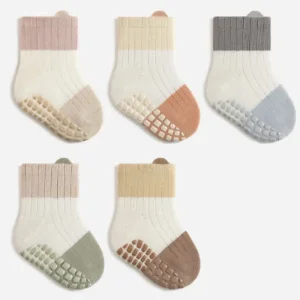
Specialized Pediatric & Institutional Anti-Slip Hosiery
Compliant designs combining reinforced heel and toe longevity, micro-silicone anti-slip dots, and temperature-regulating yarn blends for nursery, pediatric ward, and specialized clinic applications.
Audit Checklist for Hospital Footwear Supply Tenders
Before executing long-term healthcare consumable supply agreements, procurement committees should benchmark candidate factories against the following technical criteria.
1. ASTM F2913 Friction Certification
Require third-party laboratory verification (e.g., SGS, Intertek, TÜV) confirming dynamic coefficient of friction across both dry and wet vinyl tile under realistic vertical forces representing lightweight pediatric and bariatric adult loads.
2. Skin Sensitization & Cytotoxicity
Demand biological testing reports compliant with ISO 10993-5 (in vitro cytotoxicity) and ISO 10993-10 (tests for irritation and skin sensitization) to protect high-vulnerability ICU and long-stay geriatric patients.
3. Production Capacity Elasticity
Ensure the manufacturing partner maintains vertically integrated knitting, automated finishing, and buffer yarn stock (such as MiFo's 42,000 m² site) capable of surging production during regional viral epidemics without default.