
Signature Bobby & Gripper Sock Collections
Factory-direct technical hosiery meeting stringent global toxicity, slip resistance, and tensile durability standards.
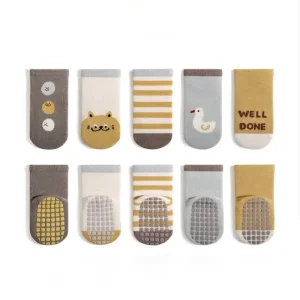
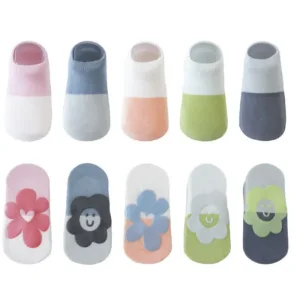
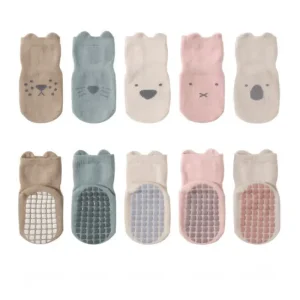
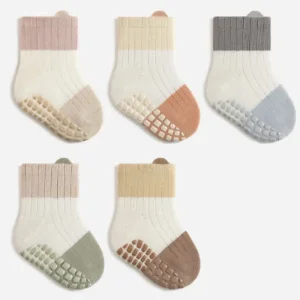
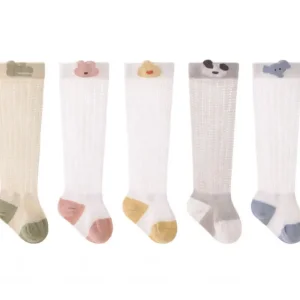
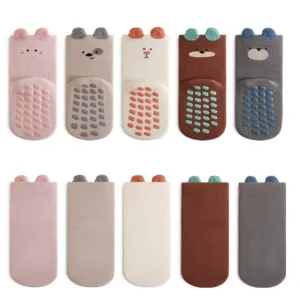
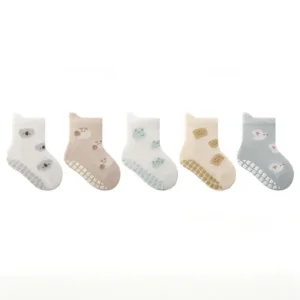
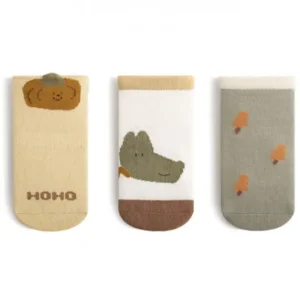
The Global Commercial & Industrial State of Bobby Socks
Moving from mid-century casual aesthetics to high-performance, precision-engineered turn-cuff hosiery across international enterprise supply chains.
Evolution of Modern Turn-Cuff Architecture
Bobby socks—traditionally defined by their folded ankle cuff—have transformed from casual retro apparel into a complex technical hosiery category. Today's commercial applications require strict gauge uniformity, controlled rib tension to eliminate vascular compression, and integrated elastomeric mapping to prevent slippage during dynamic wear.
Rigorous Compliance & Chemical Safety
Global retail channels in North America (CPSIA, Prop 65) and Europe (REACH, OEKO-TEX Standard 100 Class 1) enforce zero-tolerance thresholds for phthalates, heavy metals, and alkylphenol ethoxylates. High-capacity manufacturing facilities must deploy closed-loop testing protocols for infant, toddler, and institutional bobby sock lines.
Supply Chain Consolidation Trends
Fast-fashion agility paired with medical-grade reliability requires massive horizontal integration. Modern procurement heads bypass trading brokers in favor of vertically integrated manufacturers capable of combining spinning, computerized double-cylinder jacquard knitting, screen dispensing, and automated retail packaging under one roof.
Engineering Trends Driving Next-Gen Bobby Socks
Discover the structural and material breakthroughs revolutionizing bobby sock performance across global markets.
1. Nanotech Liquid Silicone Rubber (LSR) Gripping
Traditional PVC plastisol dots deteriorate, lose tackiness, and raise environmental compliance alarms. Modern manufacturing uses high-purity liquid silicone rubber (LSR) cross-linked directly onto combed cotton loops via infrared curing tunnels, guaranteeing over 100 commercial wash cycles without peeling or micro-fissuring.
2. 168N to 200N High-Density Needle Engineering
The transition from low-needle coarse knitting (96N/120N) to ultra-fine 168N and 200N electronic single/double cylinder machines provides an exceptionally tight knit structure. This density optimizes thermal insulation, delivers photographic jacquard clarity, and prevents elastomer grinning through the folded turn-cuff.
3. Circular Economy & Recycled Sustainable Fibers
Leading tier-1 fashion and sports conglomerates demand Global Recycled Standard (GRS) audited supply chains. High-spec bobby socks integrate GRS-certified post-consumer recycled cotton and rPET filaments, treated with zinc-ion antimicrobial coatings to minimize water usage and suppress microbial colonization without silver migration.
Localized Application Scenarios & Global Deployment
Tailoring cuff construction, coefficient of friction (CoF), and fiber ratios to diverse end markets.
| Sector / Market | Target Demographic | Technical Construction | Primary Material Matrix | Regulatory Benchmarks |
|---|---|---|---|---|
| Early Childhood & Preschool | Toddlers (6–36 Months) | Turn-cuff with gentle stay-up ribbing, full-sole grip | 82% Combed Organic Cotton, 15% Nylon, 3% Spandex | CPSIA Sec. 101/108, EN 71-3, OEKO-TEX Class 1 |
| Pediatric Healthcare & Clinical | Inpatient Infants & Children | Double-sided anti-slip treads, non-constricting cuffs | 75% Cotton, 23% Polyester, 2% Conductive Carbon Yarn | FDA Class I Medical Device, BS 7971 Anti-Slip |
| Boutique Streetwear & Athleisure | Gen Z & Millennial Fashion | Heavy terry cushion sole, exaggerated ruffled/retro cuff | 68% Combed Cotton, 28% Recycled Poly, 4% Elastane | REACH Annex XVII, AATCC Color Fastness Class 4+ |
| Institutional & Sports Academy | Junior Gymnasts & Cheer | Graduated compression ankle core with high-friction tread | 50% Polyamide 6.6, 45% Combed Cotton, 5% Lycra | SATRA TM144 Slip Resistance, ISO 12947 Abrasion |
Macro-Level Industrial Solutions for Volume Importers
Eliminating supply chain fragmentation through integrated manufacturing, quality verification, and tariff engineering.
1. Fully Integrated Automated Mills
By keeping pattern digitizing, computerized sock knitting (Lonati & Sangiacomo automated heads), continuous linked toe sewing (Rosso/Hand-linking), auto-silicone printing, and heat-boarding in one 42,000 m² plant, we eliminate inter-subcontractor delays and secure standard batch lead times of 15 to 25 days.
2. In-Line Multi-Point Quality Assurance
Every batch undergoes four-step quality screening: automated optical camera inspection for dropped stitches, tensile testing of turn-cuff recovery elasticity, cross-hatch adhesion testing of silicone prints, and metal detection down to 0.8mm ferrous calibration before cartons are sealed.
3. Strategic Logistics & Tariff Engineering
We work with international brands on technical material classification (HS Code optimization 6115.95 / 6115.96) to legally minimize import duties, supported by door-to-door DDP, bonded warehousing options, and automated EDI pallet labeling directly aligned with major distribution center platforms.
Technical Roadmap & Future Hosiery Innovations
Our ongoing multi-year R&D investments in smart textiles, green chemistry, and sustainable hosiery manufacturing.
Zero-Waste Direct 3D Linking
Deploying automated circular knitting machinery that eliminates cutting waste at the toe pocket, reducing pre-consumer yarn waste to below 0.3% per 1,000 dozen pairs.
Bio-Based TPU Elastomers
Replacing petroleum-derived silicone dots with bio-based, plant-derived polyurethane polymers that naturally break down in industrial composting without microplastic runoff.
Active Biometric Sensor Inlays
Integrating flexible conductive silver threads directly into the bobby sock arch and cuff to capture baby mobility, temperature, and infant step cadence.
Closed-Loop Chemical Recycling
Creating an industrial textile take-back program that depolymerizes blended cotton-spandex turn-cuff hosiery back into pure virgin-grade spinning filaments.
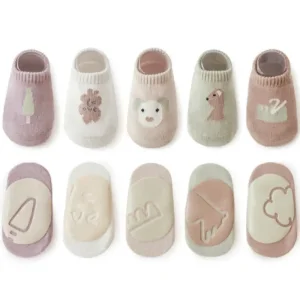
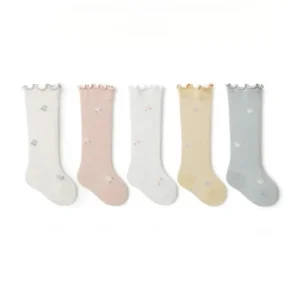
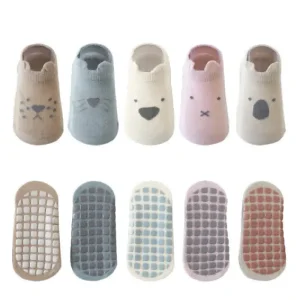
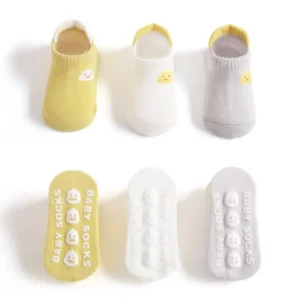
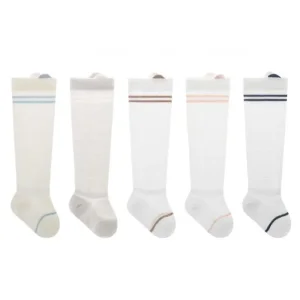
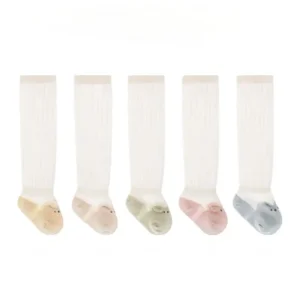
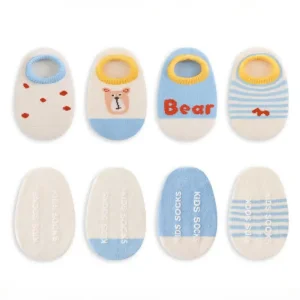
Featured Commercial & Children's Hosiery Lines
Tested formulations and popular silhouettes ready for private labeling, custom logos, and branded retail packaging.
B2B Procurement Questions & Answers (FAQ)
Everything sourcing managers, quality directors, and merchandise planners need to know before initiating a production run.
What differentiates bobby socks from standard crew socks during industrial manufacturing?
Bobby socks feature an engineered turn-down cuff requiring double-cylinder or specialized elastic-mapped knitting so the fabric stays clean on both the face and reverse sides. In contrast to crew socks, which use a continuous welt, bobby socks balance rib tension with elastic recovery to keep the fold secure without constricting circulation.
What Minimum Order Quantities (MOQs) and sampling timelines do you offer?
Standard custom private-label productions generally start at 1,000 to 3,000 pairs per design/colorway, depending on yarn specifications and custom dye vat sizes. Rapid pre-production prototyping takes 5 to 7 business days using in-stock combed cottons, with full industrial lab dips delivered within 72 hours.
How do you ensure child safety compliance for anti-slip bobby socks?
Our production facilities run comprehensive batch testing using in-house spectrometry and certified third-party labs (SGS, Intertek, TÜV). All plastisol and silicone dots are formulated free of ortho-phthalates, lead, BPA, and heavy metals, meeting CPSIA (US), Proposition 65 (California), and REACH SVHC (EU) chemical regulations.
Can customized silicone grip patterns include intricate logo designs and multi-color layouts?
Yes. Utilizing multi-station rotary screen printing and precision automated dispensing units, we reproduce brand logos, text, and geometric tread designs down to 0.5mm tolerances. We also support multi-color silicone applications and dual-durometer grip patterns to balance traction with comfortable cushioning.
What packaging and point-of-sale retail options do you support?
We provide full-spectrum OEM packaging solutions, including FSC-certified recycled paper header cards, printed belly bands, individual polybags with child-safe perforations, multi-pair gift packs, and master shipping cartons with GS1-128 compliance barcoding ready for global distribution centers.