
Engineered Infant & Toddler Hosiery Collections (Series I)
Manufactured using fine-gauge Italian computerized knitting systems, OEKO-TEX certified combed cotton, and vulcanized non-toxic silicone grip compounds.
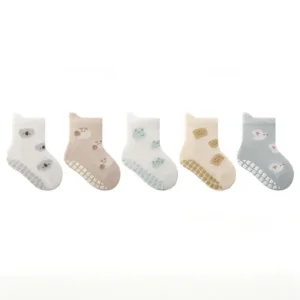
Wholesale Wholesale Anti Slip Kids Socks for Newborn Baby Toddler Infant in Summer Suppliers, Factory
Explore Specifications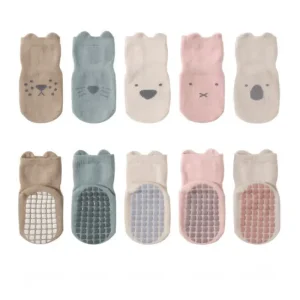
Wholesale Non-slip Infant Socks with New Cute Novelty Cartoon Animal Design for Baby Supplier, Factory
Explore Specifications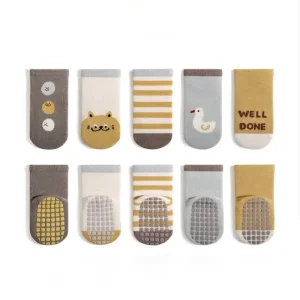
Wholesale Factory Price Baby Socks Floor Grip Mid-tube Socks with Cartoon Character for Kids in Fall Supplier, Factories
Explore Specifications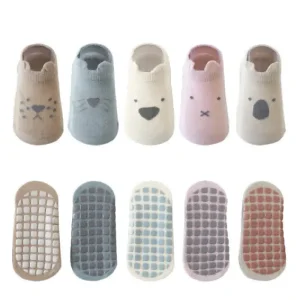
Custom Newborn Soft Anti Slip Infant Socks Cotton Baby Crew Socks With Silicone Grips Suppliers, Factory
Explore Specifications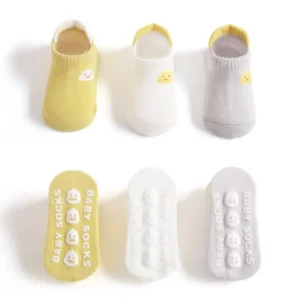
Wholesale Hot Sale Kids Socks Wholesale Non Slip Soft Ankle Baby Toddlers Socks Manufacturers, Supplier
Explore Specifications
Custom Wholesale High Quality Baby Socks Over Knee High Toddler Socks Anti Slip Breathable Kids Socks Manufacturers, Suppliers
Explore Specifications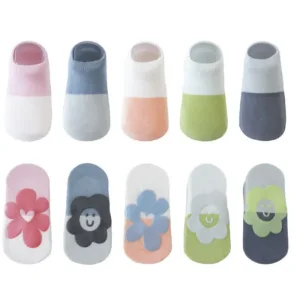
Custom Cotton Cute Anti Slip Baby Ankle Socks with Cartoon for Newborn Children in Spring Autumn Manufacturer, Manufacturers
Explore Specifications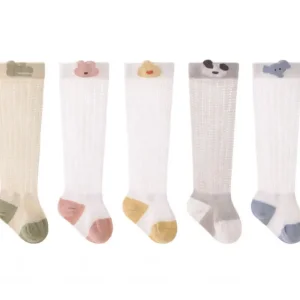
Wholesale Custom Baby Socks Long Tube Breathable Seamless Kids socks in Spring/Summer Manufacturers, Factory
Explore SpecificationsEnterprise Baby Socks Sourcing: Mitigating Risk Across Sensitive Supply Chains
Baby and toddler socks occupy a unique intersection of textile engineering, chemical safety, and biomechanical ergonomics. Procuring at commercial scale requires auditing factories far beyond basic cut-and-sew parameters.
Stringent Chemical & Skin Biocompatibility
Infants absorb topical chemicals up to 300% faster than adults due to an underdeveloped epidermal barrier. Industrial hosiery contracts demand zero-tolerance thresholds for extractable heavy metals, organotin compounds, NPEOs, and formaldehyde. Manufacturing facilities must deploy raw combed cotton audited under OEKO-TEX Standard 100 Class I (specifically reserved for babies under 36 months) and fully conformant with CPSIA Section 101 and EU REACH Annex XVII.
Vascular-Safe Non-Binding Compression
Standard retail socks rely on synthetic elastic ribbons that exert uneven circumflex tension, presenting risks of arterial restriction and skin redness on plump infant calves. Professional factories design graduated, loose-top cuffs using double-covered Lycra or high-elastic Spandex. By balancing tension ratios between 2.2cN and 3.5cN per yarn course, our proprietary cuffs prevent slipping without impeding microvascular blood flow.
Tensile Attachment & Choking Hazard Defense
Decorative 3D plush doll attachments, faux-leather badges, and appliqués are top sales drivers in gift hosiery, but represent acute regulatory liabilities under ASTM F963-17 and EN 71-1. Our high-standard manufacturing lines employ industrial automated lockstitch anchor machines backed by digital pull gauges. Every embellishment is verified to withstand a sustained pull force exceeding 70 Newtons (15.7 lbf) for 10 seconds without particulate displacement.
Advanced Manufacturing Architecture: The Anatomy of a High-Precision Sock
Discover how Sichuan MiFo Technology Co., Ltd. coordinates yarn spinning, automated computer knitting, seamless toe linking, and vulcanized silicone dispensing.
Italian Computerized Knitting
Utilizing high-speed Lonati and Sangiacomo single-cylinder knitting machines calibrated between 96N (for heavy winter loop-terry socks) and 144N / 168N / 200N (for ultra-dense, featherweight summer mesh). Precise computer-steered actuator needles maintain exact looping tension across irregular baby foot morphology.
Rosso & Hand-Linked Toe Linking
Traditional lockstitch seams produce an elevated, ridged hem that causes frictional irritation and blisters against sensitive infant toe tips. Our baby sock lines feature automated Rosso flat-linking or artisanal 1-to-1 hand-linking ("seamless toe") technology, delivering a smooth, zero-ridge interior contact zone.
Liquid Silicone Rubber (LSR) Dispensing
Inferior suppliers use cheap PVC plastisol grips loaded with phthalates and volatile plasticizers that degrade after 3 machine washes. MiFo integrates food-grade Liquid Silicone Rubber (LSR) screen-printed via high-temperature vulcanization, yielding non-slip coefficient of friction (COF > 0.85) on tile and hardwood.
Inline Metal Detection & QC
Broken sewing needle fragments pose catastrophic liability risks for infant brands. Our 5-tier quality protocol subjects 100% of finished hosiery lots to dual-head electromagnetic aperture metal detectors capable of detecting ferrous contaminants down to 0.8mm before secondary vacuum polybag hermetic sealing.
Industrial Hosiery Engineering & Quality Assurance Matrix
A rigorous specification standard enabling procurement heads, QA directors, and category managers to inspect, test, and brief tier-1 baby sock factories.
| Evaluation Parameter | Commercial Grade (Commodity) | MiFo Engineering Benchmark (Tier-1) | Testing Protocol & Industry Standard |
|---|---|---|---|
| Primary Fiber Composition | Carded low-staple cotton / Recycled poly blend | 32S/40S Combed Long-Staple Cotton / Organic Bamboo Modal | AATCC 20A / ISO 1833 Fiber Quantitative Analysis |
| Knitting Gauge Density | 84N – 96N Open weave, coarse gauge | 120N – 168N / 200N High-Density Fine Loom | Digital course-count inspection (Courses/Inch) |
| Toe Seam Construction | Bulky Overlock lockstitch (ridged seam) | Computerized Rosso Flat-Linking or Seamless Hand-Linking | Zero-ridge tactile evaluation & frictional wear simulation |
| Anti-Slip Grip Compound | Solvent-based PVC Plastisol (Phthalate risk) | 100% Food-Grade Liquid Silicone Rubber (Vulcanized LSR) | CPSIA Section 108 / EN 71-3 Phthalate Screening |
| Grip Adhesion & Shear Durability | Peels or chips after 3-5 home laundry cycles | Sustained bond integrity after 50+ industrial washes at 60°C | ISO 6330 Accelerated Domestic Washing Test |
| Cuff Compression Gradient | Uneven elastic tension (> 5.5 cN/course) | Gentle, non-binding micro-elastication (2.2 – 3.2 cN/course) | Pneumatic pressure sensor simulation for pediatric calves |
| Color Fastness (Saliva / Perspiration) | Grade 2 – 3 (Pigment leaching risk) | Grade 4 – 5 Non-leaching reactive vat dyestuffs | DIN 53160-1 / ISO 105-E04 Saliva Fastness Assay |
| Contaminant Screening | Sample visual spot-check (Random sampling) | 100% Inline Electromagnetic Tunnel Metal Detection (<0.8mm) | Sedex / BSCI / Walmart QA Needle Protocol |
Global Regional Clusters vs. Centralized Technological Hubs
How geographic industrial clustering, raw material proximity, and social auditing define modern hosiery procurement economics.
The Sichuan Specialized Hub (MiFo Campus)
Sichuan MiFo Technology Co., Ltd. consolidates R&D, fiber spinning, robotic knitting, high-capacity silicone vulcanization, and customs logistics on a dedicated 42,000 m² campus. Backed by stable, clean hydro-electric energy grids and integrated supply chains, this manufacturing model shields international brand partners from the production bottlenecks, coal-power disruptions, and subcontracting opacity common to fragmented industrial zones.
Traditional Coastal Clusters (Zhuji / Guangdong)
While historically dominant in volume, legacy coastal hubs frequently suffer from hyper-fragmented cottage subcontracting networks. Dyeing is outsourced across municipalities, knitting is farmed out to domestic workshops, and finishing lacks unified lot traceability. For high-stakes baby sock programs where batch contamination risks trigger full retail recalls, single-facility vertical integration offers indisputable chain-of-custody control.
Southeast Asia & Emerging Alternatives
Procurement teams seeking tariff diversification in Vietnam, Cambodia, or Bangladesh frequently encounter a bottleneck: lack of upstream raw materials. Yarn, specialized Spandex, non-toxic dyes, and custom silicone plates must still be imported from China, creating 30-day transit lead times and eliminating anticipated labor cost savings on complex jacquard or silicone baby socks.
Global Ethical Governance & ESG Architecture
Meeting the statutory compliance frameworks of regulated retail jurisdictions across North America, the European Union, the United Kingdom, and the Asia-Pacific.
BSCI & Sedex SMETA 4-Pillar Audited
Social accountability is an uncompromisable prerequisite for big-box retailers including Target, Walmart, Carrefour, and Mothercare. MiFo manufacturing floors operate under continuous social audits covering living wages, zero child labor protocols, workplace occupational safety, clean dormitory provisions, and non-discriminatory employment practices.
FSC Packaging & Biodegradable Inks
Modern parents actively favor sustainable consumer packaging. We engineer retail-ready display packaging using Forest Stewardship Council (FSC) certified post-consumer recycled paperboard, water-soluble soy printing inks, and oxo-biodegradable polybags, significantly reducing the carbon footprint per SKU.
DDP Multimodal International Logistics
From factory gate to regional distribution centers across 100+ countries, our logistics network provides end-to-end customs clearance under Incoterms 2020 DDP (Delivered Duty Paid), FOB, or CIF. Integrated tracking systems and pre-inspected container loading preserve pristine product integrity across transoceanic shipping routes.
Specialized Infant & Toddler Hosiery Collections (Series II)
From organic cotton knee-high styles to ultra-breathable summer mosquito-barrier designs, browse custom-manufacturable reference profiles.
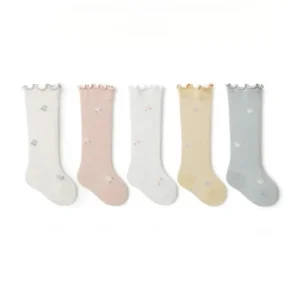
High-Quality 100 Percent Cotton Socks Eco-Friendly Organic Knee High Socks For Baby Supplier, Factories
Explore Specifications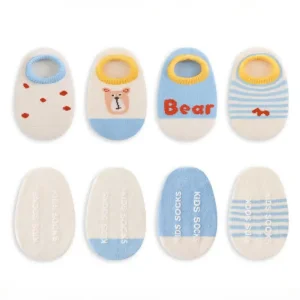
Wholesale Factory Colorful Soft Baby Socks Anti-slip Comfortable Kids Socks Cotton Ankle Socks Supplier, Suppliers
Explore Specifications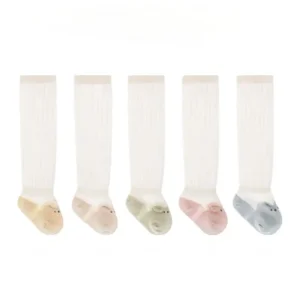
High-Quality Cooling Cartoon Infant Socks Knee-High Colorful Baby Socks Manufacturer, Factory
Explore Specifications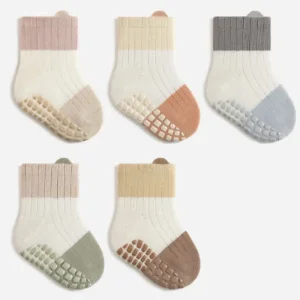
Custom Wholesale Colorful Kids Socks Indoor Floor Anti Slip Socks for Babies from Factory Supplier, Factory
Explore Specifications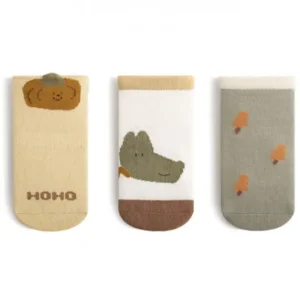
Custom Wholesale Breathable Baby Socks Grip Cartoon Toddler Socks Anti-Slip Cotton Kids Socks Manufacturer, Manufacturers
Explore Specifications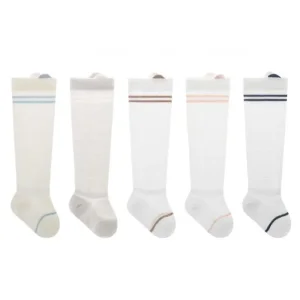
Wholesale Thin Baby Socks with Cute Cotton Knee High Mosquito Proof Socks in Summer Supplier, Suppliers
Explore Specifications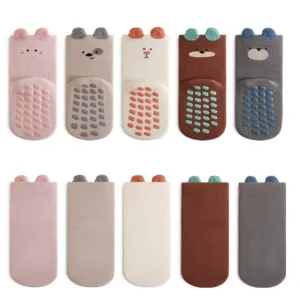
Wholesale Custom Wholesale Anti Slip Soft Kids Socks Breathable and Comfortable Unisex Grip Baby Socks Manufacturers, Factories
Explore Specifications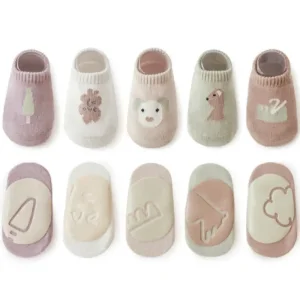
High-Quality Non Slip Toddler Socks Cute Cartoon Baby Socks With Grips Crew Walking Socks Manufacturer, Manufacturers
Explore SpecificationsFrequently Answered Technical & Sourcing Questions
In-depth responses compiled by senior hosiery engineers and export compliance directors for institutional purchasers.
What is the standard needle count recommendation for newborn vs. toddler socks?
For newborns (0–6 months), foot circumference is diminutive, demanding ultra-fine 120N or 144N single-cylinder looms to avoid bulky, stiff fabrications. For toddlers (12–36 months), we deploy 144N to 168N needles for standard daily crew socks, or 96N/108N for heavy winter terry loop cushioning. Higher gauge counts (e.g. 200N) allow hyper-detailed jacquard patterns with micro-fine combed yarns while maintaining a supple tactile handfeel.
How does MiFo ensure zero phthalates and heavy metals in customized silicone grip applications?
We reject standard PVC/Plastisol formulations entirely in infant socks. Instead, we use certified two-component Liquid Silicone Rubber (LSR) mixed with food-grade siloxane pigments. After high-temperature tunnel vulcanization (160°C to 180°C), cross-linked silicone forms an inert polymer chain impervious to human saliva and acidic sweat, fully complying with CPSIA 16 CFR Part 1307, California Proposition 65, and EU REACH Annex XVII.
What is the difference between standard overlock toe linking and seamless hand-linking?
Traditional overlock sewing loops excess fabric across the toe line, creating a prominent 2mm internal seam ridge that presses into a baby's soft metatarsals inside tight shoes. Rosso linking reduces this ridge significantly, while True Hand-Linking (loop-to-loop linking) connects individual needle loops manually or via high-precision modern robotic sensors. This creates a 100% flat, stitchless interior transition that prevents frictional chafing.
What Minimum Order Quantities (MOQs) and lead times apply for custom OEM baby socks?
Standard custom hosiery runs start at 1,000 to 2,000 pairs per colorway/size combination, depending on yarn complexity (e.g., custom Pantone vat-dyeing versus stock color banks). Sampling protocols deliver physical pre-production samples (PPS) in 7 to 10 days. Mass production cycles are typically completed in 25 to 35 business days following sample approval, backed by an annual production volume exceeding 200 million pairs.
Can you manufacture certified organic (GOTS) baby socks?
Yes. We source Global Organic Textile Standard (GOTS) and Organic Content Standard (OCS) certified organic long-staple cotton yarns. Full transaction certificates (TC) can be provided per manufacturing lot to verify provenance from ginning to knitting, ensuring zero synthetic pesticides or toxic defoliants were employed across the upstream agricultural footprint.
How are decorative elements (doll attachments, pom-poms) tested for baby safety?
Any peripheral attachments undergo rigorous pull testing on certified Instron tension equipment. Under ASTM F963-17 and EN 71-1 small parts requirements, decorative doll components must withstand a tensile pull force of 70 Newtons (approx. 15.7 lbs) maintained continuously for 10 seconds. In addition, internal thread anchor stitching prevents unravelling should the baby gnaw on the sock tips.
Initiate Your Baby Sock OEM / ODM Project with Engineering Certainty
Partner directly with Sichuan MiFo Technology Co., Ltd. for factory-direct cost efficiencies, automated Italian knitting precision, Sedex/BSCI social compliance, and certified chemical safety for global distribution.