
Featured Toddler & Infant Engineering Lines
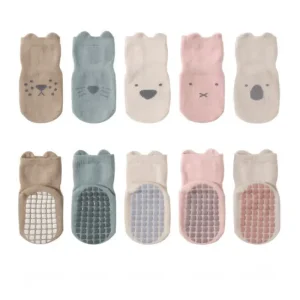
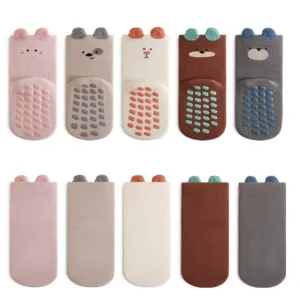
Direct-from-factory infant solutions optimized for anatomical gait development, zero-compression cuffs, non-toxic micro-dispensing grips, and certified thermal comfort.
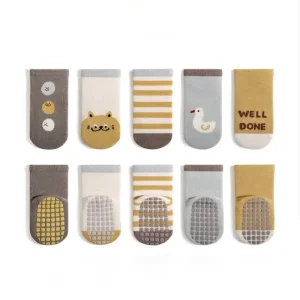
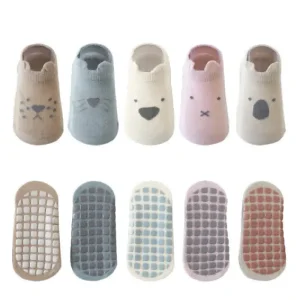
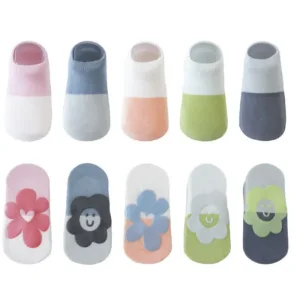
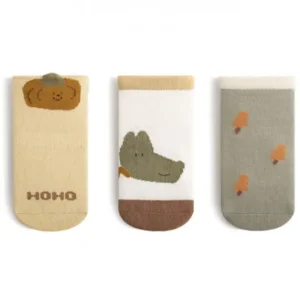
Global Toddlers Socks Industrial Landscape & Chinese Manufacturing Primacy
An empirical evaluation of technical supply ecosystems, automated circular knitting infrastructure, and compliance paradigms shaping international infant hosiery procurement.
Vertical Value Chain Integration
The Chinese toddlers' sock manufacturing sector has transitioned from fragmented workshop networks to vertically integrated intelligent industrial parks. Operating out of clusters like Sichuan and Zhejiang, top-tier factories unite spinning, differential dye chemistry, computerized knitting, automated silicone grip vulcanization, and robotic packaging within single bonded facilities. This consolidation removes up to 18 days of inter-stage transit latencies common in Southeast Asian supply corridors.
Stringent Global Chemical Governance
Modern infant and toddler hosiery represents the most chemically regulated segment in apparel. Production requires exhaustive adherence to OEKO-TEX Standard 100 (Class I for newborns), US CPSIA (lead and phthalate bans under 16 CFR Part 1307), and EU REACH SVHC restrictions. Chinese high-tier manufacturers utilize heavy metal-free dyestuffs, formal alkylphenol ethoxylate (APEO) bans, and certified non-migrating plasticizers across all elastane compounding.
Industrial Automation & Micro-Gauge Knitting
Producing miniature footwear for foot beds ranging from 7cm to 14cm demands specialized hosiery cylinders. Chinese factories operate computerized 96N, 108N, 120N, and high-density 144N single/double cylinder machines equipped with electronic yarn feeders and tension stabilizers. This hardware eliminates inside loose threads ('yarn loops') that represent tourniquet hazards for developing infant toes (Strangulation and Hair-Thread Tourniquet Syndrome prevention).
Pediatric Material Science & Mechanical Blueprint
Deconstructing yarn matrices, silicone vulcanization dynamics, and ergonomic architectural parameters.
GOTS-Certified Organic Blends
Skin contact layers utilize 100% GOTS organic ring-spun combed cotton (32s/1 to 40s/1 counts) to ensure an ultra-soft hand feel without chemical softening agents that may provoke infant dermal allergies. Core construction incorporates covered elastane (Air Covered Yarn - ACY) to guarantee mechanical springback without synthetic rubber ever coming in direct contact with the toddler's skin.
Liquid Silicone Micro-Dispensing
To safeguard active toddlers navigating high-polish flooring, soles undergo optical CCD positioning automated silicone screen dispensing. Medical-grade liquid silicone rubber (LSR) undergoes multi-zone infrared heat curing (140°C–160°C), resulting in permanent adhesion that withstands over 50 commercial hot-wash wash cycles without shear detachment or hardening.
Rosso & Seamless Linking Integration
Conventional toe seams cause friction against vulnerable toddler cuticles. Modern production employs automated hand-linking simulation (Rosso linkers and automated seamless single-thread linking machines). The resultant toe closure is perfectly flat with zero ridge elevation, preserving peripheral venous return and preventing interdigital abrasion.
Custom Toddler Sock Engineering Specification Architecture
Comprehensive baseline parameter guide for brand technical packs, sourcing audits, and quality control QA teams.
| Pediatric Development Stage | Target Age / Foot Length | Recommended Machine Gauge | Yarn Matrix & Construction | Functional Soling Dynamic | Global Safety Standards |
|---|---|---|---|---|---|
| Pre-Walker / Infant | 0–6 Months (7–9 cm) | 96N – 108N Single Cylinder | 80% Combed Organic Cotton, 17% Nylon, 3% Spandex | Zero-grip or soft micro-dot silicone; ultra-loose tension cuff | OEKO-TEX Class 1, EN 71-3 (Saliva resistance) |
| Crawler / Early Step | 6–12 Months (9–11 cm) | 108N – 120N Terry / Plain | 78% Compact Cotton, 20% Polyester, 2% Spandex ACY | Full-sole anatomical grip matrix + instep crawl pads | CPSIA Sec. 101/108, ASTM F963-17 physical testing |
| Active Toddler / First Walker | 1–3 Years (11–14 cm) | 120N – 144N Reinforced Double Welts | 75% Organic Cotton, 22% Polyamide, 3% Lycra | Hexagonal/Honeycomb high-tack silicone grip array | REACH SVHC, BS EN 14878 (Low flammability criteria) |
| Junior Explorer / Daycare | 3–5 Years (14–17 cm) | 144N Micro-Gauge Circular Knit | 70% Combed Cotton, 25% Moisture-Wick Poly, 5% Spandex | Zone-targeted heel/ball traction; reinforced double heels | GB 31701-2015 Category A (Infants & Children Textile Code) |
Engineered Functionality for Critical Toddler Environments
Optimizing hosiery performance across real-world commercial, clinical, and home environments.
Indoor Early Learning & Montessori Spaces
Early education environments demand bare-foot stimulation alongside environmental insulation. Chinese production clusters craft specialized floor socks with high-density terry loops across the plantar fascia to absorb impacts during jump-play while maintaining superior floor grip on treated hardwood and polymer puzzle mats, mitigating micro-falls.
Trampoline Parks & Play-Zone Safety Kits
Commercial family entertainment centers mandate dedicated grip hosiery to lower premises liability risks. Sourcing custom branded toddler grip socks directly from manufacturers provides venue operators with customized coefficient of friction (COF > 0.6 on wet/dry surfaces) calibrated specifically for light toddler weights, preventing joint hyper-extension on high-rebound vinyl meshes.
Pediatric Clinical Care & Thermal Balance
Infant thermal regulation is notoriously volatile. In hospital wards or postpartum rehabilitation centers, socks engineered with double-cylinder ventilation channels and non-constricting ribbing ensure optimal circulation without restricting venous flow. Antimicrobial silver-ion yarn infusions maintain bacteriostatic efficacy across extensive clinical wash protocols.
Full-Cycle Supply Chain Solutions for Global Brands
Eliminating supply chain volatility through vertically integrated manufacturing, real-time QA dashboards, and turnkey fulfillment.
Rapid Agile Prototyping
Direct CAD-to-machine prototyping translates original client vector art into physical knit samples within 72 hours. Precision digital jacquard matching accurately mirrors Pantone PMS formulas in certified yarn stocks.
Social & Technical Compliance
Every production line is covered under rigorous annual BSCI, Sedex SMETA 4-Pillar, and ISO9001 certifications. Full audit trails ensure fair wages, safe working environments, and zero forced or underage labor throughout upstream spin houses.
Eco-Packaging Engineering
FSC-certified kraft header cards, soy-based vegetable inks, and ocean-bound recycled polybags (GRS certified) empower retail brands to satisfy strict EU EPR directives and plastic taxation laws seamlessly.
Multimodal Freight Orchestration
Strategic export routing via major seaports (Ningbo, Shanghai, Shenzhen) and China-Europe Railway corridors enables predictable DDP/FOB handling with optimized volumetric vacuum-packing, slashing ocean shipping cubage by up to 35%.
High-Performance Toddler & Infant Line Extensions
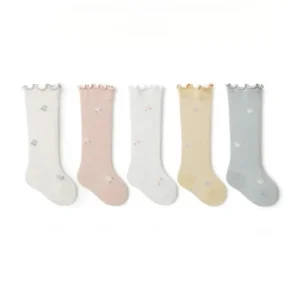
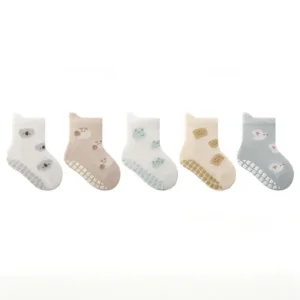
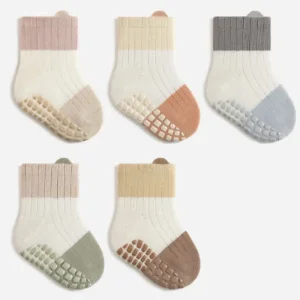
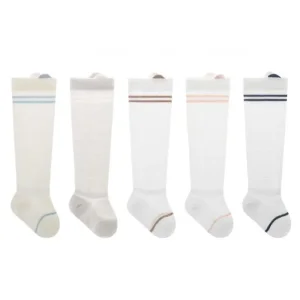
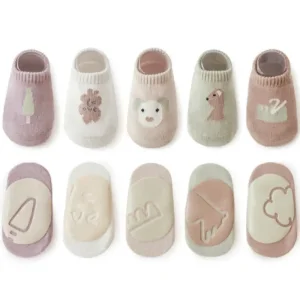
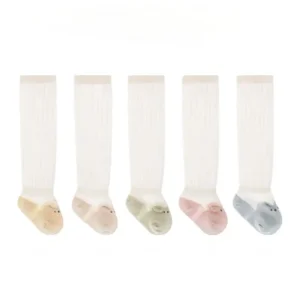
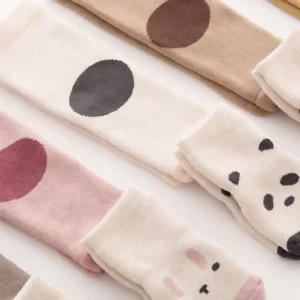
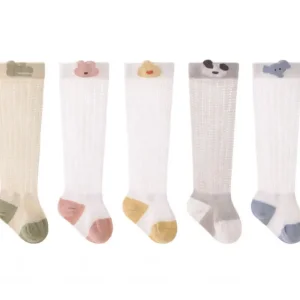
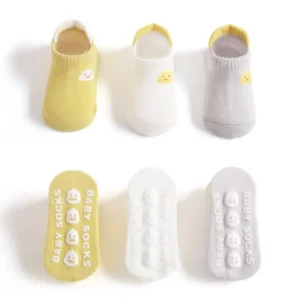
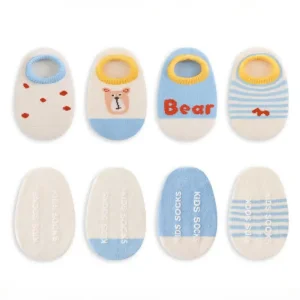
Explore our full OEM production spectrum: seasonal anti-mosquito knee-highs, ultra-fine seamless summer crew socks, and high-traction daycare floor socks.
Procurement & Technical Questions for Sourcing Directors
Direct technical clarifications addressing regulatory testing, production minimums, non-toxic chemistry, and IP protection.