
Enterprise Sock Engineering Catalog (Batch I)
Tactical-grade and functional hosiery, engineered for high-friction operational environments, endurance testing, and institutional deployment.
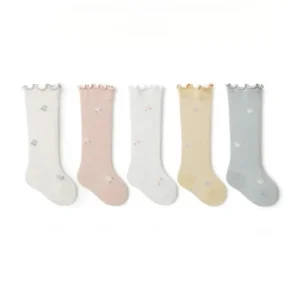
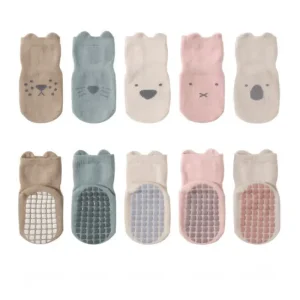
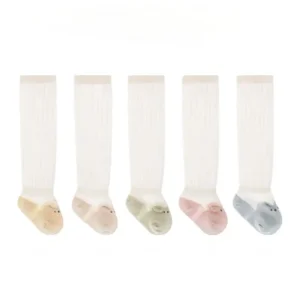
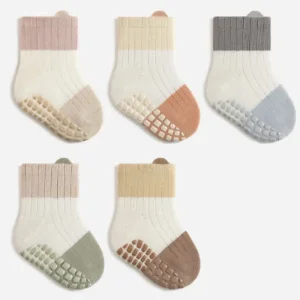
The Global Landscape of Defense & High-End Tactical Hosiery
Standard retail footwear fails under high moisture, continuous rucking, and extreme climate changes. Custom military socks represent an elite category in technical textiles requiring specialized needle gauges, targeted friction matrices, and antimicrobial fiber integration.
Combat Biomechanics & Foot Integrity
Prolonged tactical operations expose personnel to non-freezing cold injury (NFCI), hyperhidrosis, and severe blister-induced downtime. Tactical hosiery engineering requires selective cushioning mapped across the metatarsal and calcaneus zones to prevent pressure-point failures.
Advanced Material Hybridization
Modern military hosiery incorporates high-recovery elastane cores wrapped in Australian Merino wool, silver-ion filament (X-STATIC® equivalent), and abrasion-resistant Cordura® nylon. This ensures thermal balancing across arctic and arid deployment conditions.
Institutional Procurement Shifts
Global defense ministries and commercial tactical operators are moving from legacy bulk cotton issues to engineered multi-zone performance socks, driving demand for OEM manufacturers capable of producing to stringent physical tolerances.
Context-Specific Performance Engineering
Tactical sock parameters must be calibrated for the environmental stresses of the theater of operations. We produce specialized lines for distinct geographic and functional operational profiles.
Arid / Desert Patrol Platforms
Designed for operations in dry heat (45°C+), these socks utilize capillary Coolmax® fibers and instep vapor mesh vents to accelerate moisture evacuation, preventing epidermis maceration during long forced marches.
Jungle & Amphibious Operations
Hydrophobic filament combinations shed water rapidly after submersion. Integrated bacteriostatic silver yarn controls broad-spectrum bacterial growth and odor under continuous multi-day wet conditions.
Sub-Zero Mountain & Arctic Warfare
High-density Terry-loop merino structures (350+ GSM) capture warm air pockets while driving perspiration away from the skin, preventing flash freezing during passive observation shifts.
China Factory Infrastructure & Production Scale
Sichuan MiFo Technology Co., Ltd. integrates modern knitting automation, raw material sourcing, and quality management systems across a 42,000 m² campus in Sichuan, China.
Advanced Lonati Knitting Infrastructure
Equipped with computerized high-gauge Lonati circular knitting machines (96N, 108N, 144N, 168N, 200N), our production lines switch easily between complex Terry loop cushioning and high-density compression panels with zero structural variation.
Upstream Fiber Integration
Direct yarn spinning partnerships eliminate intermediate broker markups and delivery delays. We secure certified functional inputs—from Oeko-Tex Standard 100 organic combed cotton to military-spec Kevlar-reinforced heel/toe yarns.
Stringent Multi-Tier Quality Control
Each batch undergoes four stages of quality verification: incoming yarn tensile testing, in-line optical knitting inspection, dimensional post-wash shrinkage analysis, and pressure-gradient verification using pneumatic leg forms.
Next-Generation Tactical Footwear Roadmap
Developing performance textiles that merge biometric monitoring with advanced thermodynamic insulation.
Graphene-Infused Thermal Dissipation Matrices
Integrating graphene nanosheets into polyester filament structures to achieve uniform heat distribution along the plantar surface, eliminating hotspot buildup during high-tempo operations.
Graduated Tactical Compression & Venous Return
Implementing medical-grade 15-20 mmHg graduated compression profiles into standard field-service socks to lower blood pooling, delay fatigue during prolonged standing, and reduce deep vein thrombosis risks on long transport flights.
Circular Bio-Synthetic Polymers & Circularity
Developing 100% recycled nylon yarns with non-leaching zinc pyrithione antimicrobial treatments, helping institutional buyers meet carbon accounting goals without sacrificing tear strength or elastic memory.
International Regulatory Compliance & Verification
Our manufacturing facilities operate under verified social, ethical, and chemical management frameworks to satisfy stringent enterprise and government tender requirements.
BSCI & Sedex SMETA Audited
Our facility passes regular BSCI and Sedex four-pillar audits, ensuring fair labor standards, complete wage documentation, safe worker conditions, and responsible waste stream management.
OEKO-TEX® Standard 100 Verified
Every dye formulation, elastane yarn, and silicone grip application is certified free from harmful aromatic amines, formaldehyde, heavy metals, and fluorinated chemicals (PFAS/PFOA).
Direct Port Logistics Access
Connected via Chengdu’s integrated freight corridors to major sea hubs in Shanghai, Shenzhen, and Ningbo, as well as direct China-Europe Railway Express links, ensuring consistent transit schedules for global contracts.
Engineering Parameters by Footwear Category
A reference guide to help procurement teams specify optimal yarn blends, stitch densities, and finishing treatments for contract production.
| Operational Class | Primary Fibers | Gauge / Needles | Functional Cushioning | Core Characteristics |
|---|---|---|---|---|
| Heavy Tactical Ruck | 65% Merino, 30% Nylon, 5% Spandex | 108N / 132N High Density | Full footbed high-density loop | Impact attenuation, friction shielding, dry warmth |
| Hot-Weather Patrol | 70% Coolmax, 25% Polyamide, 5% Lycra | 144N / 168N | Zonal heel/toe Terry loops | Vapor permeability, rapid drying, anti-maceration |
| Institutional Physical Training | 80% Combed Cotton, 17% Poly, 3% Spandex | 144N / 168N | Half-sole Terry cushion | Cost efficiency, high absorbency, soft hand-feel |
| Sub-Zero Winter Warfare | 80% Fine Merino, 18% Nylon, 2% Spandex | 96N / 108N Heavy Terry | Full anatomical loop padding | Max thermal retention, loft retention under pack weight |
Enterprise Sock Engineering Catalog (Batch II)
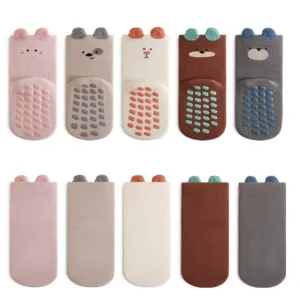
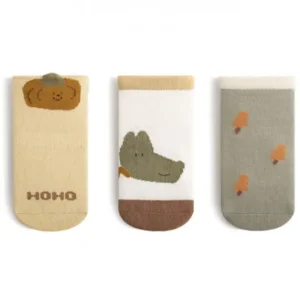
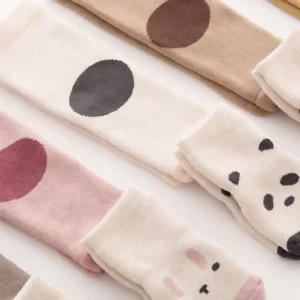
Diverse custom manufacturing profiles covering functional consumer, infant, and specialized apparel sectors.
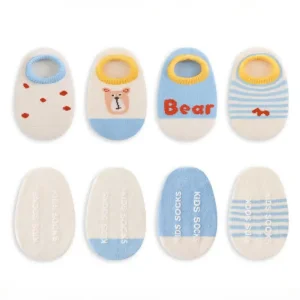
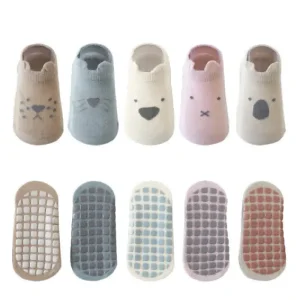
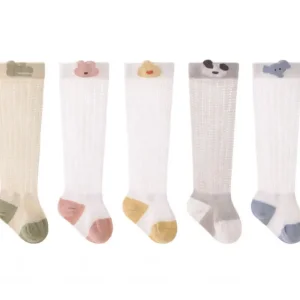
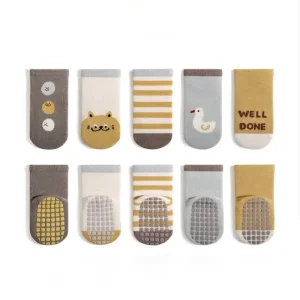

Frequently Asked Procurement Questions
Answers to questions regarding material specifications, minimum run quantities, production schedules, and compliance standards.
What makes military socks different from standard commercial athletic socks?
Military socks undergo rigorous friction, wash-shrinkage, and hydrostatic performance testing. They feature targeted reinforcement zones (heel, toe, Achilles), specialized flame-retardant or antimicrobial yarn coatings, and specific tension-retaining ribbing designed to hold firm inside 8- to 10-inch combat boots without sliding down or causing pressure blisters.
Can you manufacture socks compliant with Berry Amendment or NATO specifications?
While our production base is in Sichuan, China, we produce custom socks to international technical standards (tensile strength, colorfastness to perspiration, dimensional stability after boiling water cycles, and yarn composition tolerances) required for commercial defense contracts, global tenders, and private label tactical brands worldwide.
What is your Minimum Order Quantity (MOQ) for custom military sock production?
Our standard custom run MOQ starts at 1,200 to 2,400 pairs per design/size/colorway depending on yarn complexity (e.g., standard combed cotton vs. dyed fine Merino wool or specialized silver ion fibers). Prototyping and initial lab dips run across rapid sample setups within 7 to 10 business days.
How does Sichuan MiFo handle toe seam construction to prevent chafing in tactical boots?
We use automated Rosso toe closing or flat hand-linking techniques that create a virtually flat, seamless interior finish. This eliminates the raised seam ridge found in budget hosiery, which is the primary cause of forefoot friction blisters during heavy rucking.
What packaging and branding options are available for military/contract buyers?
We provide complete private labeling services, including mil-spec compressed packaging, serialized barcode labeling, hang tags with full fiber disclosure, bulk master carton pack-outs, and custom header cards. All cartons use reinforced corrugated cardboard to withstand intercontinental transit conditions.