
Why Do Global Buyers Need a Baby Socks Buying Guide?
Table of Contents
- The Role of a Baby Socks Buying Guide in Global Sourcing
- How Baby Sock Requirements Vary Across International Markets
- Key Materials, Sizes, and Quality Factors to Evaluate
- How to Assess Suppliers, Pricing, and Regulatory Compliance
- How a Buying Guide Helps Reduce Sourcing Risks
- FAQS
- Conclusion
- Related Posts
Buying baby socks for several markets can look simple, but small product details affect comfort, quality, and repeat orders. A pair may feel soft in a sample yet tighten after washing. Check fiber content, knit density, seam placement, and cuff stretch rather than relying on appearance alone. Tiny details matter. A cuff that leaves marks or a toe seam that rubs can turn a promising product into a return.
The Baby Socks Global Buyer Guide helps importers compare suppliers and make purchasing decisions with clearer evidence. It covers practical checks such as size measurements, sample review, color consistency, packaging, minimum order quantities, and production lead times. Ask suppliers for material specifications and relevant test documents, then confirm that they match your product and destination-market requirements. Review samples after washing, too. One sample cannot prove that every production batch will be identical.
Keep written records of agreed specifications, approved colors, and inspection criteria. This makes changes easier to spot before shipment. Still, no checklist removes every risk. A neat spreadsheet can miss a loose thread or an uncomfortable fit. Buyers should combine supplier documentation with hands-on product checks and clear communication. That extra attention takes time, but it can prevent avoidable quality problems and support more dependable sourcing.
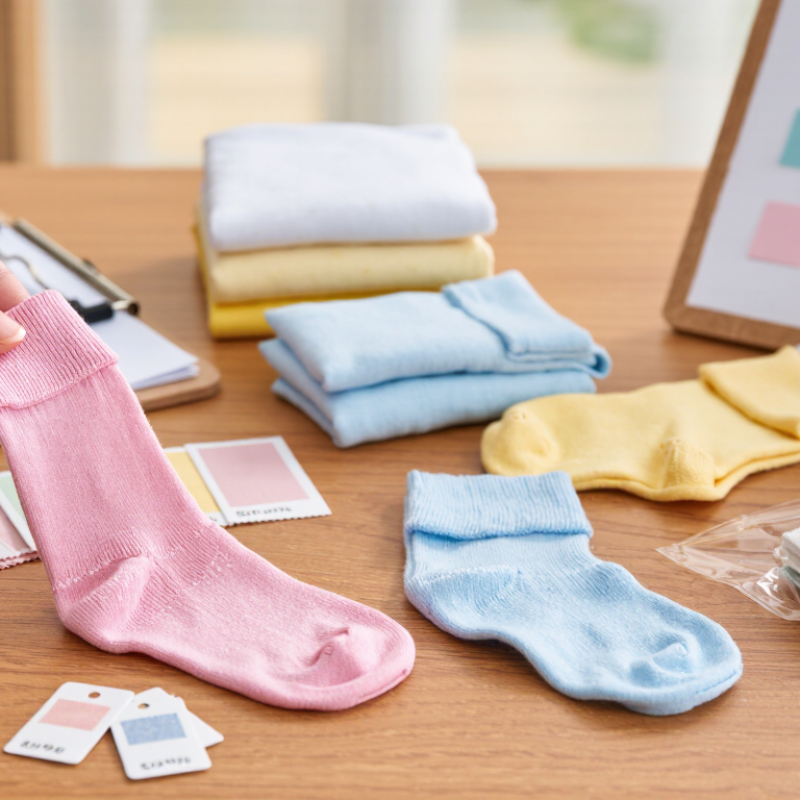
The Role of a Baby Socks Buying Guide in Global Sourcing
A baby socks buying guide gives global sourcing teams a shared specification before they request samples. It can define size ranges, fiber content, cuff height, grip placement, packaging, and acceptable measurement tolerances. These details matter when factories interpret the same brief differently. A sock that looks correct on a flat table may still slip or leave marks when worn. Small details matter.
Material choices need evidence, not guesswork. Textile Exchange’s Materials Market Report 2024 estimates that global fiber production reached 124 million tonnes in 2023; polyester represented 57% and cotton 20%. These figures cover the wider fiber market, not baby socks specifically, but they help buyers ask informed questions about blends, hand feel, durability, and supply availability. A practical guide also records sample revisions, color references, test results, and inspection criteria. That paper trail helps teams compare suppliers across regions and spot mismatches before bulk production. Still, no checklist catches every production variation. Buyers should review samples and confirm key specifications with the supplier.
Request socks in several sizes, then measure the foot length and cuff opening.
Wash-test samples and check for shrinkage, loose threads, and grip durability.
Record results with dated photos. Keep the guide flexible; some first measurements may need rethinking.
How Baby Sock Requirements Vary Across International Markets
Global buyers need to compare more than colors when sourcing baby socks. Local climate, household routines, and retail expectations can shape what parents consider comfortable. In warm regions, lightweight knits and breathable fibers may be preferred. Colder markets may favor thicker cuffs and roomier designs that fit over footed clothing. Fit is not universal.
Sizing labels also vary between suppliers and markets. A stated age range may not match every baby’s foot length, so buyers should request measurements and sample socks. Check the toe seam, cuff tension, and stretch after washing. Cotton-rich blends can feel soft, but fiber content alone does not predict durability or drying time. Small details matter.
Packaging and product assortments can differ, too. Some retailers favor multipacks in practical neutral colors; others need seasonal shades and individual size options. For wholesale orders, compare samples under realistic use, including repeated washing and movement. Ask suppliers for material specifications, size charts, and care instructions, then check that these details match the actual product. Forecasts are imperfect, and a popular color in one market may sit unsold in another. Begin with a balanced assortment, review local feedback, and adjust future orders accordingly.
Key Materials, Sizes, and Quality Factors to Evaluate
A reliable baby socks buying guide starts with materials, fit, and repeatable quality checks. Cotton blends can feel soft and breathable, while a small amount of stretch fiber may help socks stay in place. The exact blend matters: thicker yarn can feel warm but may make a snug shoe tighter. Ask suppliers for fiber content and care instructions, then inspect a physical sample when possible.
Sizing needs careful comparison. Age labels are only a rough guide, since babies’ feet grow at different rates and size charts vary between suppliers. Compare foot-length measurements, and check whether the stated size refers to the foot or the sock itself. A sock should cover the heel without pulling the toes flat. Check the seams. Tight cuffs can leave marks, while loose ones may slip down during wear.
Tips: Wash a sample as directed and check for shrinkage, fading, loose threads, and changed elasticity. Review several pairs from the same batch, not just one. Small differences are easy to overlook, and I would not treat a neat product photo as proof of consistent production.
How to Assess Suppliers, Pricing, and Regulatory Compliance
Supplier assessment should start with traceability, not a polished sample. Ask for the factory address, monthly capacity, subcontracting policy, and recent test reports. Then check whether the delivered socks match the approved sample in yarn feel, cuff stretch, grip placement, and wash performance. A low quote can still be the wrong quote. Compare yarn, dyeing, packaging, inspection, and freight costs separately; otherwise, a cheap unit price may hide a costly landed price.
Pricing also reflects material markets. Textile Exchange’s Materials Market Report 2024 estimates global fiber production reached 124 million tonnes in 2023, with polyester making up about 57 percent. That figure does not predict sock prices, but it shows why fiber choice and supplier sourcing matter. For compliance, identify each destination market before placing an order. Check applicable textile-labeling rules and chemical limits, and request test documentation for dyes, prints, and any grip material. The European Commission’s Safety Gate 2023 report recorded 3,412 safety alerts across product categories; it is a reminder to verify risk controls, not evidence that baby socks caused those alerts. Keep records. Details matter.
Tips: Approve a size-set sample, wash it, and measure it again. Confirm who pays for retesting if materials or factories change. A checklist helps, though it will not catch every production surprise.
How a Buying Guide Helps Reduce Sourcing Risks
A baby socks buying guide turns a vague request into checks buyers can verify. It should specify yarn composition, size ranges, cuff stretch, seam placement, colorfastness, and packaging. Small details matter. A sock may match the approved color but still feel rough at the toe seam, so samples need both visual and hands-on review.
The risk is broader than product quality. McKinsey’s 2020 report, Risk, Resilience, and Rebalancing in Global Value Chains, found that 93% of surveyed supply-chain leaders planned to increase resilience; 44% planned greater regionalization. For sock buyers, this supports documenting backup production options, material lead times, and delivery checkpoints before placing orders. A guide can also set measurable inspection criteria, such as acceptable size variation and how many pairs to sample from each lot. It cannot prevent every delay.
Supplier records deserve careful checking, too. Request current test reports that match the exact yarn, dyes, and trims used in production, then confirm that the tested sample matches the shipment. Keep the paperwork. But do not treat paperwork as proof of a comfortable fit. In my view, buyers sometimes overfocus on unit price; that is easy to compare, while elastic recovery and seam feel take more work. A clear guide makes those trade-offs visible before cartons leave the factory.
FAQS
Record size ranges, fiber content, cuff height, grip placement, packaging, and measurement tolerances. Keep dated sample notes. Small details matter.
A sock can look right on a table but slip or leave marks when worn. Check fit on a baby-sized foot form if available.
Request foot-length measurements, not just age labels. Confirm whether each chart measures the foot or the sock itself. Fit varies.
Ask for fiber content and care instructions. Cotton blends may feel soft, while stretch fiber can help socks stay in place. Feel alone proves little.
Wash samples as directed. Look for shrinkage, fading, loose threads, and weaker elasticity. Check several pairs from one batch.
Check whether the heel stays covered and toes remain relaxed. Tight cuffs may leave marks; loose cuffs can slip down. Recheck after washing.
Consider local climate and retail preferences. Warm areas may favor lightweight knits; colder markets may prefer thicker cuffs. Color forecasts can miss.
Save color references, measurements, test results, and dated photos. A checklist helps, but I would not treat it as proof of consistent production.
Conclusion
A Baby Socks Global Buyer Guide helps international buyers make informed sourcing decisions by bringing key requirements into one practical framework. Baby socks may need to meet different expectations across markets, including preferences for materials, sizing, softness, durability, and seasonal use. Understanding these differences early can help buyers specify products more clearly and avoid mismatches between supplier samples and market needs.
The guide also explains how to evaluate fabric choices, construction quality, size consistency, supplier capabilities, pricing, and relevant product compliance requirements. By comparing these factors systematically and confirming specifications before production, buyers can identify potential issues sooner, improve communication with suppliers, and manage sourcing risks. A structured approach supports more reliable purchasing decisions while keeping infant comfort and product quality at the center.

Blog Tags: